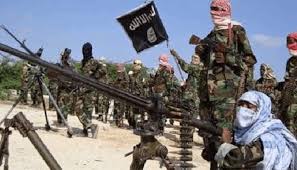
Last week, just before midnight on Friday, May 15, United States President Donald Trump announced on his Truth Social platform that a coordinated joint operation between Nigerian and American forces had led to the killing of Abu Bilal al-Minuki, described as the second-in-command of ISIS globally.
The following day, President Bola Ahmed Tinubu confirmed the development. The operation reportedly took place around the Lake Chad region in Borno State, North-East Nigeria. For many Nigerians, the announcement initially appeared to signal a major breakthrough in the fight against terrorism.
Yet the relief was painfully short-lived. Within hours came reports of another Boko Haram attack on a primary school in Borno State, leading to the abduction of dozens of pupils. Before the nation could process the horror, gunmen struck again — this time in the Iresa/Irara axis of Ogbomoso in Oyo State, where scores of schoolchildren were reportedly kidnapped.
The symbolism is troubling. Even after a high-profile counterterrorism success, insurgents and criminal networks still retain the operational capacity to terrorise vulnerable communities, target schools and undermine public confidence in the state.
For ordinary Nigerians, these incidents deepen a growing belief that government responses remain reactive rather than preventive. Citizens watch attacks occur repeatedly despite military deployments, security checkpoints and official assurances. In many communities, fear has become normalised. The debate over self-defence and civilian armament has consequently resurfaced.
Many Nigerians increasingly question whether the state can continue insisting on a monopoly of force while simultaneously struggling to guarantee the safety of lives and property. Although widespread civilian armament carries serious risks in a fragile environment already saturated with weapons, the frustration behind such demands reflects a deeper crisis of confidence in state protection.
Yet Nigeria’s insecurity cannot be reduced merely to a military problem. That would be dangerously simplistic. The country’s security crisis is equally a governance problem, an economic problem, a justice problem and, increasingly, a social breakdown.
Terrorism, banditry and kidnapping thrive most effectively where institutions are weak, corruption is entrenched, unemployment is widespread and citizens no longer trust the state. From the Maitatsine uprisings of the 1980s to the attempted bombing of a Detroit-bound aircraft by Umar Farouk Abdulmutallab, Nigeria has long confronted violent extremism in different forms.
The hijacking of a Nigerian passenger aircraft to Niamey decades ago was another early warning sign that radical violence and organised criminality were gradually mutating beyond conventional policing challenges. Today, insecurity stretches across multiple fronts.
Recent attacks and intelligence assessments point to persistent violence in Kaduna, Katsina, Niger, Kebbi, Kogi and Kwara states. Rural communities face recurring raids, highways remain vulnerable to ambushes and schools increasingly appear exposed.
This has reignited national conversations around state policing, community-led intelligence systems and the urgent need to properly implement community policing structures capable of generating local trust and actionable intelligence. Unfortunately, Nigeria still suffers from a pattern of “too much reaction and too little prevention”.
Security responses often come after villages have been attacked, after children have been kidnapped and after lives have already been lost. In some cases, communities report that attacks occur shortly after security personnel leave an area, fuelling suspicions, conspiracy theories and declining public trust.
Whether such perceptions are justified or not, they reveal a dangerous credibility gap between citizens and security institutions. The fundamental question therefore becomes: why does Nigeria continue to struggle with early warning systems, intelligence gathering and rapid response coordination despite years of conflict?
The current administration may argue — correctly — that it did not create these problems. But leadership ultimately requires ownership of inherited crises. Governments campaign not merely to identify problems, but to demonstrate the capacity and political will to solve them. If every administration continues to shift responsibility to its predecessor, the cycle of insecurity may become permanent.
Beyond the military Military offensives alone will not end Nigeria’s security crisis. What Nigeria requires is a multidimensional security strategy anchored on intelligence reform, institutional accountability, economic inclusion and community participation.
First, intelligence gathering must become more localised and technology-driven. Rural surveillance systems, informant protection frameworks and inter-agency intelligence sharing need urgent strengthening.
Terrorist and bandit groups continue to exploit weak coordination between federal, state and local authorities. Second, the welfare and professionalism of security personnel must improve significantly.
Poorly equipped and poorly motivated officers cannot sustain effective long-term operations against highly adaptive criminal networks.
Third, Nigeria must confront the economic foundations of insecurity. Mass unemployment, poverty and social exclusion provide fertile recruitment grounds for extremist and criminal organisations. A country with millions of frustrated young people will remain vulnerable to violence regardless of military spending.
Further more , justice must become faster and more credible. Delayed prosecutions, weak investigations and low conviction rates encourage impunity. Citizens lose faith when high-profile criminals are repeatedly arrested without visible consequences.
Finally, communities themselves must reclaim a sense of collective responsibility. Security cannot be outsourced entirely to government.
Citizens must resist the culture of silence, ethnic protectionism and political complicity that sometimes shields criminal actors.
The challenge is no longer whether Nigeria recognises the scale of the crisis. The challenge is whether its political leadership possesses the courage, urgency and discipline required to confront it beyond rhetoric.