
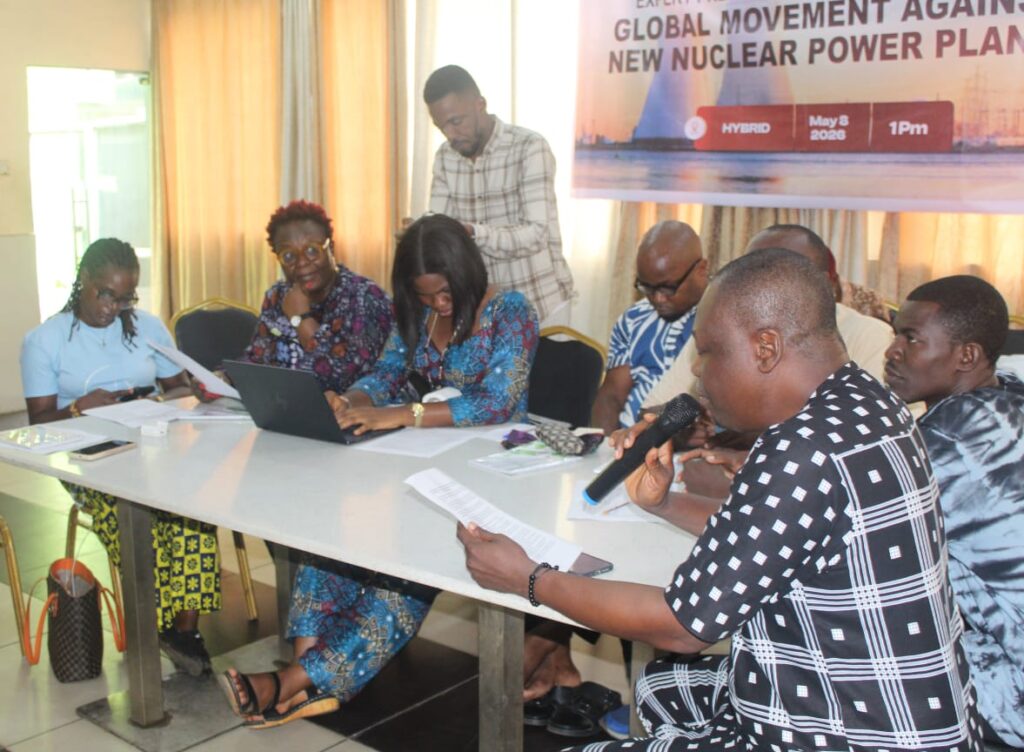
A coalition of environmental advocates, energy experts and civil society groups has warned Nigeria and other African countries against investing in new nuclear power plants, describing the technology as expensive, risky, obsolete and unsuitable for nations battling insecurity and energy poverty.
The concerns were raised at the Expert Presentation/Nigeria Workshop on New Nuclear Power Plants held in Lagos and organised by the Renevlyn Development Initiative in partnership with Tipping Point North South.
The workshop, attended by journalists, anti-nuclear advocates and experts from Kenya, Zambia, South Africa, Germany and the United States, focused on the implications of Nigeria’s proposed nuclear power programme and the broader implications for Africa.
Speaking at the event, Executive Director of the Renevlyn Development Initiative, Philip Jakpor, said African governments were being “lured into another form of colonialism” through nuclear energy deals largely driven by foreign interests.
Jakpor said Nigeria’s secrecy surrounding agreements signed with the Russian state-owned nuclear company Rosatom had heightened fears among civil society groups and local communities.
“We don’t just want to wake up one day and hear that they have constructed nuclear plants somewhere,” he said.
According to him, journalists and citizens have not been adequately informed about the environmental, financial and security implications of nuclear power projects proposed for Nigeria.
“Nuclear power is presented as clean energy, but nobody talks about the processes, nobody talks about nuclear waste, nobody talks about the fact that this technology is being phased out across the globe,” he stated.
He warned that building nuclear facilities in a country facing terrorism and insecurity could worsen national vulnerabilities.
“Nigeria, which is already facing a terrorism crisis, will add fuel to the fire when we build nuclear power plants because terrorists will naturally threaten those facilities,” he said.
Jakpor also questioned Nigeria’s capacity to independently manage nuclear technology, noting that foreign companies could maintain control of the plants for decades.
“We are talking about 25 to 30 years before they hand over management to Nigeria. We would rely on them to build, rely on them for loans and rely on them to manage the waste. That is a problem,” he added.
Stakeholders at the workshop identified several challenges associated with nuclear power generation, including radioactive waste disposal, safety concerns, high construction costs, long completion timelines and dependence on foreign expertise.
Participants recalled global nuclear disasters such as the Chornobyl disaster and the Fukushima Daiichi nuclear disaster as reminders of the devastating consequences of nuclear mishaps.
Jakpor stressed that one of the unresolved global concerns remains how to safely store radioactive waste generated from nuclear reactors.
“Promoters of nuclear power plants do not have answers to where these wastes will be stored,” he said.
The workshop also revisited Nigeria’s 2016 Memorandum of Understanding with Russian nuclear corporation Rosatom for the construction of four nuclear power plants estimated to cost about $80 billion and expected to generate 4,800 megawatts by 2035.
Speakers questioned why discussions around the project had remained largely secretive since public criticism emerged.
In her intervention, Co-founder of Tipping Point North South UK, Deborah Burton, urged African nations to reject nuclear energy and instead invest in renewable energy sources capable of addressing energy poverty sustainably.
“Africa must resist the pressure to adopt nuclear power because it is a distraction for a continent that has an abundance of renewables,” Burton said.
She listed countries including Angola, Ghana, Kenya, Rwanda, Uganda and Nigeria among African nations considering nuclear power projects despite abundant renewable energy resources.
Burton referenced the 2025 report, The Alarming Rise of False Climate Solutions in Africa: The Nuclear Energy Misadventure, which called on governments to abandon plans for new nuclear plants and redirect funding toward safer energy alternatives.
Throughout the workshop, experts repeatedly recommended renewable energy options such as solar and wind power as safer and more affordable pathways for Africa’s development.
Participants argued that Nigeria possesses enormous sunlight potential across the northern region and strong wind resources along coastal areas and the Sahara corridor that could power homes, industries and rural communities more sustainably.
Stakeholders said steering clear of nuclear power would help Africa avoid radioactive pollution, debt burdens, long-term foreign dependence and security threats while accelerating access to cleaner, decentralised and affordable electricity.
Also, speaking at the event, Zambian environmental activist, Miss Chansa Kaluba questioned Zambia’s push toward nuclear energy, citing environmental contamination linked to decades of mining activities and unresolved public health concerns.
Kaluba said many communities in mining regions were still grappling with pollution and lead poisoning from historical mining operations.
“One of the biggest questions we ask is whether we are ready to maintain the right to a safe, clean and healthy environment while pursuing nuclear power development,” the activist said.
She noted that although Zambia relied heavily on hydroelectric power, the country possessed significant untapped renewable energy potential, particularly in solar and wind energy, estimated at more than 2,300 megawatts.
For many at the gathering, the message was that Africa’s energy future should be built on renewables, not on what they describe as a dangerous and outdated nuclear experiment.-