


The Lagos State Branch of the Nigerian Institute of Estate Surveyors and Valuers has stated that within the last 12 months, the association spent over N200m to train about 950 members both locally and internationally.
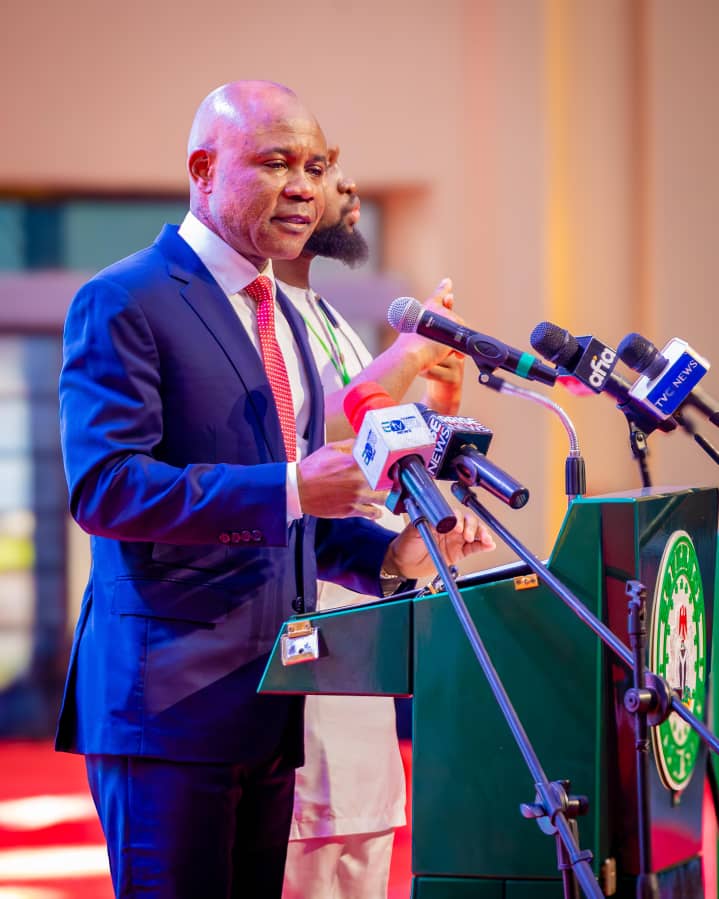
The Lagos State Branch Chairman of NIESV, Tosin Kadiri, who disclosed this on Monday in Lagos during a press conference to mark the commencement of the 2026 Annual Estate Week, stressed that the programme is the association’s flagship opportunity to engage the public, government, and stakeholders in the role of estate surveyors and valuers in nation-building.
Giving a breakdown of the training within the period under review, Kadiri explained that over 300 members were trained through MCPD in November 2025, while 200 members were trained through the Pan-Africa Webinar Series held in January 2026.
He added that an additional 350 members were trained in Summit 7.0 and over 100 members through four sessions of NIESV’s resource centre training covering various aspects of the profession.
Kadiri stated that within the period under review, 76 members were recommended for upgrade to fellowship status in the profession, adding that an international conference was organised in Saudi Arabia for members to enhance international knowledge and networking.
“In organising MCPD alone, we have spent over N10m. And for Summit alone, we spent over N12m, and we spent millions on resource centre training alone. So, for international engagement, the Saudi Arabia trip alone, our members spent well over N120m. So, if you have to look at the money or the amount of money that has been expended in training our members in various areas of the profession, both international and local training, I will tell you that in the last year, it has run to well over N200m,” Kadiri said.
According to him, this year’s programme will allow NIESV to reflect on its contributions to the real estate sector, “evaluate our impact on society and reaffirm our commitment to professional excellence, ethical practice and national development”.
He noted that the last year has been highly productive and impactful for the branch through collective commitment, strategic leadership and the unwavering support of members, with significant achievements recorded.
Kadiri highlighted that in the area of strengthening professional development, the association successfully organised several continuing professional development programmes, workshops, seminars and technical sessions aimed at enhancing the competence and global relevance of members.
“This programme focused on emerging trends in property valuation, digital transformation in real estate practice, sustainability and green buildings, asset valuation standards, real estate investment analysis, professional ethics and compliance. These initiatives have significantly improved the technical capacity of our members,” he added.
On advocacy and stakeholders’ engagement, Kadiri added that over the past months, the branch strengthened engagement with critical stakeholders in both the public and private sectors.
He stressed that the association has actively engaged with government agencies, regulatory bodies, financial institutions and professional bodies, among others, adding that the engagement has amplified its voice on key issues affecting the real estate sector, “including property documentation reforms, land administration efficiency, urban planning compliance and professional valuation standards”.
“In the area of promoting ethical practice, the branch has intensified efforts towards promoting professionalism and ethical conduct among practitioners and the public through sensitisation programmes on television and radio stations. We continue to uphold the integrity of the estate surveying and valuation profession,” he stated.
He pointed out that in the area of youth development, the association recorded commendable growth in membership participation, particularly among younger professionals within the period under review.
“Our membership initiatives have helped to bridge the generational gap and prepare emerging professionals for leadership within the institution, particularly in the branch. We have interviewed and recommended over 350 new probationers for induction into our professional institution, and we mentored over 500 young students through our mentorship programme. Our ‘Catch Them Young in Schools Programme’ reached over 12 secondary schools, introducing the profession to over 1,200 students,” he added.
He lamented that financial constraints, particularly regarding overseas programmes, have posed significant challenges in securing broad member participation in training sessions.
“Number one of the challenges is financing. We all know the state of the economy. So getting a lot of our members to participate in some of these programmes will actually be very challenging when it comes to the cost, particularly in the ones that we organise as international training conferences,” he said.