

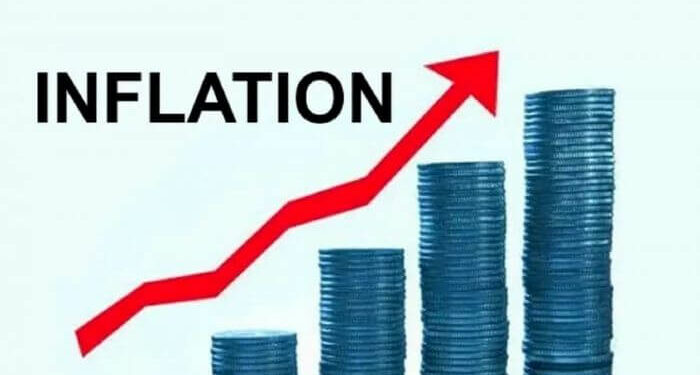
Nigeria’s cooling inflation era has hit a significant geopolitical roadblock. After nearly a year of steady decline, headline inflation is projected to climb for the second consecutive month, reaching 15.95 per cent in April 2026.
According to the Coronation Inflation Outlook released on Thursday, the disinflationary trend that began in March is expected to persist through the second quarter. This shift is driven primarily by a “structural risk premium” in global energy markets and localised food supply constraints.
The primary catalyst for the upward pressure remains volatility in the Middle East. With Brent crude averaging $127.45/bbl in April, the domestic impact has been immediate and sharp.
“The geopolitical oil shock that defined the March inflation release has not faded,” the report states. “For Nigeria, the transmission to domestic prices runs through higher PMS prices, which surged to an average of N1,322.50 in April from N1,208.38 in March, a 9.44 per cent increase,” it added.
This surge in fuel costs is already bleeding into the broader economy. The transport sub-index is expected to see further acceleration as “second-round adjustments to fares, logistics, and intra-city haulage rates feed through”.
While monthly food momentum showed a slight cooling as festive demand subsided, the year-on-year figures remain troubling.
Key staples like yams, cassava, and tomatoes continue to face upward price pressure, largely due to factors beyond the reach of traditional monetary policy.
“The persistence of these specific staples in the inflation basket points to structural supply constraints, particularly insecurity-related disruptions in key northern food basket states, that cannot be quickly resolved by monetary tightening alone,” the Coronation Inflation Outlook added.
Perhaps most concerning for policymakers is the “broadening” of price pressures. Core inflation, which excludes volatile farm produce and energy, firmed to 16.21 per cent in March. This suggests that the high costs of doing business are now being passed on to the service sector, specifically restaurants, accommodation, and education.
“Core inflation… is signalling a nascent broadening of price pressures beyond the more volatile components,” the report noted. “We forecast core inflation to edge higher in April as lagged energy cost pass-through filters into services prices.”
For the Central Bank of Nigeria’s Monetary Policy Committee, the data present a dilemma. Earlier hopes for a cycle of interest rate cuts in mid-2026 are now being revised. “For policy determination, the resumption of rate cuts we previously expected to start in Q3 2026 now looks materially harder to justify,” the report added. “The first plausible window for a further cut shift to September at the earliest.”
In the financial markets, the outlook suggests a “wait-and-see” approach. Analysts are currently favouring the front end of the yield curve, specifically 1-year T-Bills, over longer-term bonds. In the equities market, the recommendation remains defensive. “We expect investor preference for fundamentally strong and dividend-paying stocks to remain… as investors continue to seek inflation-hedged returns.”
As Nigeria navigates this “upside tilt” in the inflation trajectory, the nation’s eyes remain fixed on global oil benchmarks and the upcoming MPC meeting on 19-20 May, which will dictate the cost of borrowing for the remainder of the year.