

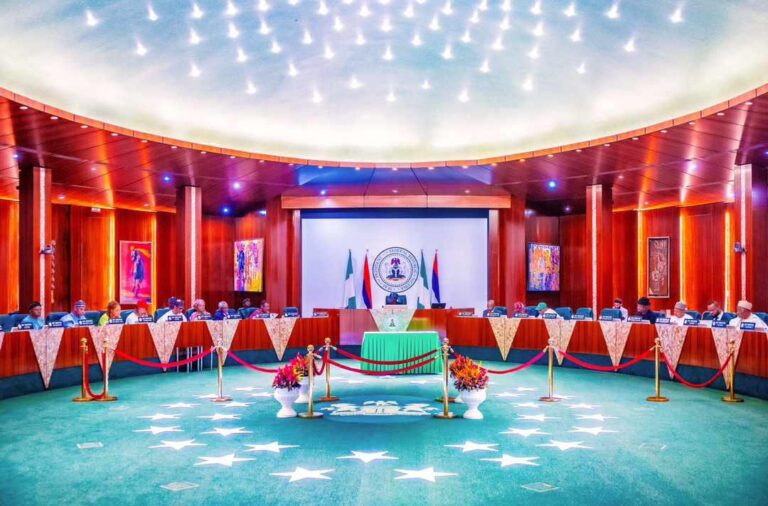
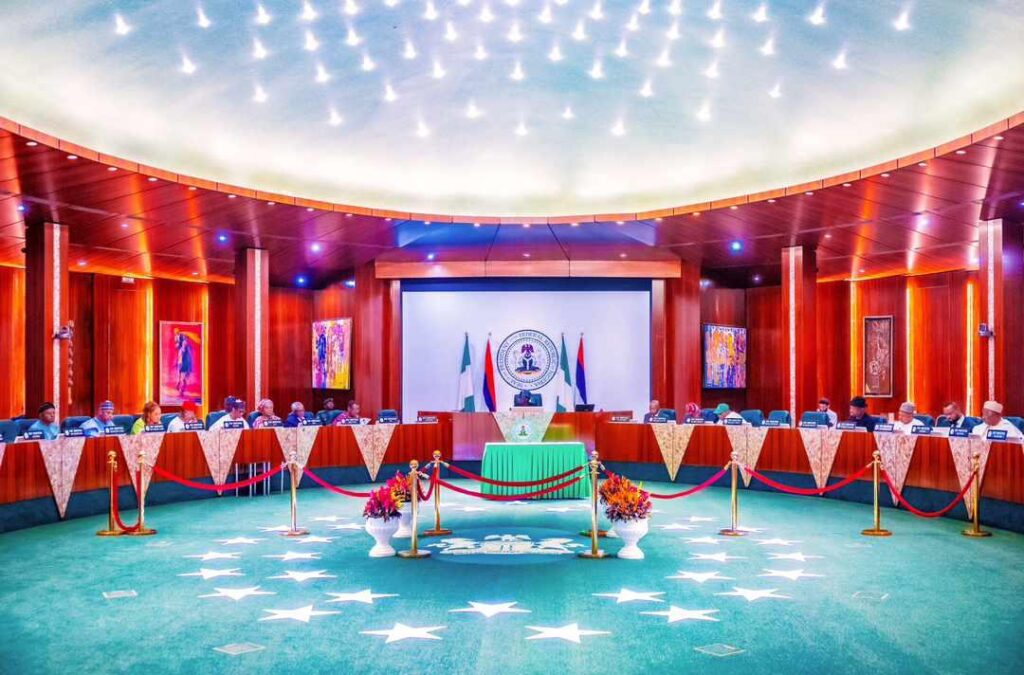
The Federal Executive Council has approved three strategic Public-Private Partnership projects aimed at strengthening Nigeria’s infrastructure base and unlocking economic growth across critical sectors.
The approved projects include the development of a Smart National Transport Data Bank under the Nigerian Institute of Transport Technology, as well as two Independent Power Projects at the Onne Port Complex in Rivers State and the Apapa Port Complex in Lagos.
The development was announced in a statement issued by the Infrastructure Concession Regulatory Commission through its Acting Head of Media and Publicity, Ifeanyi Nwoko, on Sunday in Abuja.
The approvals further reinforce the commitment of President Bola Tinubu to fast-track infrastructure delivery through private sector participation, strengthen economic efficiency, and promote sustainable national development.
The approvals followed regulatory oversight by the ICRC, which conducted the Outline Business Case review, guided due diligence and negotiations, and certified the Full Business Case in line with ICRC guidelines and regulatory framework before the projects were presented to the Federal Executive Council for approval.
Speaking on the significance of the approvals, the Director-General of the ICRC, Jobson Ewalefoh, said the projects represent a deliberate shift toward well-structured PPPs that unlock private capital while delivering measurable economic impact.
According to him, “Nigeria’s biggest transport challenge is not just infrastructure, it is the lack of reliable, usable data. What this administration has done with the approval of the National Transport Data Bank is to lay the foundation for a data-driven transport system that improves planning, enforcement, and overall efficiency across the sector.”
He explained that the Smart National Transport Data Bank under the Nigerian Institute of Transport Technology would serve as a nationwide digital backbone for transport intelligence, integrating real-time data across road, rail, air, and marine systems, while deploying technologies such as vehicle tagging and automated number plate recognition to support traffic management and enforcement.
Ewalefoh further noted that the project would improve the government’s ability to plan infrastructure investments based on evidence, reduce inefficiencies within the system, and unlock new revenue streams through automation and digital compliance.
On the approved power projects, the ICRC boss said the Onne and Apapa Port Independent Power Projects are critical interventions aimed at addressing one of the biggest constraints to industrial productivity — unreliable power supply.
“At Onne, the development of a 50MW power plant will provide stable electricity to the port and the Oil and Gas Free Zone, significantly reducing operational bottlenecks and supporting industrial activities in that corridor,” he said.
He added that the Apapa Port project, with a planned hybrid energy mix delivering about 36MW, would improve energy reliability within Nigeria’s busiest port environment, reduce energy costs for operators, and enhance the competitiveness of port operations.
“These are not just power projects; they are productivity enablers. When you fix power in these critical economic zones, you directly impact trade efficiency, reduce the cost of doing business, and strengthen Nigeria’s position as a regional hub,” he stated.
Collectively, the projects underscore a coordinated approach to addressing Nigeria’s infrastructure deficit through structured PPP frameworks, ensuring that investments in power and digital transport systems translate into tangible economic benefits for businesses and citizens.
The ICRC boss reaffirmed that the commission would continue to ensure that all PPP projects are structured in line with global best practices, with a clear focus on value for money, investor confidence, and the protection of public interest.
In a related development, the ICRC and the Federal Ministry of Art, Culture, Tourism, and the Creative Economy have commenced discussions on the development of major tourism infrastructure projects across Nigeria through Public-Private Partnerships.
The discussions followed a meeting between the Director-General of the ICRC and the Minister of Art, Culture, Tourism, and the Creative Economy, Hannatu Musawa, in Abuja.
Projects under consideration include a seven-star hotel infrastructure project, a modern concert and entertainment arena, the revitalisation of national museums for tourism and cultural purposes, as well as strategic collaborations with Netflix in film production, training, and creative industry development.
Speaking during the meeting, Ewalefoh assured the ministry of the commission’s readiness to support and fast-track viable tourism infrastructure projects capable of transforming the sector and boosting economic activities in the country.
“The Renewed Hope Agenda of President Bola Tinubu is heavily driven by infrastructure development, and tourism infrastructure is no exception. The Commission is committed to ensuring that all viable projects within the tourism and creative economy sector receive the necessary regulatory support required to move from concept to implementation within record time,” he said.
The ICRC DG added that the commission had significantly streamlined PPP processes to create a more investor-friendly environment capable of accelerating infrastructure delivery while maintaining transparency, due diligence, and regulatory compliance.
Speaking earlier, Musawa described infrastructure as central to unlocking Nigeria’s tourism and creative economy potential, noting that the sector could contribute as much as $100bn to the nation’s GDP by 2030.
According to her, Nigeria possesses the demographic strength and cultural capital needed to become a global tourism and entertainment hub, but critical infrastructure gaps continue to limit the sector’s growth.
“Nigeria is known for its music, fashion, and food, yet we do not have the infrastructure to host the world. Our people travel to other countries for major entertainment events, and that represents a huge loss of economic value for Nigeria,” she said.
The minister also stressed the need for world-class hospitality and entertainment infrastructure in Abuja and other major cities, expressing optimism that the collaboration with the ICRC would help actualise the administration’s vision for the sector.
The discussions further underscored the growing recognition that Public-Private Partnerships can play a critical role in addressing infrastructure deficits within the tourism sector and reposition Nigeria as a major tourism hub in Africa and globally.