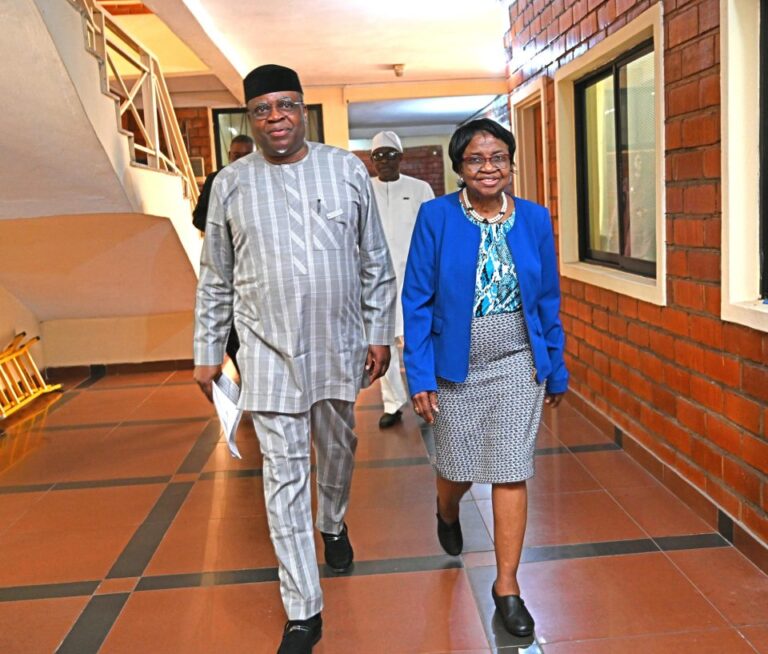


- Auditor-General: Deficient record-keeping fuels tax disputes, inheritance battles in Nigeria
Members of Nigeria’s Organised Private Sector (OPS) have criticised what they described as the poor and uncoordinated implementation of the Federal Government’s tax reforms during the first quarter of 2026, warning that the situation is hurting small and medium-scale enterprises (SMEs).
The OPS said findings from its assessment of the reforms showed that the promised tax harmonisation has yet to materialise, particularly at the state and local government levels, leaving many operators in the informal sector exposed to multiple taxes and levies. Nigeria’s tax reforms, signed into law in June 2025 and implemented from January 2026, were introduced through the Nigeria Tax Act 2025 and related legislation aimed at simplifying tax administration, boosting revenue generation and supporting small businesses.
The reforms consolidated several tax laws into a unified framework under a digital first tax system supervised by the restructured Nigerian Revenue Service (NRS). The new legal framework includes the Nigeria Tax Act (NTA), Nigeria Tax Administration Act (NTAA), Nigeria Revenue Service Act (NRSA) and the Joint Revenue Board Act (JRBA). As part of efforts to support SMEs, the reforms raised the exemption threshold for small companies.
Under the new law, small businesses are exempt from Companies Income Tax (CIT), Capital Gains Tax (CGT) and the newly introduced Development Levy.
Small companies are now defined as firms with annual turnover of N100 million or less, up from the previous N25 million threshold, and fixed assets not exceeding N250 million. Despite these incentives, OPS members said many small businesses were yet to experience relief from multiple taxation three months after implementation began.
The OPS coalition includes the Manufacturers Association of Nigeria (MAN), Nigerian Association of Chambers of Commerce, Industry, Mines and Agriculture (NACCIMA), Nigeria Employers’ Consultative Association (NECA), Nigeria Association of Small and Medium Enterprises (NASME), Nigeria Association of Small Scale Industrialists (NASSI), Lagos Chamber of Commerce and Industry (LCCI), Centre for the Promotion of Private Enterprise (CPPE), among others.
Speaking in separate interviews with New Telegraph in Lagos, a former President of the Lagos Chamber of Commerce and Industry, Babatunde Ruwase, and Chief Executive Officer of the Centre for the Promotion of Private Enterprise, Dr. Muda Yusuf, blamed state and local governments for delays in achieving effective tax harmonisation. Yusuf said enforcement and compliance remained weak at sub-national levels, particularly in the informal sector.