
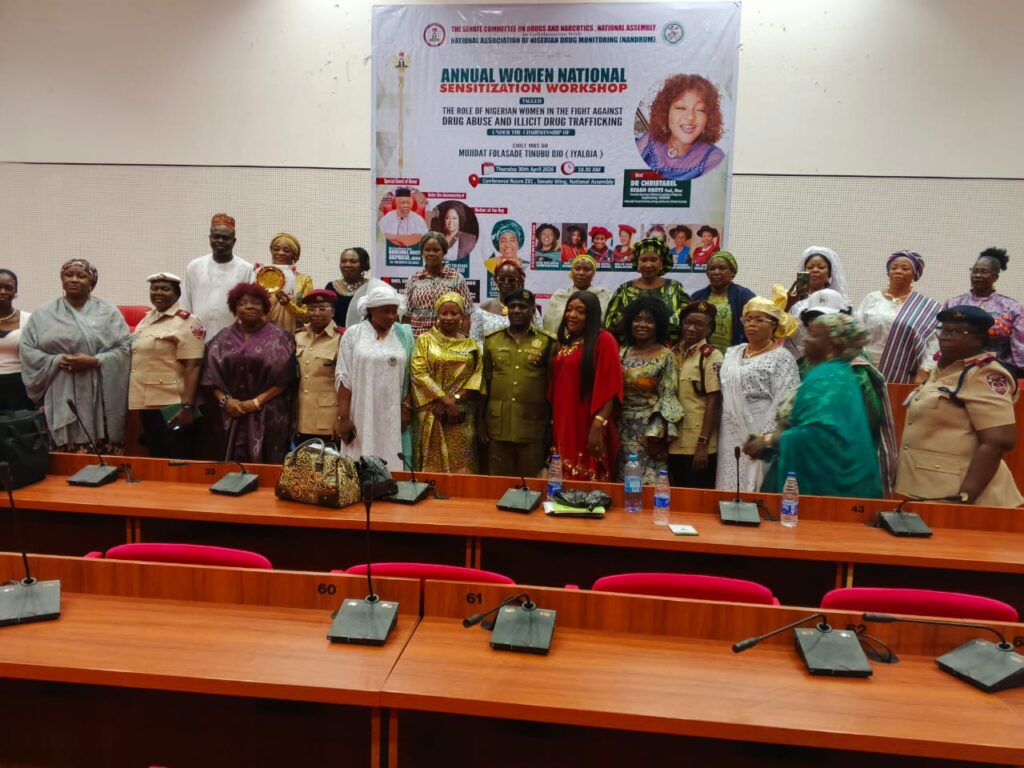
The National Assembly has challenged Nigerian women to lead the crusade against drug abuse, stressing that the country could not tackle the menace without leveraging the role of women in families and communities.
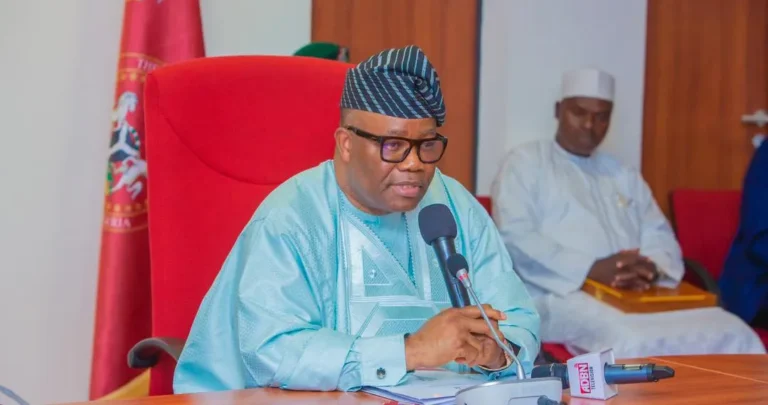
The Chairman, Senate Committee on Drugs and Narcotics, Senator Ibrahim Dankwambo, made the remarks at a workshop on the role of women in curbing drug abuse in Nigeria, which was held at the National Assembly Complex, Abuja.
The workshop, which was organised by the Senate Committee on Drugs and Narcotics, in collaboration with the National Association of Nigerian Drug Monitoring (NADRUM), is: “Role of Nigerian Women in the fight against drug abuse and illegal drug trafficking”.
Dankwambo, who was represented by the Clerk of the Committee, Isah Garba, said a comprehensive, community-driven approach was the sustainable solution, with women at the forefront of prevention efforts in communities.
He noted that women, as custodians of the home and first educators of children, are uniquely positioned to detect early signs of drug use and instil values that protect young people from substance abuse.
“Beyond the home, women also play critical roles in civil society, healthcare, education, and governance, where they influence policy and drive advocacy. Empowering women with knowledge, resources, and platforms is not optional; it is necessary,” he said.
Dankwambo pointed out that when women are equipped to lead prevention efforts, challenge the stigma around drug and substance abuse, and support rehabilitation and reintegration, entire communities become stronger and more aware.
Speaker, House of Representatives, Tajudeen Abass, represented by Chairman, House Committee on Drugs and Narcotics, Abass Adigun, said the war on drug abuse could not be won by law enforcement alone, stressing that it would take the collective efforts of all stakeholders in society to triumph over the enigma.
“It can only be won through the prevention, education, family support system, economic empowerment, and community resiliency,” he said, assuring that the House of Representatives was fully committed to measures toward mitigating drug abuse in Nigeria.
Abass also said that the House of Representatives had continued to support and advance intervention in key areas, especially in the area of governance review and institutional accountability.
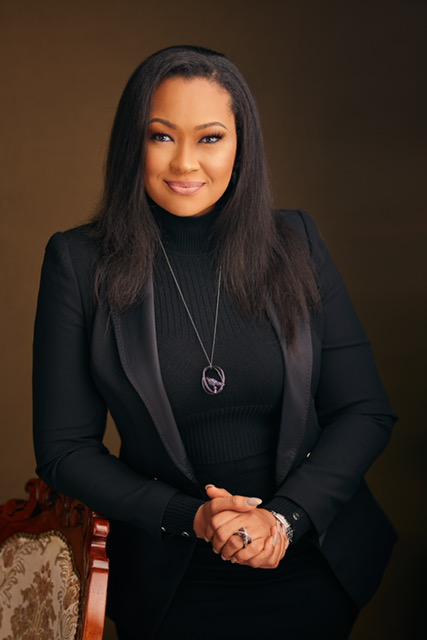
Earlier in her address of welcome, Convener of the workshop and Executive Secretary, National Association of Nigerian Drug Monitoring (NANDRUM), Dr Christabel Okoye, said that the presence of women’s associations reflects a shared national commitment to addressing the issue of drug abuse.
Dr Okoye described the menace of drug abuse as one of the most pressing social challenges confronting the nation, saying that drug abuse and illicit trafficking continue to cause serious threats to public health, family stability, community safety, and national development.
She said women as mothers, caretakers and caregivers, professionals and community influencers occupy a unique and strategic position in shaping values, guiding behaviours, and safeguarding the future of society.
According to her, the workshop was designed to harness the strength inherent in the leadership of Nigerian women by helping them to solve problems in mental health, in promoting prevention, advocacy, early intervention, and community-based solutions.
“Through collective engagement, we can amplify awareness, challenge harmful norms, and build resilience,” she said while encouraging participants to actively engage in the discussion, contribute ideas, and explore practical strategies that can be implemented within their reach to fight drug abuse.
Commenting on the theme of the workshop, the Commander, Narcotics in the National Drug Law Enforcement Agency (NDLEA), Shehu Lamuwa, enjoined Nigerians to desist from perceiving drug abuse from a personal standpoint, noting that the menace is a global problem.
Giving a statistical overview of the problem, Lamuwa hinted that 246 million people use drugs worldwide, out of which Nigeria makes up 14.5 million, as he noted that six million of the world’s drug users require help.
He also revealed that more than 700 Nigerians are on death row in Southeast Asia over drug-related offences. He also claimed that data available to him indicated that one in four drug users is a woman, while out of the estimated 39.5 million drug users worldwide, Nigeria contributes 7.5%.
The workshop attracted participants and representatives from the Nigeria Police Force (NPF), National Council of Women Societies (NCWS), the Federal Road Safety Commission (FRSC), the National Drug Law Enforcement Agency (NDLEA), the Academia, Civil Society Organisations (CSO) on drug abuse prevention, among others.