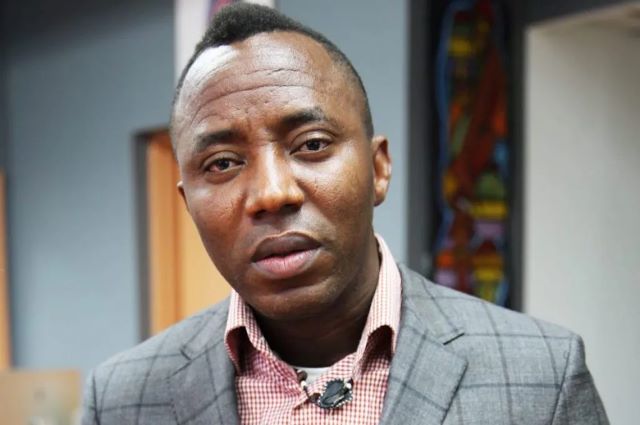
A human rights activist and 2023 African Action Congress (AAC) presidential candidate, Omoyele Sowore, has criticised Nigeria’s current electoral framework, describing it as structurally flawed, burdensome, and deliberately designed to suppress voter participation rather than enable credible elections.
Sowore made the remarks on Thursday during an exclusive interview on Frontline, a current affairs programme on Eagle 102.5 FM, Ilese Ijebu, Ogun State, where he argued that the existing electoral system has failed to reflect the true will of Nigerians in successive elections.
According to him, the electoral process is heavily bureaucratic and discourages active participation, particularly among rural voters and young people, who often face logistical and financial barriers to voting.
He said, “We should have a person who shows up at a polling unit who says, ‘ This is my NIN card and an additional ID, passport, driver’s license.
“You know, because a lot of people who register to vote don’t go back to collect their voter’s card because the process is too stressful. And then you have to go and borrow money to travel back to your village.
“If you’re in Lagos, you have to go to Anambra or Port Harcourt, risking road accidents or kidnapping or terrorist attacks. Most people will not go and vote. So it is their own systematic way of disenfranchisement of the majority”.
Sowore said the system, as currently designed, functions more as a tool of exclusion than democratic expression, insisting that reforms must go beyond incremental adjustments to address what he described as systemic disenfranchisement.
He maintained that the country has continued to operate outdated voting structures despite global technological advancement, arguing that Nigeria is long overdue for a transition to electronic voting.
He said, “It is their own systematic way of disenfranchisement of the majority through the Electoral Act, the cumbersome, bureaucratic and burdensome process of voting. So that’s the problem we have.
“The current voting process places unnecessary strain on citizens, many of whom are forced to travel long distances to participate in elections, increasing risks of insecurity and reducing turnout.
“We shouldn’t be talking about, like I say, my preference for the election is for Nigerians to be voting electronically. And I’m sure it’s possible.
“This is 2026, that we should be voting electronically, and that you don’t need to travel from Lagos to your village to go and vote”.
The AAC candidate insisted that modern electoral systems across the world have adopted digital solutions to enhance transparency and participation, questioning why Nigeria continues to lag behind in reforming its electoral infrastructure.
“And that is to say that one of the most resisted electoral acts in recent history is this particular Electoral Act, as you are aware. So, it wasn’t designed to deliver free and fair elections. It was designed to stymie, you know, it’s like throwing back the hand of the electoral clock. Whatever progress they might have made in ensuring transparent elections had been totally destroyed by the current Electoral Act.
“The fact that even the very little progress of sending election results to a portal had now become non-compulsory shows to you that they weren’t ready for the electoral act.
“But this is the problem when you appoint, or you elect people to represent you who have no capacity or the conscience or your mandate to represent you in places where laws are made”.
He also argued that voter apathy in Nigeria is not accidental but the result of a deliberately burdensome system that discourages participation, particularly among the youth population.
According to him, simplifying the voting process through technology would significantly increase turnout and reduce opportunities for manipulation.
Sowore further called for a broader restructuring of Nigeria’s political environment, arguing that meaningful electoral reform cannot be achieved without addressing the dominance of elite-driven political structures.
He maintained that existing political parties operate in ways that exclude citizens from real decision-making, insisting that new political formations must emerge from grassroots mobilisation rather than elite alliances.
Commenting on political coalitions, Sowore reiterated his rejection of current opposition realignments, describing them as recycled arrangements involving actors who have previously held power without delivering meaningful change.