
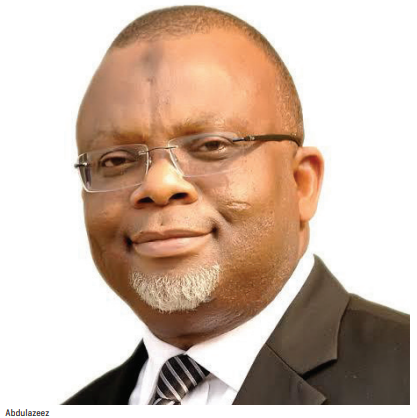


The Regional Head of Biometrics for West Africa at Identy.io, Dr Olalekan Olasiyan, has raised concerns over Nigeria’s identity gap, warning that millions of citizens remain outside the country’s digital identity ecosystem despite growing enrolment in the Bank Verification Number scheme.
Olasiyan on Wednesday said BVN registrations rose to 67.8 million as of December 2025, up from 63.5 million in 2024, reflecting a 6.8 per cent year-on-year increase.
However, he noted that the figures still fall short of covering Nigeria’s adult population, leaving a significant number of people, particularly in rural and informal sectors, unidentified.
“Despite the steady rise in BVN enrolment, millions of Nigerians remain outside the identity net, limiting their access to financial services and digital opportunities,” he said in a statement he personally signed.
Olasiyan stressed that the gap poses a major challenge to Nigeria’s ambition of building a robust digital economy, as trusted digital identity remains central to financial inclusion, service delivery, and economic participation.
“The strength of any digital economy hinges on the ability to uniquely identify citizens and residents. Without this, financial inclusion stalls, fraud flourishes, and access to services remains uneven,” he added.
The expert highlighted the implications of weak identity coverage on Nigeria’s financial system, pointing to rising fraud losses across digital channels. According to industry data, fraud losses surged to ₦52.26 billion in 2024 before declining to ₦25.85 billion in 2025 following improvements in identity verification and data standards.
“These figures clearly show that fraud is costly, but also that stronger identity systems can significantly reduce these risks when effectively implemented,” Olasiyan said.
He called for urgent efforts to expand Nigeria’s identity infrastructure to underserved populations, including rural communities, women, and persons with disabilities, noting that exclusion from identity systems directly translates to exclusion from economic opportunities.
Beyond financial services, Olasiyan said identity gaps also affect public service delivery, including access to healthcare, social interventions, and government programmes.
Nigeria’s Digital Public Infrastructure, anchored on the National Identification Number, has so far captured over 121 million residents.
However, he emphasised that reaching the remaining population, especially those in low-connectivity areas, remains critical.
“Identity systems must not only be secure but also inclusive. If millions remain excluded, the promise of digital transformation cannot be fully realised,” he said.
Olasiyan pointed to the need for more secure, privacy-preserving, and interoperable identity solutions, highlighting innovations from Identy.io. He explained that the company’s contactless, on-device biometric authentication technology allows for identity verification without storing sensitive data in centralised databases, reducing exposure to data breaches.
According to him, such solutions align with global standards and support Nigeria’s transition to the Modular Open Source Identity Platform (MOSIP), being implemented by the National Identity Management Commission with backing from the World Bank’s $430 million ID4D programme.
“A digital economy cannot thrive without secure authentication mechanisms that protect both institutions and citizens,” he said.
He further noted that adopting modern biometric systems could help reduce fraud, improve trust in digital channels, and enable financial institutions to extend services to previously excluded populations.
Olasiyan also highlighted the importance of technologies that can function offline and on widely available smartphones, particularly in rural areas where connectivity remains a challenge.
“Bridging Nigeria’s identity gap requires solutions that are not only secure but also accessible to people regardless of location or connectivity,” he added.
Providing a broader context, Nigeria has emerged as one of Africa’s leading digital economies, driven by rapid growth in fintech, mobile penetration, and digital services. However, experts warn that without a comprehensive and inclusive identity system, these gains could be uneven and unsustainable.
Olasiyan concluded that closing the identity gap is essential to reducing fraud, strengthening public trust, and unlocking the full potential of Nigeria’s digital economy.