


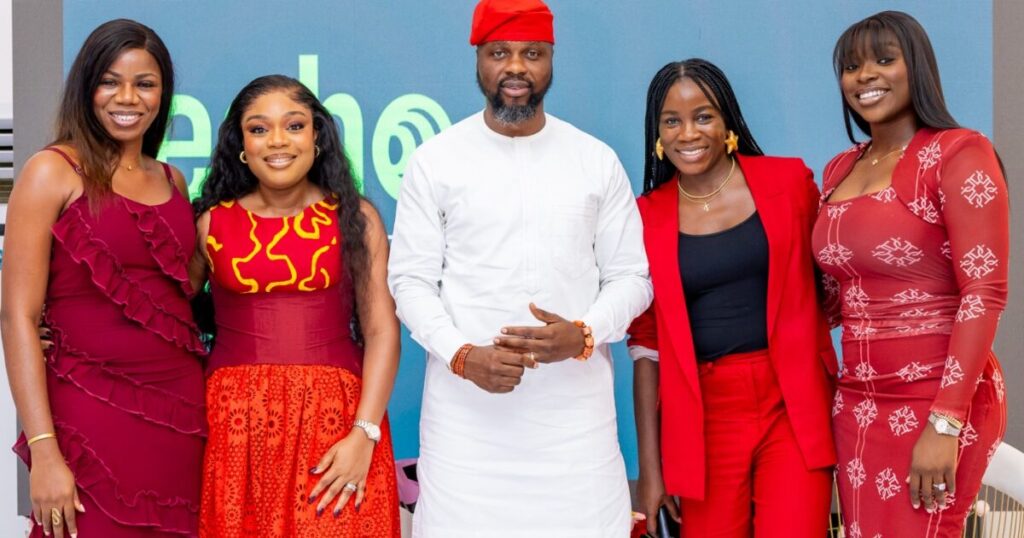
The ECHO accelerator, launched by Woof Studios, is seeking to professionalise Africa’s $30bn fast-growing creator economy by training digital content creators to build scalable and monetisable businesses.
Unveiled at an event in Lagos titled The Future of Africa’s Creator Economy, the programme brought together a cohort of creators alongside industry leaders from film, media and digital storytelling to address the widening gap between audience growth and sustainable income in the region’s creative sector.
The six-to-seven-week accelerator is designed to provide structured training in content strategy, distribution, audience development and monetisation, with a focus on turning informal creators into structured digital entrepreneurs.
Founder of Woof Studios, Adetutu Laditan, said the accelerator was designed to provide “hand-holding” for creators who often struggle to scale beyond social media platforms.
She said many creators require more than one-off events, adding that the programme was designed to offer structured guidance over several weeks, including frameworks for content packaging, distribution and growth strategy.
Laditan said the broader objective was to help creators understand how to move from simply producing content to building sustainable businesses.
She added that while the creator economy is increasingly accessible due to smartphone penetration and internet access, it has also become highly saturated, making structured support more critical.
According to her, the accelerator also reflects a commercial opportunity, allowing the company to identify and support emerging creators while helping them translate their output into revenue-generating models.
A central theme of the programme is the shift from reliance on social media platforms to building owned digital ecosystems.
The executive warned that creators are effectively “renting eyeballs” on platforms such as Instagram, TikTok and YouTube, meaning they do not control their audiences. She noted that algorithm changes or account suspensions could wipe out entire followings.
Instead, she encouraged creators to focus on building direct communities through tools such as websites, newsletters and product ecosystems, which can later be monetised through sales, partnerships or product development.
She said the goal is to help creators convert followers into communities that trust their work and are willing to support future products or services, whether in fashion, beauty, education or other sectors.
Industry stakeholders at the event also highlighted the broader economic potential of the creator economy in Africa.
Chairman of AW Network and Founder of Red for Africa, Adebola Williams, said creators are increasingly becoming historians shaping how Africa is represented globally. He stressed the need to invest in storytellers who will define future narratives about the continent.
He added that creators must adopt clearer strategies, focus on niche positioning and treat content creation as both a passion and a profit-driven enterprise. According to him, the global creator economy is valued at about $250bn, while Africa accounts for roughly $30bn, underscoring significant headroom for growth.
Williams said African creators could unlock more value by setting measurable targets and diversifying revenue streams, including content monetisation and brand partnerships.
The event also featured insights from participants such as content creator Oluchukwu Chiadika, who said the accelerator programme provides an opportunity to deepen skills in storytelling, monetisation and audience engagement.
She described the initiative as a structured learning environment that brings together creators and mentors, adding that it could be transformative for participants due to its focus on practical execution and business strategy.








