

Prominent Nigerians have weighed in into the worrisome drift of the country towards a one party rule ahead of the forthcoming general elections scheduled to hold in the first quarters of 2027 with a call on all stakeholders, particularly the President Bola Tinubu led government, to allow plurality of choice available to Nigerians.
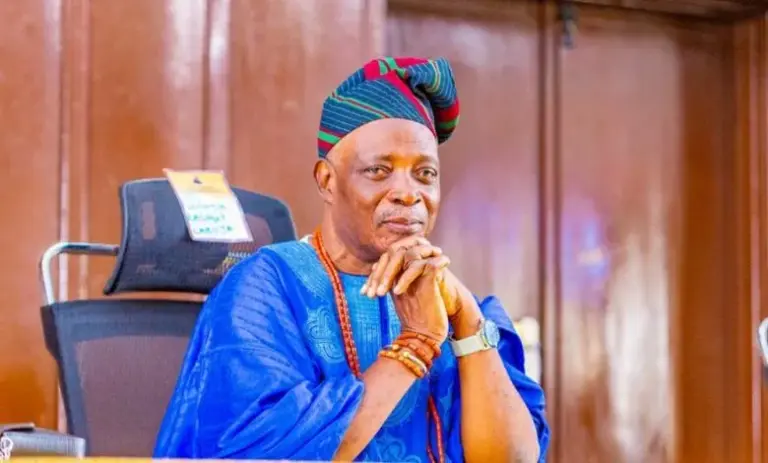
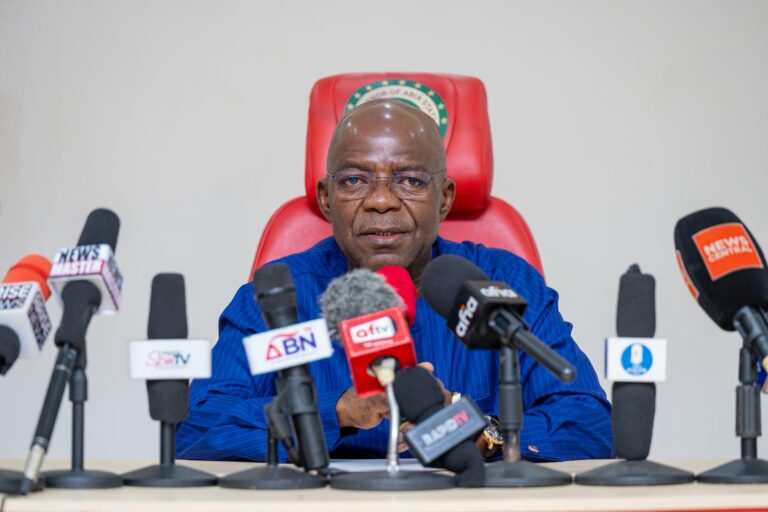
This is coming just as those who spoke maintained that the drift if allowed would portend immense dangers to the country’s aspiration to progress and develop as they argued that it would invariably lead to dictatorship. Those who spoke with Saturday Telegraph during the week included the Leader of the pan-Yoruba socio political group, Afenifere, Oba Oladipo Olaitan; the President General of Pan Niger-Delta Forum, (PANDEF), Ambassador Godknows Ighali and the National President of the Middle Belt Forum (MBF), Dr. Bitrus Pogu.
Others included a former President of pan-Igbo think tank, Aka Ikenga, Chief Goddy Uwazurike, human rights lawyer, Mr. Monday Ubani, SAN; and the Founder of Mission Against Injustice (MAI), Mr. Ige Asemudara. Commenting on the trend, Ubani expressed concern, warning that lack of credible opposition in the 2027 elections will signal a troubling erosion of democracy in the country.
Democracy is imperiled where choices are weak, compromised Ubani
In an interview with one of our correspondents, Ubani stated that the health of any democracy is not measured merely by the conduct of elections, but by the quality of choices available to the electorate during electioneering.
He noted that where such choices are weak, compromised, or non-competitive, democracy itself is endangered. Ubani added that the framers of the Constitution of the Federal Republic of Nigeria envisaged a plural political system in which power would be vigorously contested in the interest of the people.
The senior lawyer further warned that when opposition parties fail to present strong candidates or coherent alternatives, elections risk becoming mere formalities rather than genuine contests. According to him, this situation undermines the credibility of institutions such as INEC, not necessarily due to procedural failures, but because of deeper democratic deficiencies.
He outlined several consequences of the absence of credible opposition, including voter apathy. He added: “Opposition is not an inconvenience to governance; it is its essential companion. In every thriving democracy, opposition parties serve as a check on executive excesses, a source of alternative policies and ideas, and a platform for accountability and transparency.
“Recent political developments in Nigeria raise serious concerns about the erosion of credible opposition. Internal crises within political parties, defections driven by opportunism rather than ideology, and the weakening of institutional party structures have combined to produce a troubling scenario.”
More lawyers raise concerns The lawyers’ reaction was premised on the happenings in the two major opposition parties; the Peoples Democratic Party (PDP) and the Africa Democratic Congress (ADC). There are allegations that the problems in the two parties are being fueled by the ruling APC, all in a bid to be the sole party on the ballot paper.
A legal practitioner, Abiodun Olugbemide, said that, “This is nothing but an emergence of one party system, which poses significant danger to democracy. “One party system consolidates power, eliminates opposition, and fosters authoritarianism. With this around, there will be unchecked corruption, and suppressed political freedom, and weak accountability.
“Where there is no opposition party, democracy gradually degenerates into a military rule, and anarchy becomes the order of the day.” Another lawyer, Ngozi Igbo, noted that, “Nigeria’s democratic journey, since the return to civil rule in 1999, has been marked by resilience, contestation, and periodic institutional strain.
As the nation inches toward the 2027 general elections, a troubling contion parties, allegations of judicial compromise, and growing distrust in electoral management raise serious concerns about the future of democratic governance in Nigeria. “The fear that democratic institutions may be complicit, whether by design or default, is no longer a fringe opinion but an emerging mainstream anxiety. “A vibrant democracy thrives on a strong and credible opposition.
However, opposition parties in Nigeria have been engulfed in persistent internal crises characterized by leadership tussles, factions, and ideological inconsistency. “More troubling is the perception that some of these crises are externally influence allegedly orchestrated or amplified to destabilise opposition structures ahead of the elections. Whether factual or speculative, such perceptions erode public confidence in the political process.
“The judiciary, constitutionally vested with the responsibility of interpreting the law and adjudicating disputes, plays a pivotal role in electoral democracy. However, its increasing involvement in pre-election and post-election disputes has drawn criticism and suspicion. “The Independent National Electoral Commission (INEC) is constitutionally mandated to organise, undertake, and supervise elections.
Its credibility is therefore central to the legitimacy of any electoral outcome. “INEC must improve operational efficiency, ensure transparency in decision making, and fully implement technological innovations without compromise. “The warning signs are clear: if the current trajectory persists, Nigeria’s democracy faces a serious threat. The 2027 general elections will not merely be a contest for political power they will be a referendum on the integrity of democratic institutions.
Also reacting, another lawyer, Dr. Festus Akachukwu, warned that the possibility of having no major opposition party on the ballot during a presidential election would pose a grave threat to democratic governance in Nigeria. “Democracy thrives on competition, plurality of views, and the ability of citizens to make choices among alternatives.
If the electorate is left with only one dominant political option, the democratic process risks becoming a mere ritual rather than a genuine exercise in popular sovereignty. “The absence of viable opposition on the ballot could gradually push the country toward what is described as a “civilian authoritarian system.” While elections might still be conducted, the spirit of democracy where competing political parties present different policy choices to voters would be severely weakened.
Such a development undermines the constitutional vision of multiparty democracy as provided under the 1999 Constitution of the Federal Republic of Nigeria (as amended). “The presence of opposition parties plays a crucial role in holding the government accountable. Without a strong opposition, policies may go largely unchallenged, and public institutions may become susceptible to abuse of power.
Opposition parties provide alternative policy frameworks and serve as watchdogs that help maintain checks and balances within the political system.” Also reacting, another lawyer, Onesimus Ruya, submitted that, “the prospect of a presidential ballot lacking major opposition parties is a dangerous sign for Nigeria’s democratic future. Democracy without opposition is comparable to a courtroom where only one side is allowed to speak.
Such a scenario would deprive voters of meaningful choices and weaken the legitimacy of the electoral process. “Opposition parties are fundamental pillars of any democratic system because they provide alternative visions for governance and ensure that the ruling party remains accountable to the people.
Without credible opposition participation in elections, the process could begin to resemble a one-party state, even if technically multiple parties still exist. “The absence of strong opposition participation might also reduce voter turnout and deepen public apathy toward politics. When citizens feel that elections are predetermined or lack genuine competition, they may lose faith in democratic institutions. This loss of trust could, in the long run, threaten national stability and weaken the legitimacy of elected leaders.”
Politicians should properly organise themselves, says Igali
To stem the tide, Igali urged members of the coalition parties to properly organise themselves so as not to be used by the ruling party to cause disunity within their ranks. He acknowledged that the 1999 Constitution allows Nigerians to enjoy freedom of association. He however, said that the APC has not breached any portion of the constitution to cause internal crisis in some parties.
He added that, “It’s unfortunate that the police and politicians allow themselves to be used against each other. They should be given the opportunity to form a credible opposition. So the argument that they are being disorganised is not tenable. “This is because power is a game of one trying to outdo the other.
So if APC is using a wider rule within their party, they should resist it. For me, it takes two to tango. “If the opposition parties are well organised, the opposition politicians are peaceful enough, then the imposition of one party will not occur,” he said.
Igali further stated that “If the APC is using the law to depoliticise the political parties, then that’s a different matter but if two political parties are fighting each and some parties allow themselves to be used, it shows that the those political parties themselves are not serious. “But for any democracy to thrive, it’s always good to have political pluralism. People should have a choice of the good and evil, right and wrong.”
One party state scenario can’t happen but Nigerians should be proactive-Pogu
Pogu pointedly accused the ruling All Progressives Congress of orchestrating the crises in the various political parties, but maintained that the possibility of a one party rule remains farfetched. He however, urged Nigerians not to be complacent “The ruling party will certainly try to disorganise others and weaken them but that wouldn’t necessarily lead to a one-party state.
The only problem is the opposition. “They have to put their act right. People are so selfish. If not, why would somebody sell his birth right just because of stupidity? So the issue is the Nigerian behaviour has to change.”
Tinubu not disposed to free, fair poll, says Uwazurike
Uwazurike stated that the strength of a democratic country depends on who is the president and that if the president is inclined towards democracy, he will make sure that he upholds the basic tenets. He added that apart from freedom of expression and freedom of assembly that must be present in such environment, there must be the presence of freedom of the legislature and the judiciary.
“So, as it is today in Africa, you have to have countries like Ghana, where they are respecting democratic ideals. You have a country like Senegal but here in Nigeria, we had such a country up to 2015. “And since then, we have been practicing winner-takes-it-all in all its horrible ramifications.
As it is today in Nigeria, in 2026, there is no basic democracy in place. What we have is the fear of the president. “Are we going to have an independent legislature? Are we going to have an independent arbiter, like an electoral commission? Are we going to have a judiciary that is independent in word and deed? Today’s Nigeria is not disguising its intention to have a one-party state,” he said.
Beauty of democracy lies in healthy competition
Asemudara On his part, Asemudara believes that the beauty of democracy lies not just in periodic elections but also in the healthy competition, robust debates, unrestrained electioneering campaigns, and freely contested elections. He said that it is antithet- ical to democracy to have a one-party state or to create an atmosphere that tends to allow only a party to freely operate.
That, he said, will be reminiscent of the Fascist Italy under Benito Mussolini where only the National Fascist Party (PNF) was allowed to operate. He said: “It also brings to mind the haunting memory of the General Sani Abacha years where five political parties described by late Chief Bola Ige (SAN) as five fingers of a leprous hand, adopted Abacha as their candidate.”
For Asemudara, “the government of the day, especially INEC must allow free participation. It must allow a level playing ground. It must not use any unlawful underhand tactics to intrigue or distablise opposition parties. “Our democracy is deepened when opposition parties actually have a level playing ground. On the other hand, opposition parties must organise themselves. They must decisively deal with their internal issues not just trading blames or playing the blame game.”