
Nigeria has called for urgent global collaboration and increased financing to accelerate sustainable cooling solutions, warning that climate resilience, food security and economic productivity in developing countries depend heavily on access to efficient cooling technologies.
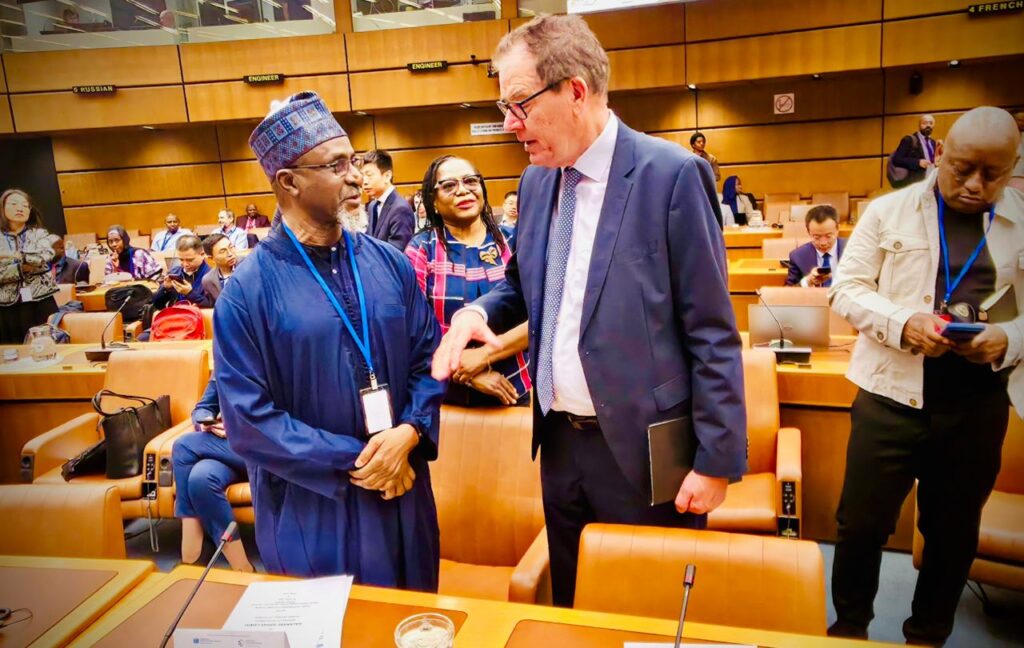
The Minister of Environment, Balarabe Abbas Lawal, made this call at the UNIDO Sustainable Cooling Forum held at the Vienna International Centre in Austria, while stating that sustainable cooling has become a critical pillar of climate action and economic development.
The forum, organised by the United Nations Industrial Development Organisation at the Vienna International Centre, brought together global stakeholders to explore practical solutions for climate-friendly cooling technologies.
Lawal emphasised that sustainable cooling goes beyond environmental protection, noting that it plays a vital role in food preservation, healthcare delivery and industrial productivity, particularly in developing nations like Nigeria.
“Sustainable cooling is vital not only for climate mitigation, but also for food security, public health, and economic productivity. Achieving this transition requires not only technology, but also skilled human capital, strong institutions, and sustained collaboration,” he said.
The minister highlighted Nigeria’s ongoing efforts to transition to environmentally friendly cooling technologies, including investments in technical capacity, improved education systems and strengthened institutional frameworks aligned with the Montreal Protocol and Kigali Amendment.
He also pointed to Nigeria’s updated climate commitments under the Nationally Determined Contribution 3.0 submitted to the United Nations Framework Convention on Climate Change.
A major milestone, according to the minister, is the implementation of the Nigeria Cooling Action Plan (N-CAP), which outlines a roadmap for adopting energy-efficient, low global warming potential cooling technologies in partnership with UNIDO and other development partners.
Despite the progress, Lawal stressed that financing gaps, limited access to technology, and workforce development challenges remain major barriers, particularly for developing countries.
He urged governments, industries, financial institutions and development partners to strengthen collaboration to accelerate the transition.
“This Forum provides valuable opportunities to exchange knowledge, strengthen partnerships, and accelerate collective action,” he said, reaffirming Nigeria’s commitment to climate protection and sustainable development.
The minister further noted that advancing sustainable cooling would improve quality of life, enhance economic resilience and support global climate goals.
The forum is expected to produce actionable outcomes aimed at scaling sustainable cooling solutions worldwide.