

Transgrid Enerco Limited and Decentralised Energy Limited have signed a strategic collaboration agreement aimed at addressing persistent electricity shortages in Lagos, marking a significant private-sector intervention in Nigeria’s struggling power industry.
The deal, announced in a statement on Monday by Decentralised Energy, comes after President Bola Tinubu approved a N3.3tn payment plan to stabilise Nigeria’s electricity sector and improve power supply by settling longstanding debts across the power value chain.
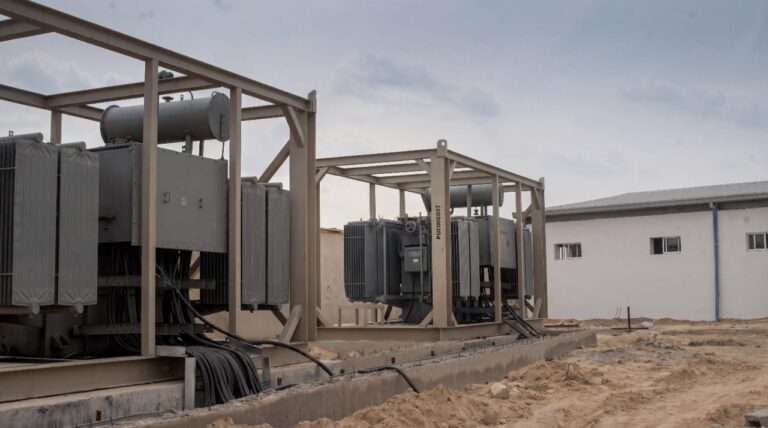
The partnership, supported by credit enhancement from InfraCredit, seeks to deploy integrated embedded power solutions designed to bypass recurring failures in the national grid and deliver round-the-clock electricity to high-density commercial districts, including Marina, Lekki Phase 1, Ikoyi, and Victoria Island.
The Chief Executive Officer of Decentralised Energy, Habeeb Alebiosu, said the partnership was the culmination of a journey that began in 2011, attributing the breakthrough to a mix of rigour, resilience, and providence.
“This transaction changes the landscape,” he said. “We always knew collaboration was at the heart of everything we wanted to do,” Alebiosu stated.
He highlighted that the union of distribution infrastructure and integrated power producers is the only way to achieve the scale needed to bring down electricity pricing for the end consumer.
“It moves things forward for both the consumers and starts to entrench a disciplined approach to deployment that makes investors confident.”
The deal utilises a project special purpose vehicle to bridge the value chain gap that has historically plagued Nigerian DisCos. DEL, an investee company of the Anergi and Viathan Groups, combines decades of operating expertise with a formidable network of strategic investors, while Transgrid, a core investor in Eko Electricity Distribution Plc, brings its distribution footprint to the table, creating a “high-level convergence” that InfraCredit believes will signal a new era of bankable, sustainable energy for Nigeria.
Chairman of Transgrid Enerco Limited, Olubunmi Peters, stated, “You cannot continue to do things the same way and expect a different result,” he remarked.
“We want to reduce the genset as much as possible. This transaction is a game-changer because embedded power will bring value that people will key into when they know they can pay less for 24/7 service.”
Peters further urged investors to see the power sector as a destination for long-term “equity development” rather than short-term gains. “It’s not going to happen overnight, but this deal ensures that within the axis it runs, we continue to expand gradually.”
The initiative is bolstered by a credit enhancement facility from InfraCredit, which has been instrumental in mobilising long-term local currency financing. By mitigating risks, the partners hope to create a “scalable and replicable” model that can be exported to other states struggling with grid reliability.
The Chief Executive Officer of InfraCredit, Chinua Azubike, said the biggest competitor in the room wasn’t another power company, but the ubiquitous diesel generator.
“The competitor is the genset. You are displacing the diesel genset,” Azubike stated, emphasising that the project aims to tap into the estimated 50 gigawatts of power currently generated off-grid by Nigerians.
“To do that, you need someone who understands how to serve that customer better. This is signaling that there is a potential for a sustainable, cost-reflective, viable energy sector.”