

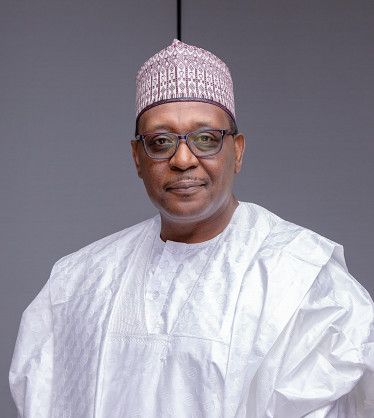
The Coordinating Minister of Health and Social Welfare, Prof. Muhammad Pate, has warned that future pandemics are inevitable, urging Nigeria and its partners to sustain investments in preparedness to prevent devastating global health crises.
Pate said waiting until outbreaks spiral into full-blown emergencies would prove costly, stressing that countries must adopt proactive strategies anchored on resilient health systems, strong public health institutions and trained personnel.
Speaking at a high-level public health symposium on pandemic preparedness and response with insights from China and Nigeria on Monday in Abuja, the minister highlighted the persistent threat of infectious diseases, citing recent scientific findings in Nigeria that revealed exposure to deadly pathogens, including influenza, Ebola and coronaviruses.
“That brought home the risk that we constantly face,” he said, stressing the strong link between human health, the environment and animal populations, as he explained that pandemics evolve gradually if not contained early.
He said: “Pandemics do not start overnight; they start from an outbreak and grow until they cover the entire world.”
Pate added that history from the Spanish flu to the COVID-19 pandemic shows how infectious diseases repeatedly disrupt societies and economies.
While noting that pandemics go beyond public health emergencies and pose broader national and economic threats, the minister pointed to the massive economic losses recorded globally during COVID-19 and the disruption of economic activities in Nigeria during the 2014 Ebola outbreak.
“It is not just a purely public health issue; it is an economic security issue and also a national security issue. Preparedness must be continuous, must be proactive, and we must invest in it.”
Pate, who stressed that sustained preparedness must remain a national priority, commended the Nigeria Centre for Disease Control (NCDC), for coordinating national responses to health emergencies.
He also underscored the need to strengthen community trust, local production of medical supplies and the protection of frontline health workers.
According to him, frontline health workers were the lifeblood of a response, as he revealed that nearly 79,000 health workers have been retrained in recent years to strengthen Nigeria’s emergency response capacity.
Pate further called for stronger investments in research, innovation and digital health systems to position Nigeria as a contributor to global knowledge rather than merely a consumer.
“We do not have to be net consumers of global knowledge; Nigeria can be a contributor,” he said, while stressing that global collaboration remains vital, including learning from China’s response to COVID-19.
Warning stakeholders against complacency, he said decisive action must be taken on lessons learned from past outbreaks.
“It is not a matter of if, but when. Preparedness must remain science-driven, collaborative and sustained.”
The Minister of State for Health and Social Welfare, Dr Iziaq Adekunle Salako, also warned that the world must remain alert to future outbreaks.
“Pandemics are one of the most disruptive and brutal killers in human history, and the world must always be prepared for them. The next global outbreak is not if but when.”
Reflecting on the COVID-19 pandemic, which claimed more than seven million lives globally, Salako said the crisis exposed major weaknesses in health systems across the world.
“It reminded us that infectious diseases know no borders and revealed that even the wealthiest nations could be brought to their knees.”
He added that poorer populations bore the greatest burden despite global efforts to mitigate the crisis.
Salako, however, noted that Nigeria demonstrated resilience during the pandemic, saying, “Nigeria fared reasonably well, despite its weak health system.”
Salako attributed the outcome to coordinated national response, leadership and support from development partners, alongside innovative and improvised strategies.
He added that both Nigeria and China have valuable experiences to share with the world on managing future health emergencies, “Our two countries therefore have a lot to learn from each other and to teach the world.”
He urged stronger collaboration, improved surveillance systems and a whole-of-society approach to pandemic preparedness.
The World Health Organisation (WHO) Country Representative in Nigeria, Dr Pavel Ursu, stressed that international cooperation remains essential in responding to global health threats.
“No country, regardless of its strengths, can face global health threats alone,” he said, noting that pathogens often spread faster than the policies designed to contain them.
He emphasised that early detection, transparency and data sharing remain critical tools in limiting outbreaks, saying, “Preparedness saves lives._
Ursu explained that countries with stronger health systems and coordinated emergency response structures were better positioned to manage the COVID-19 pandemic.
He also highlighted ongoing global efforts to strengthen pandemic response frameworks, including negotiations on a global pandemic agreement.
“The pandemic accord is a global commitment to solidarity, trust, and collective security,” Ursu added, as he stressed the importance of equitable access to vaccines, diagnostics and treatments during future outbreaks.
Also speaking, the Ambassador of the People’s Republic of China to Nigeria, Yu Dunhai, called for deeper bilateral cooperation to address emerging global health threats, as he cited increasing risks from virus mutations and cross-border transmission.
“The threat of infectious disease remains complex and severe. China attaches great importance to cooperation with Nigeria in the public health sector and stands ready to work together.”
The Ambassador, who emphasised mutual benefit and shared development, added that stronger cooperation in scientific innovation and health systems would boost preparedness capacity.
“Strengthening practical cooperation carries both immediate and long-term significance,” he said.