

The Permanent Secretary of the Federal Ministry of Youth Development, Dr Maryam Keshinro, has announced that Nigeria is shifting away from “cup-in-hand” diplomacy in response to changes in the global landscape.
She noted that the country was moving toward a high-tech, value-based partnership that focuses on harnessing the immense potential of its youth population.
She stated this while speaking on the theme “Nigerian Youth Development and Contribution to the New World Order” at the 2026 quarterly business meeting and honorary membership conferment, organised by the Nigeria-Vietnam Chamber of Commerce and Industry in Lagos on Friday.
She underscored that Nigeria was no longer seeking handouts but strategic collaborations in artificial intelligence, robotics, and agro-processing.
“We are no longer going with a cup in hand to beg for funds. We’re asking for trade and collaboration. This is not the era of dependency on assistance. Aid creates asymmetry, trade creates equity.
“Nigeria is not looking for handouts. We are looking for partners. And Vietnam’s economic trajectory from a post-colonial nation to a manufacturing hub for the world mirrors the ambition we hold for Nigeria. We seek to learn from your model of export-led growth, agro-processing, and special economic zones,” Keshinro enunciated.
According to the permanent secretary, the traditional concentration of economic power in Western capitals is giving way to a “multi-polar world order”, where South-South cooperation is becoming the imperative.
“Strategic alliances are defined less by historical colonial ties and more by mutual economic interests,” Keshinro noted, adding that with Nigeria serving as the anchor of West Africa and Vietnam as a stellar example of South-East Asian growth, the two nations are leveraging unique strengths: Vietnam’s manufacturing prowess and Nigeria’s massive market size and energy resources.
She highlighted that while many developed nations grapple with ageing populations, Nigeria’s “wellspring of youth”—with a median age of just 19—is being framed as its greatest geopolitical force.
The permanent secretary warned, however, that this demographic is a “ticking time bomb” unless the education system evolves. She shared a personal motivation for pushing this partnership forward, recalling a 2003 attempt at Nigeria-Vietnam ties that had stalled.
“I am ready to go the whole length,” the Secretary declared. “Anything that will make our youth independent. Take them off the street. Take them off terrorism. Take them off drugs. Give them a hope of having a family… I’m ready to go for it,” she enthused.
Delivering a goodwill message, the Director-General of the Nigerian Institute of International Affairs, Prof Eghosa Osaghae, who was represented by the institute’s Director of Studies, Mrs Chinasa Ohiri, said Nigeria’s youth must be seen as “critical actors shaping the future of nations” rather than passive beneficiaries of policy.
“Nigeria, with one of the largest youth populations in the world, stands at a strategic crossroads where the empowerment, education, and engagement of its youth will determine the trajectory of national development and global relevance,” she said.
The NIIA DG stressed that youth development was central to Nigeria’s foreign policy and economic diplomacy, noting that young Nigerians were already making strides in entrepreneurship, digital innovation, creative industries, agriculture, and international trade.
He added that collaboration with Vietnam could provide “valuable lessons in youth-driven economic transformation, vocational training, and export-oriented industries that can transform a developing country into a competitive global player within a generation.”
On his part, the representative of the Small and Medium Enterprises Development Agency of Nigeria’s Director-General, Deputy Director, Partnership, SMEDAN, Dr Bunmi Kole-Dawodu, highlighted practical steps the agency was taking to support small businesses and youth entrepreneurs.
He explained that the agency had established Common Facility Centres where small business owners could access modern equipment at minimal cost.
“In Abuja, for example, we have a CFC for fashion designers with modern sewing and weaving machines. Designers can use the facilities without the burden of buying expensive equipment or renting large workspaces. This reduces production costs and boosts output,” he said.
He revealed that SMEDAN planned to replicate such centres across all 36 states and Abuja, covering sectors like food processing and packaging.
“Our target for 2026 is youth, particularly. We train them in ICT and digital marketing, and provide equipment. Some will even be sent abroad to deepen their knowledge in areas useful to Nigeria’s economy,” he added.
He stated the agency’s resolve to partner with the Nigeria-Vietnam Chamber of Commerce and Industry to empower youths in the country.
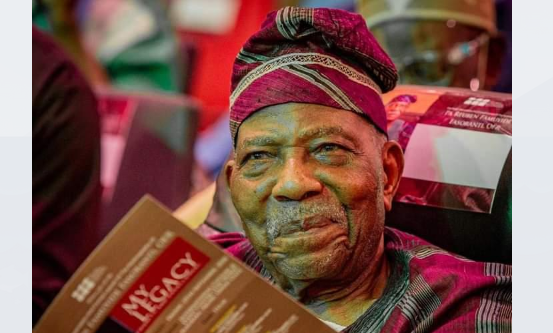
The event also honoured an elder statesman, High Chief Tunde Fanimokun, for his philanthropic contributions to the development of the country, especially the youth.
In his response, the former permanent secretary in Lagos State noted, “I thought I should give back to society some of the benefits the Almighty had given me,” he said, emphasising his desire for a low-profile event attended only by those “very special” to him.
Looking toward the future, he remained convinced that his path was guided by a higher power. “When you are on a good mission, you are directed by God Almighty,” he concluded.