

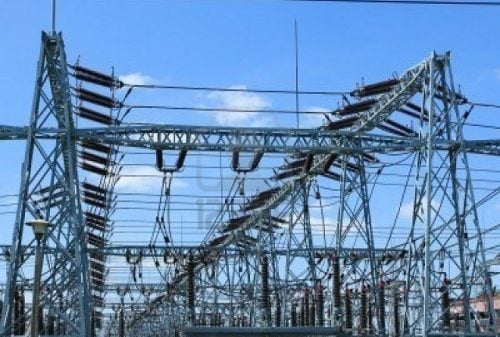
As Nigerians endure several weeks of blackout, power generation companies have accused the distribution companies of deliberately rejecting electricity load allocations, resulting in heavy financial losses to the sector.
In an interview with The PUNCH, the GenCos said that though there are gas shortages resulting in reduced power generation from thermal plants, DisCos are also rejecting the little being generated by the GenCos.
However, the DisCos declared that they could only pick up power transmitted to areas where they could sell it and make money.
The Chief Executive Officer of the Association of Power Generation Companies, Joy Ogaji, told our correspondent that there were times the system operator asked GenCos to reduce their outputs because the DisCos were rejecting load.
Asked if the thermal plants are getting gas from their suppliers, she replied, “DisCos are not taking load; hence, there is high frequency.” Ogaji confirmed that the gas situation was not the only problem responsible for the current low power supply, arguing that the DisCos’ load rejection contributed to the current outages.
According to her, the average power generation figure in January was 4,541 megawatts, while stranded power during the same period was 2985MW. In February, average generation was 4,218MW, out of which 3,274MW were not picked.
According to Ogaji, Nigeria has 30 power plants with an installed capacity of 15,500 megawatts. Out of this, GenCos can only make 7,000MW available, but the transmission company and the DisCos can off-take just 4,000MW. This, she said, resulted in billions of losses to power producers.
Speaking further, she said, “We have 30 power plants that are grid-connected. The 30 are on the grid. All of them put together have an installed capacity of 15,500MW. Out of the 15,500MW, because of the huge debt owed to the GenCos, the GenCos can only make 7,000MW available. Out of the 7,000MW they are making available, the DisCos and transmission can take just between 4,000MW and 4,500MW since 2013 till now.”
According to her, power generation remains abysmally low because the transmission and distribution capacity is still low. “Don’t mind all the stories we are hearing that the transmission company can transmit 8,000MW and distribution companies can distribute 6,000MW,” she said, challenging the Transmission Company of Nigeria and the DisCos to prove the capacity being declared in the media.
DisCos kick
Operators in the power distribution arm of the business, who spoke with our correspondent in confidence due to the lack of authorisation to speak on the matter, said they were not to blame for load rejection. The operators said DisCos reject load due to an inefficient transmission system.
“Between the GenCos and the DisCos, is there no transmission? And if you are the DisCo and I’m the transmission, don’t you have the right to tell me where you want your load to be taken to? If I dump it where you don’t want it, will you accept it?
“You want your load in Magboro, but I could not move it there; on my way from Ibadan, I decided to dump it at Sagamu Interchange. Will you accept that? No, you won’t! That’s the same analogy,” an operator said.
Another DisCo official argued that only a “foolish” businessman would want to reject an electricity load that would give him money.
“But if a transporter dumps my load midway and I don’t have the capacity to wheel it myself, you don’t expect me to pay for that. We cannot be saying the same thing, repeating the same argument of 12 years ago now. This is 2026. We should be talking about progress.
“Remember that DisCos are business people. We also want to sell our products. We want to make money. How can I reject loads that will give me money? There is a difference between load rejection and load dumping. She is talking about load dumping, but making it look like load rejection. They are two different things.
“Load dumping is when you go and dump the load where the DisCos do not want it and where they cannot even collect it.
They should take it to where we can make use of it. The end users are waiting. My customers want light. My job is to provide them with electricity. So load dumping is not a good thing. We do not engage in load rejection, at least not now. Not when we need electricity, but we will reject the one that is dumped, not the one that is brought to us when we agree that this is where we want it,” the operator stated.
The DisCos said they do not agree with the sentiment that they should want electricity everywhere, asking if any trader can sell a product where there is nobody to pay.
The CEO of the Association of Nigerian Electricity Distributors, Sunday Oduntan, said the association would not join issues with stakeholders in the value chain. Oduntan maintained that ANED has been advocating that GenCos’ debt should be paid, saying it would not be proper to put any blame on the DisCos.
“DisCos are not going to join issues with any of the stakeholders within the value chain. ANED is interested in solutions, and we are proffering solutions. And that is why we feel that we should join hands with the government to find solutions. When there are no more bottlenecks, there will not be any load rejection or load dumping.
“Bottlenecks lead to load dumping. Load dumping becomes load rejection by way of allegation. But in reality, it is load dumping. You don’t dump load where people don’t need it,” Oduntan said, corroborating the views of the earlier DisCo operators.
Oduntan, who refused to apportion blame, said the newly established Grid Asset Management Company would right the wrongs in the power sector, saying no one should blame the TCN.
TCN explains
In its explanation of load allocation to the DisCos, the Transmission Company of Nigeria blamed multiple factors for low allocation, including generation companies’ output and requests by the DisCos. TCN said electricity load allocation to distribution companies is determined mainly by their daily requests.
In a post shared on its social media handles, the transmission company explained the methodology used in allocating available electricity to distribution companies.
According to TCN, the Nigerian Electricity Regulatory Commission’s Multi-Year Tariff Order guides the power sector in the load allocation formula to electricity distribution companies by sharing the total volume of power generated by the GenCos on a ratio based on their customer base.
It added that the volume of electricity accepted by the DisCos on the previous day also plays a role in determining subsequent allocations. The TCN stated that DisCos nominate the quantity of power they require a day ahead, a process that helps system operators determine the amount of electricity to be delivered to each company.
“The DisCos nominate the quantum of power they would want a day ahead. This also helps in determining the quantum of electricity delivered to them. When TCN supplies the bulk electricity to the DisCos, the DisCos, in turn, serve the electricity customers within their franchise areas,” TCN said.
It added that “electricity apportionment within DisCos’ franchise areas depends on the discretion of each DisCo”.