



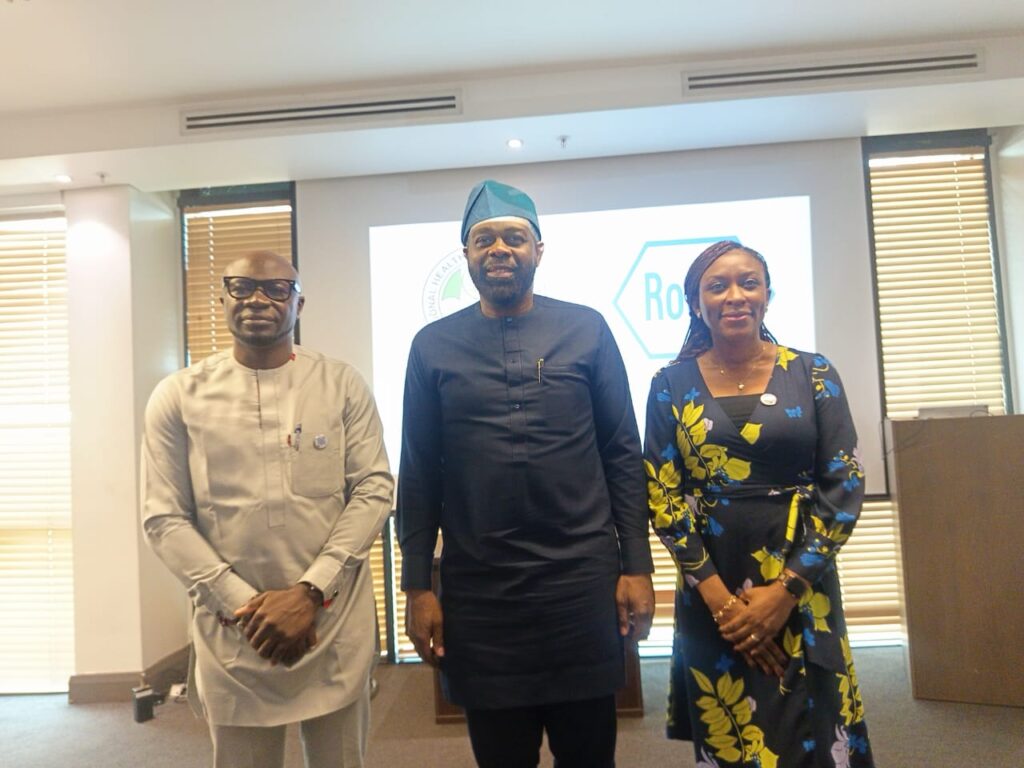
In a move to accelerate Universal Health Coverage (UHC) in Nigeria, Roche and the National Health Insurance Authority (NHIA) have deepened their partnership through the launch of the Health Innovation Leadership Academy (HILA), a capacity-building initiative designed to expand health insurance coverage and strengthen leadership across the sector.
Held in Lagos, the programme signals a decisive shift from passive healthcare administration to a proactive, “enrollee-first” model that prioritises access, affordability, and quality care for Nigerians.
Speaking after the Academy session, NHIA Director-General Kelechi Ohiri declared that the agency is entering a new era of reform driven by innovation and accountability.
“This programme is an invitation to embrace the unknown and see every constraint as an opportunity for creative solutions. By the end, participants will not only refine their leadership voice but also develop implementation-ready ideas to deliver on NHIA’s vision,” he said.
The establishment of HILA responds to a critical gap in Nigeria’s health system: the need for strong, innovative leadership capable of driving complex reforms. With over 200 million Nigerians and only about 21.7 million currently covered by health insurance, scaling access requires not just policy—but people with the right mindset and tools.
The Academy equips NHIA’s top management with skills to rethink systems, improve service delivery, and fast-track enrolment through data-driven and people-centred strategies. It also fosters a unified “One NHIA” culture, ensuring all departments work cohesively toward UHC.
Nigeria’s health financing landscape has long left millions vulnerable, with many citizens just one illness away from financial ruin. Through this partnership, NHIA and Roche aim to change that narrative.
For Roche, the collaboration goes beyond corporate responsibility—it is a strategic investment in Nigeria’s future. Acting General Manager, Bolarinwa Oyedeji, emphasised that a healthy population is essential for national prosperity.
“When our health systems get smarter, families stay strong, and the nation grows wealthier. Healthcare is not a cost—it is an investment in human capital,” she said.
She noted that the Academy was designed to help leaders “unlearn, relearn, and innovate,” ensuring they can translate ideas into real-world impact. The initiative also addresses growing health challenges, including non-communicable diseases like cancer, diabetes, and heart disease.
Ohiri likened health insurance to a safety net: “Wearing a seatbelt doesn’t mean you’re looking for an accident—it protects you if something happens. Insurance is financial protection. It ensures you don’t have to sell everything or delay treatment when illness strikes.”
Already, targeted interventions such as cancer care partnerships, fistula treatment programmes, and emergency maternal services are demonstrating impact—saving lives while shielding families from catastrophic health expenses.
For the average Nigerian, the benefits of this partnership are far-reaching. Increased awareness, simplified enrolment processes, and improved service quality are expected to drive trust and participation in health insurance.
More importantly, expanded coverage means fewer out-of-pocket expenses, earlier access to treatment, and reduced poverty caused by medical bills.
The Academy also prioritises equity—ensuring vulnerable populations are not left behind—and sustainability, by strengthening domestic financing and collaboration with private insurers and state agencies.
With a strategic focus on expanding coverage, improving quality, ensuring equity, and promoting sustainability, NHIA is positioning itself as a central driver of healthcare transformation in Nigeria.
Participants of the Academy are expected to roll out innovative action plans in the coming months, translating ideas into measurable reforms that will accelerate UHC.
As Ohiri noted,
“Insurance is not about inviting illness—it is about preparing for it. It protects your health, your finances, and your future.”