



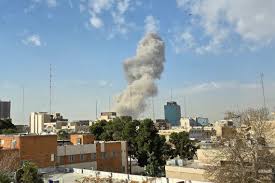
Spiralling global energy costs hike, coupled with logistics and supply chain disruptions fuelled by the ongoing Middle East crisis, following the United States, Israel and Iran war, could be spelling a doom for Nigerian businesses in both short term and long term as local manufacturers and other businesses commences the optimisation of operations to cushion the multiplier effects on production.
Specifically, Saturday Telegraph has authoritatively gathered from Nigerian businesses that the spiral high costs of energy, logistics and raw material are forcing them to begin the lay-off of some not essential workers from their duties and also, commences workers’ duties shifts as parts of the plans to overcome the current volatilities which, according to them, have resulted in a tightening squeeze on margins, declining profitability and rising business vulnerability, particularly in consumer-facing sectors.
The paper also discovered that logistics disruption alone has caused dire debilitating consequences on availability of raw materials for production. Many of them, according to findings, couldn’t afford the hike being charged for shipping insurance freight costs by shipping companies, thereby resulting in swollen unsold inventory goods, caused by low consumer purchasing power of Nigerian consumers at the moment.
The paper reliably gathered that the operating environment remains extremely challenging for most Nigerian businesses with costs of energy mostly; PMS, AGO, JET AI, Natural Gas already over 80 per cent high, ultimately costing the cost of goods to increase sporadically beyond the reach of a common man.
Speaking to Saturday Telegraph on the developments, the President of the Manufacturers Association of Nigeria (MAN), Otunba Francis Meshioye, defended local manufacturers’ actions on plans to lay-off workers if the spiral economic trajectories over the Gulf war are not urgently nipped in the bud.
Meshioye said: “The effect of the Gulf war on manufacturing business is huge, and more so, in terms of our dependence on alternative energy, that’s the issue. “In the short run every business would manage. But, what would happen in the long run, will depend on a couple of factors, particularly, the demand.
“The demand would be driven by the availability of the cash in the pockets of consumers. “As long as consumers are willing to buy at that price, production will go on. “But this is going to have a spiral effect and eventually, it may lead to laying-off some workers in the process. “It is our prayers that we don’t get to that point. One thing about manufacturing business in Nigeria is that manufacturers are very resilient, as far as they are economically oriented.
“They have human faces , most employers want to be sure that they maintain their labour, because some of them are very skilled and you don’t want to let your skilled labour go to the unemployment market like that, because you would have learned a lot of things along the line.” According to him, “I foresee manufacturers striving so much to curtail the multiplier effects of the war.
“But in the long run, they have to look at optimising all the resources. “So, optimisation will mean optimising the labour, the capital and taking care of all the stakeholders’ interests. “If it drags for a long time, it’s not only the manufacturing business that will suffer, but many people too would suffer.”
On logistics and supply chain volatility, the Director-General of African Centre for Supply Chain (ACSC), Dr Obiora Madu, stated: “The major losing sector in all of this Gulf war is logistics and supply chain. “Because this disruption is heavy and it is coming from all fronts. “For instance, let’s look at the shipping side.
What happens when the Insurance people pull out from shopping freight costs? “What happened first was that insurance costs went up, in some cases 200 per cent. And then, they withdrew from any ship that was passing through the Strait of Hormuz. “So if you bring it down to Nigeria for instance, you will see that in Nigeria now, we are suffering fuel increase and that is how it is everywhere. Companies are having issues.”