

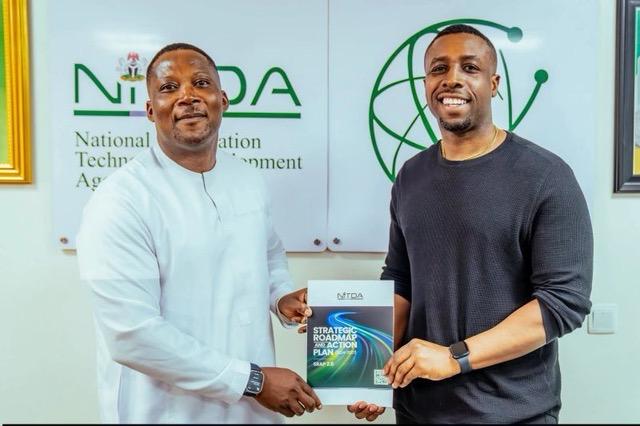
The National Information Technology Development Agency (NITDA) and NKENNEAi, a pioneer in African linguistic intelligence, have recently convened a strategic session with the aim of solidifying a partnership poised to revolutionise the integration of African dialects within the global AI landscape.
The collaboration focuses on building scalable translation and language technologies capable of supporting: Government services (multilingual citizen interfaces), Healthcare systems (patient communication in local languages), Financial platforms (banking in Yoruba, Hausa, Igbo), Digital applications (chatbots, voice assistants, customer service).
The challenge is real: Nigeria has over 500 languages. Traditional AI models—trained primarily on English, Mandarin, and Spanish—struggle with tonal African languages where a single word’s meaning shifts based on pitch, context, and cultural nuance. Google Translate works for Swahili basics. It fails spectacularly for Yoruba idioms or Igbo proverbs.
Director of the National Centre for Artificial Intelligence and Robotics (NCAIR), Dr Bunmi Ajala, outlined NITDA’s ambitious goals during the engagement: 70% digital literacy by 2027, Strong AI talent pipeline, AI integrated into public service delivery, High-performance infrastructure (GPUs, TPUs, GovNet initiative).
Furthermore, Michael Odokara-Okigbo, CEO of NKENNEAi, believes the partnership validates a dream since 2020 that African languages aren’t just worth preserving but worth building AI infrastructure around.
“NKENNE started as a cultural mission to help preserve and teach African languages,” Odokara-Okigbo said. “As our community grew to hundreds of thousands of learners, we realised the data and linguistic insights we were building could power something far bigger. NKENNEAi is about building the infrastructure that allows African languages to exist, scale, and thrive inside artificial intelligence systems.”
The project represents a shift from theoretical goals to operational deployment. If successful, it would establish Nigeria as the first African nation to maintain indigenous AI infrastructure tailored to its specific linguistic requirements, rather than relying on adapted Western models.
Odokara-Okigbo built NKENNE (which means “of the mother” in Igbo). A community-based language learning platform focused on African languages. Not Duolingo with Swahili added as an afterthought. A platform designed specifically for the tonal, contextual, and culturally rich nature of African languages.
Today, NKENNE teaches Igbo, Yoruba, Hausa (Nigeria’s three major languages), Swahili (East Africa), Twi (Ghana), Somali (Somalia), Nigerian Pidgin (Nigeria’s most widely spoken language) and more than 13 other African languages.