

Continued uncertainty in the face off between the US and Israel and Iran has seen oil prices rising again yesterday by 5% to $107 meaning that Nigeria and other countries will continue to pay more for energy.
Brent futures were up $5.26, or 5.2%, to $107.48 a barrel at 10:57 am EDT (1457 GMT), close to the session high of $107.84. U.S. West Texas Intermediate crude futures gained $3.53, or 4%, to $93.85 a barrel, after rising to as high as $94.84. Germany’s Defence Minister Boris Pistorius called the rise a “catastrophe” for the world’s economies.
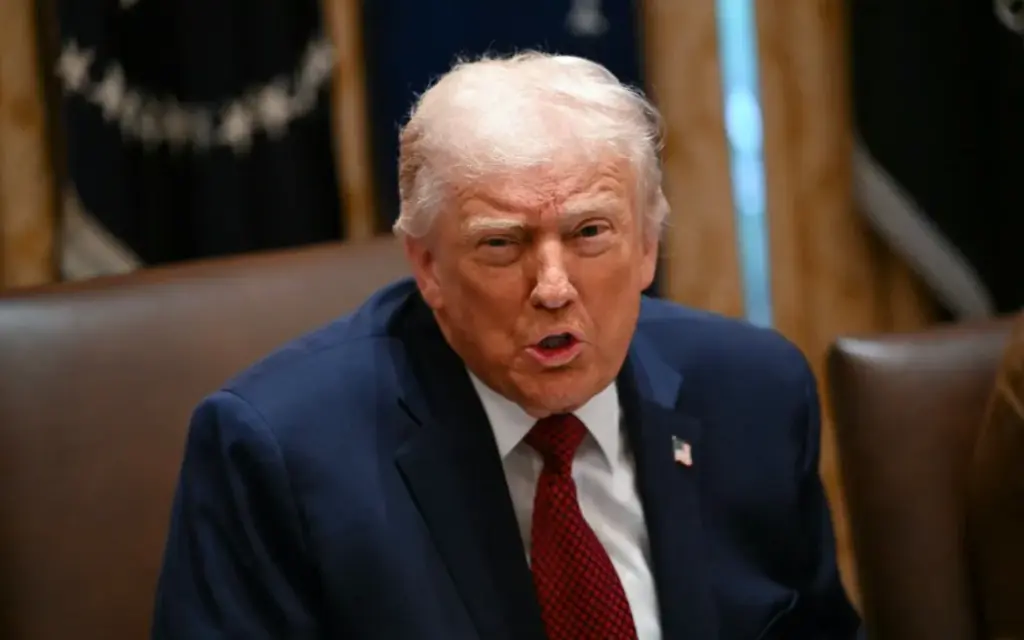
The uncertainty was further heightened yesterday after US President Donald Trump warned Iran to “get serious” about a deal to end nearly four weeks of fighting, a day after White House Press Secretary, Karoline Leavitt, said the US will hit Iran harder if Tehran fails to accept that the country has been “defeated militarily.”
Speaking after holding his first cabinet meeting since the start of the war on February 28, Trump once again insisted that Iran was begging to make a deal – a point roundly rejected by Iran. Also at the meeting, the US’ Special Envoy to the Middle East Steve Witkoff confirmed that the US had sent a 15-point action list to Iran through the Pakistani government.
Egypt is also acting as a go-between, according to Egyptian Foreign Minister Badr Abdelatty, who said yesterday that his country sees a desire from both sides “for calm, for the exploration of negotiations.” However, Iran rejected a ceasefire proposal put forth by the US, while putting forth its own demands. According to a report by The Associated Press, Iran and the United States appeared at an impasse yesterday, with each side hardening its position over talks and setting the stage for another potential escalation in the Middle East war.
Thousands more US troops neared the region, Israel sent more troops into southern Lebanon to fight the Iran-backed militant group Hezbollah, and Tehran tightened its grip on the crucial Strait of Hormuz. Sirens over Israel warned of barrages of incoming Iranian missiles, and Gulf nations worked to intercept fire. Heavy strikes were reported in Iran’s capital and other cities.
In a war that appears defined by who can take the most pain, the US has offered shifting but ambitious objectives, including ensuring Iran’s missile and nuclear programs are no longer a threat and ending Tehran’s support for armed groups in the region. Washington at one point also pushed for the overthrow of Iran’s theocracy.
While the US-Israeli campaign has hit Iran’s military and government hard, killing top leaders and striking scores of targets, Iran continues to fire missiles and there is no sign of an uprising against the government.
For Iran’s leadership, by contrast, merely outlasting the onslaught could be seen as victory. It may be hoping to get the US to back down by roiling the world economy with its stranglehold on the Strait of Hormuz — raising prices at the pump for drivers, prices in the grocery store for families and costs for businesses the world over.
Already drivers in the Philippines went on strike yesterday to protest rising pump prices which they said is affecting their livelihoods. Although no such protests have broken out in Nigeria, many are lamenting as the price of PMS has risen to over N1300 while diesel is being sold for as high as N1950 in some places which has led to a jump in the cost of goodies and services.
Commenting on the crude oil hike, Timothy Snyder, Chief Economist at Matador Economics, said: “There’s purely confusion and frustration over the veracity of stories coming out of the United States and Iran. Investors are once again rotating into safer assets in an effort to preserve capital.” However, short of a negotiated solution, the US would need a dramatic escalation to end Iran’s attacks and restore the free flow of goods through the strait, where 20% of all traded oil and natural gas is transported in peacetime.
Meanwhile, Israel has said it killed the head of Iranian Revolutionary Guard’s navy, Commodore Alireza Tangsiri, and the country’s naval intelligence chief, Behnam Rezaei. Israeli Defence Minister Israel Katz said Tangsiri was responsible for bombing operations that have blocked ships from crossing the Strait of Hormuz. Iran did not immediately acknowledge the killings. Meanwhile, a group of ships, including the USS Tripoli, drew closer to the Mideast with some 2,500 Marines.
Also, at least 1,000 paratroopers from the 82nd Airborne — trained to land in hostile territory to secure key territory and airfields — have been ordered to the region. Israel also said it carried out a wave of attacks targeting Iranian infrastructure early yesterday, and air defences were heard in Tehran. Heavy strikes were also reported around Isfahan, home to a major Iranian air base and other military sites, as well as one of the nuclear sites bombed by the US during the 12-day war in June.
Loud booms could be heard across Israel as it was repeatedly targeted by barrages from Iran. Israel’s Magen David Adom emergency service said a man in his 30s was killed in the area of Nahariya, the country’s northernmost coastal city. In the United Arab Emirates, two people were reported killed by shrapnel from a missile interception over Abu Dhabi.
Since the war began, more than 1,900 people have been killed in Iran, Deputy Health Minister Ali Jafarian told Al Jazeera. Eighteen people have died in Israel, while three Israeli soldiers have also been killed in Lebanon. At least 13 American troops have been killed.
More than a dozen civilians in the occupied West Bank and Gulf Arab states have also died. Authorities said nearly 1,100 people have died in Lebanon, where Israel has targeted the Iran-backed Hezbollah militant group, which has fired into Israel. In Iraq, where Iranian-supported militant groups have entered the conflict, 80 members of the security forces have been killed.








