




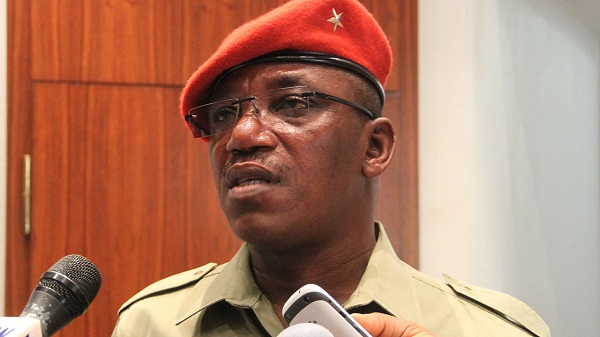
Former Minister of Youth and Sports Solomon Dalung has criticised the immediate past Governor of Kaduna State, Nasir El‑Rufai’s decision to turn himself in to security agencies ahead of his trial, warning that it is a serious strategic error.
Speaking during an interview on Trust TV, Dalung claimed that government operatives initially tried to apprehend El‑Rufai at an airport but did not succeed.
He described the decision by the former Minister of the Federal Capital Territory (FCT) to voluntarily submit himself to authorities as a notable misstep.
“The government is so scared of El‑Rufai that’s why they thought he was going to act, and they need to take him into custody.
“They attempted at the airport, and it failed, and then they realised that trying to arrest him may instigate insurrection.
“El‑Rufai himself decided to downplay and surrender himself, and that’s the greatest mistake he made as a comrade,” Dalung stated.
READ ALSO:
Asked what El‑Rufai should have done instead, Dalung emphasised a principle he said applies in political struggles.
“Comrades don’t surrender. During a struggle, if you surrender yourself, you’re going to be humiliated. It’s an established principle in struggle. When they try to get you, they become very careful,” he said.
However, Dalung also suggested that El‑Rufai’s choice to present himself may have had the unexpected effect of limiting authorities’ ability to build a case against him.
“What he did was he behaved maturely and responsibly, and they played into his trap because surrendering himself earlier denied them the opportunity to be able to frame up charges and charge him,” Dalung explained.
He added: “So, they got him into custody, but they didn’t have charges, and they have no offences on the ground. So, they started shopping for offences. El‑Rufai’s trial will not result in anything because its foundation is built on illegality and not law.”
El‑Rufai was rearrested by the Independent Corrupt Practices and Other Related Offences Commission (ICPC) on February 18 shortly after being released by the Economic and Financial Crimes Commission (EFCC), which had detained him over allegations of corruption.
He was arraigned on charges related to alleged inflated severance payments and years‑long dollar‑denominated deposits in his bank accounts.








