
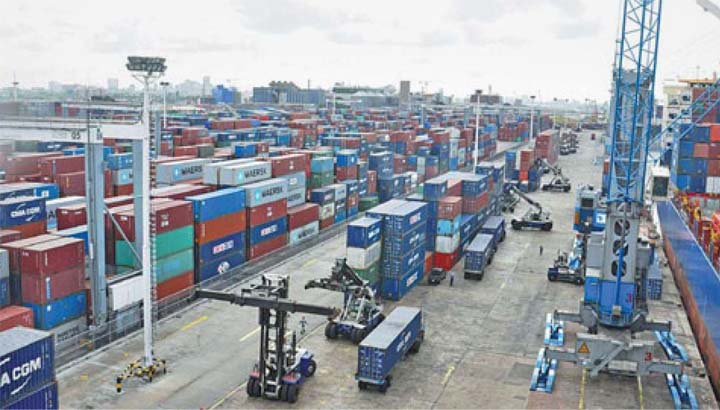
The Shipping Correspondents Association of Nigeria has expressed deep concern over the continued delay in renewing port concession agreements in Nigeria, warning that the situation poses significant risks to the nation’s maritime sector and overall economic stability.
In a statement issued over the weekend, Moses Ebosele, President of SCAN, described the delay as “a dangerous, troubling development that undermines investor confidence, disrupts operational certainty, and threatens the gains recorded in port reforms over the years”.
According to the group, the main seaport concession agreements in Nigeria were signed in 2006, adding that following a port reform exercise that began in 2004, the Nigerian Ports Authority handed over various port terminals to private terminal operators under a landlord model between 2005 and 2006, with 2006 being the primary year of full implementation.
“Many initial agreements had durations ranging from 10 to 25 years. Many of these agreements expired around 2021 and 2022.
Port concessions are the backbone of efficiency and private sector participation in Nigeria’s maritime industry. Any delay in their renewal sends the wrong signal to both local and international investors who depend on policy consistency and contractual stability,” Ebosele added.
He highlighted several disadvantages associated with the prolonged delay, noting that uncertainty over concession renewals discourages further investment in port infrastructure and technology upgrades.
“Operators are less inclined to commit resources when their contractual future is unclear. This stagnation directly affects productivity, turnaround time, and service delivery at our ports,” Ebosele stated.
He further emphasised that the delay could lead to revenue losses for the government, stressing that when port operations are hampered by uncertainty, efficiency drops, and so does revenue generation.
“This is a sector that contributes significantly to national income, and any disruption has far-reaching fiscal implications,” Ebosele added.
Ebosele also warned of potential job losses and industrial unrest: “Thousands of Nigerians depend on port-related activities for their livelihoods. Prolonged delays in concession renewals could trigger layoffs, contract disputes, and tension within the workforce.”
On the broader economic impact, Ebosele noted that inefficiencies at the ports inevitably translate to higher costs of goods and services.
“Our ports are critical gateways for trade. Any slowdown or inefficiency increases the cost of doing business, which is ultimately passed on to Nigerian consumers,” he explained.
The Federal Government initiated port reforms in the early 2000s as part of a broader economic liberalisation agenda.