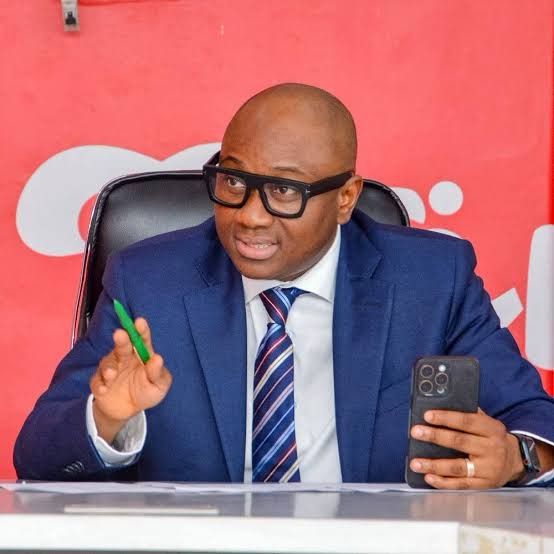


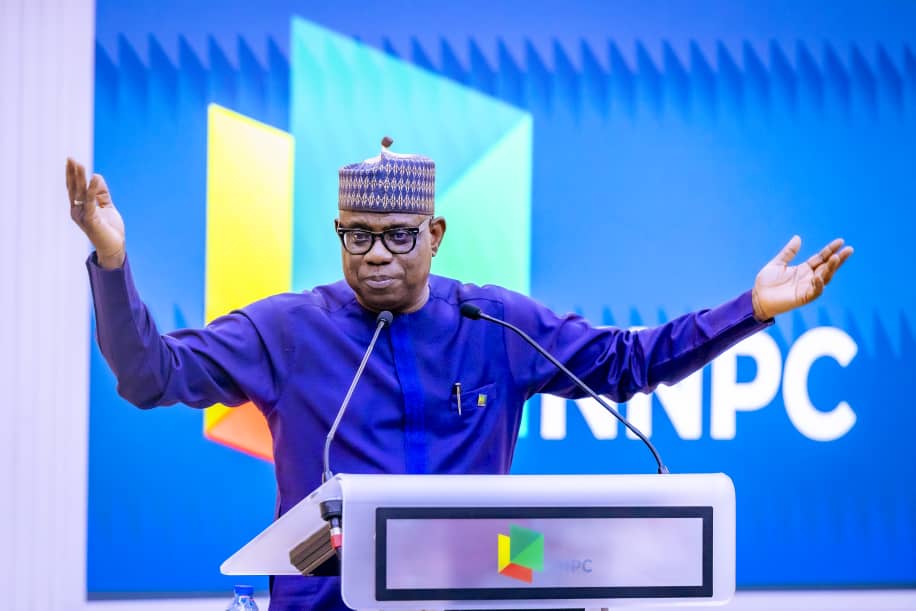
The Group Chief Executive Officer of Nigerian National Petroleum Company Limited, Bayo Ojulari, has declared that Nigeria is entering a decisive phase in its energy evolution, one driven less by promises and more by execution, as the country positions itself as a prime destination for global energy capital.
Ojulari made this known on Tuesday at CERAWeek 2026 in Houston, United States, where he delivered a blunt and pragmatic message to a global audience of energy leaders: Nigeria’s fundamentals are no longer in question; what matters now is disciplined delivery.
He disclosed in a statement that President Bola Tinubu has granted the national oil firm the autonomy to act on behalf of the Federal Government in driving sustainable, commercially viable solutions across the energy sector.
According to him, the move is aimed at enabling the company to implement long-term strategies that will strengthen Nigeria’s energy security and investment outlook.
Speaking during a high-level session themed “Convergence and Competition: Energy, Technology and Geopolitics,” Ojulari framed Nigeria’s energy strategy around realism, partnership, and value creation.
“Capital goes where value is clear, and Nigeria has that value,” he said, setting the tone for a recalibration of Nigeria’s pitch to investors, from resource abundance to bankable execution.
In what appeared to be a direct response to global concerns over energy transition risks in developing economies, the NNPC boss articulated NNPC’s core philosophy with characteristic clarity, saying, “We are not choosing between today and tomorrow; we are funding the future with the present.”
At a fireside chat anchored by Dan Pratt of S&P Global, Ojulari argued that Africa’s economic realities make continued hydrocarbon production unavoidable, even as the world accelerates toward cleaner energy.
According to him, oil remains critical for immediate revenue and foreign exchange, while gas, estimated at over 600 trillion cubic feet in Nigeria, represents a strategic lever for industrialisation and long-term energy security.
“Nigeria is the reliable destination for energy investment the world needs. The country has positioned itself as a dependable supplier, riding on the established legacies of stable policies, improved energy infrastructure security, partnerships, and, lastly, the orientation of the government,” he said.
He further disclosed that President Bola Tinubu’s administration has granted the national oil company the operational autonomy required to pursue commercially viable and sustainable energy solutions.
“The President has given NNPC the autonomy to act on its behalf and consolidate commercial solutions that are long-lasting,” Ojulari added.
In a notable shift in tone, the NNPC GCEO emphasised that Nigeria is moving away from merely owning vast hydrocarbon resources to actively monetising them through strategic investments and partnerships.
“Balance is not about equal allocation; it is about optimal sequencing,” he said, explaining that oil will continue to sustain current revenues, gas will drive industrial growth, while energy transition investments will be pursued in a targeted and disciplined manner.
Ojulari highlighted the importance of international partnerships, particularly in deepwater operations, noting that global oil majors such as Shell and Eni bring not just capital but also technology and project execution capabilities.
He pointed to assets like OPL 245 as critical to Nigeria’s production outlook, stressing that deepwater projects offer scale, reduced exposure to onshore security risks, and a stronger appeal to global investors.
“When the fundamentals are right, partnerships scale naturally,” he said.
On Nigeria’s long-touted “Decade of Gas” agenda, Ojulari admitted that the difference now lies in execution discipline, with a focus on three key enablers: commercial pricing, infrastructure, and contract certainty.
He cited the ongoing Ajaokuta-Kaduna-Kano Gas Pipeline as a critical backbone for domestic gas utilisation, while also emphasising the need for bankable agreements to attract long-term investment.
Addressing the balance between domestic supply and exports, including liquefied natural gas, the NNPC boss said Nigeria would adopt a flexible, value-driven approach. “It is about portfolio optimisation, allocating gas where it delivers the highest combined national and commercial value,” he noted.
Ojulari also expressed confidence in Nigeria’s regulatory environment, stating that the Petroleum Industry Act has significantly improved certainty for investors. He added that ongoing investments in infrastructure and strengthened security architecture are gradually addressing longstanding bottlenecks in the sector.
The renewed emphasis on execution comes at a critical time, as Nigeria seeks to ramp up production, close infrastructure gaps, and attract foreign capital amid intense global competition.
Hosted annually by S&P Global, CERAWeek remains one of the world’s most influential energy forums, drawing over 10,000 executives, policymakers, and industry leaders to debate the future of energy.
This year’s edition, held from March 23 to 27 in Houston, is focused on the intersection of energy, technology, and geopolitics, an agenda that directly mirrors Nigeria’s current challenges and opportunities.
For Nigeria, Ojulari’s message signals a strategic pivot: from talking up potential to proving performance. And in a world where capital is increasingly selective, the country’s ability to translate its vast resources into tangible value may ultimately determine its place in the evolving global energy order.