

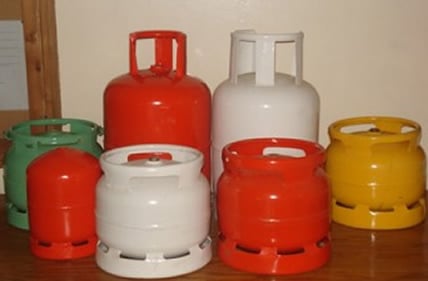
Fresh pressure is mounting on household energy costs as marketers on Monday warned that the price of Liquefied Petroleum Gas, popularly known as cooking gas, could rise further following a new price adjustment by the Dangote Petroleum Refinery and worsening global crude oil dynamics.
The Nigerian Association of Liquefied Petroleum Gas Marketers said retail prices have already climbed sharply to N1,000 per kilogramme, driven by higher ex-depot prices, surging logistics costs, and the ripple effects of rising crude oil prices.
This comes as the Dangote refinery increased its LPG ex-gantry price from N760 and N800 last week to N825 per kilogramme on Monday, a development seen by industry players as a key trigger for downstream price adjustments across the country.
Speaking in an interview on Monday, the association’s Publicity Secretary, Damilola Owolabi-Osinusi, confirmed that consumers should expect higher prices at retail outlets nationwide.
She said, “Yes, definitely. The price of cooking gas will rise. The prices have already increased to N1,000 per kg at retail stations. This is because of the cost of logistics. It has increased too, haulage and other loading costs, particularly haulage. Even the Dangote refinery has increased its price. It’s N825 from Dangote as of today.”
Her comments signal a widening gap between ex-depot and retail prices, underscoring the cumulative impact of supply chain costs on final consumer pricing.
Operators explained that, beyond the refinery price adjustment, rising transportation costs, fuelled by higher diesel prices and operational bottlenecks, are significantly compounding the situation.
The latest hike is closely linked to the sustained increase in global crude oil prices, which directly influences LPG pricing, as both products are derived from hydrocarbon processing.
As crude prices climb in the international market, the cost of propane and butane, the primary components of LPG, also rises, leading to higher import parity prices and upward pressure on domestic supply.
Nigeria, despite being a major gas producer, still relies partly on imports and market-linked pricing, making local LPG prices vulnerable to global energy shocks.
The anticipated increase is expected to further strain Nigerian households already grappling with rising food and energy costs, as LPG remains a critical cooking fuel for urban and semi-urban populations.
Over the past year, the Federal Government has promoted LPG adoption as part of its clean energy transition strategy, encouraging a shift away from firewood and kerosene. However, recurring price spikes have continued to threaten affordability and slow adoption rates.
Marketers warned that unless there is a significant drop in crude prices or targeted interventions to ease logistics and distribution costs, the upward trend may persist in the near term.
Stakeholders attribute the situation to a combination of factors, including foreign exchange volatility, high vessel and terminal charges, and infrastructure gaps in the domestic gas distribution network.
With the Dangote refinery now playing a more prominent role in domestic LPG supply, its pricing decisions are increasingly shaping market trends. Despite the concerns, marketers insist that the current adjustments are market-driven and necessary to sustain supply.
For now, consumers may have to brace for higher cooking gas prices, as the interplay between crude oil markets and local supply realities continues to dictate the cost of clean cooking energy in Africa’s largest economy.
Meanwhile, Ukraine’s President, Volodymyr Zelenskyy, said on Monday that Ukraine is exploring plans to import liquefied natural gas from Mozambique, as it grapples with energy shortages caused by years of Russian attacks on its production infrastructure.
Before the war, Ukraine met almost all of its gas needs through domestic production. However, Russian strikes have meant that Ukraine has lost about half of its gas output, Central Bank Governor Andriy Pyshnyi said late last year.
Last autumn, Russia intensified its attacks on Ukrainian gas production facilities, most of which are located in frontline regions in northeast and central Ukraine.
Speaking on the Telegram messaging app after meeting with Mozambique’s President, Daniel Chapo, Zelenskyy suggested that Kyiv could offer the southern African nation—which is battling an Islamist insurgency—support in countering its security challenges.
“Ukraine is interested in additional energy supplies. Mozambique is interested in Ukraine’s experience and technologies to strengthen its internal security and protect people from terror,” Zelenskyy said, without providing details of the volumes of gas that might be involved in any deal.
Mozambique is a major African gas producer, and in January, the country and TotalEnergies announced that they would relaunch an LNG project previously halted by the insurgency.
With the capacity to produce 13 million metric tonnes of LNG annually, the project is expected to make Mozambique a major gas exporter. Ukraine has not imported Russian gas since 2015.
In recent years, Kyiv has also been expanding its LNG supplies, establishing access to U.S. LNG from terminals in Poland and the Baltic countries.
Ukraine also imports U.S. LNG via the so-called Vertical Corridor of pipelines from Greece. European AGSI official energy data showed last week that Ukraine had begun storing gas in its underground facilities in preparation for the next heating season.
Energy minister Denys Shmyhal has said that Ukraine intends to start the 2026–2027 heating season with at least 13 billion cubic metres of gas in underground storage, roughly the same volume as in the previous season. Since the start of the war with Russia, Ukraine has not disclosed full details of its gas imports.