



…says workers’ gains slipping amid shocks, weak protections
…demands AfCFTA deliver real jobs, inclusive growth
The International Trade Union Confederation Africa (ITUC Africa) has warned that mounting global instability and economic disruptions are reversing years of progress made by African workers.
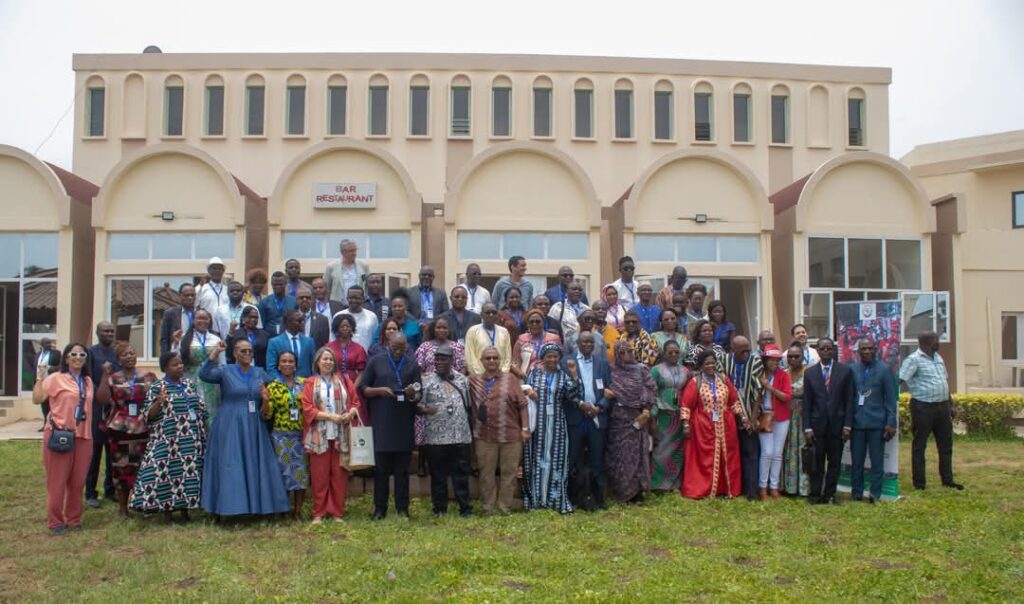
Speaking at the opening of the ITUC-Africa 2026 New Year School in Lomé, Togo, the organisation’s General Secretary, Akhator Joel Odigie, said the continent was being battered by forces beyond its control as the global order becomes more fragile.
While cautioning that millions of livelihoods were increasingly at risk, Odigie also warned that a growing trend of unilateral decisions by powerful nations was deepening uncertainty, with far-reaching consequences for vulnerable economies
He said: “This is not a moment for lamentation, the world is in a serious storm, one we cannot ignore. A single decision today can impose sanctions and destroy jobs overnight.”
Odigie who noted that disregard for international law and rising geopolitical tensions were worsening global insecurity, added that the ripple effects of conflicts and humanitarian crises across regions were exposing the illusion of global stability.
According to him, African workers were at the receiving end of the turmoil, as shrinking economic opportunities, rising uncertainty, and weak labour protections erode livelihoods.
“The threats are real, we have secured gains for our people, but today those gains are under serious attack, and we must defend them.”
He urged African governments to urgently confront worsening insecurity and economic hardship, warning that unemployment and frustration among young people were rising even in countries not directly affected by conflict.
“Without peace, we cannot advance. Without security, development is impossible,” he added.
On climate change, Odigie criticised the global imbalance in responsibility and impact, noting that Africa contributes less than four per cent of global emissions yet suffers disproportionately.
He called for a shift away from external dependence, urging African nations to chart independent development paths.
“They pollute, but resist paying for the damage, while Africa suffers floods, displacement, and loss of livelihoods. We must find African solutions to African problems,” he said.
On regional trade, Odigie stressed that economic integration must prioritise people over profit, insisting that policies should translate into tangible benefits for workers, saying, “we must strengthen African trade systems that work for our people, not against them.”
Also speaking, ITUC-Africa President, Martha Tinny Molema, warned that Africa’s current trade model continues to favour big businesses at the expense of workers.
“Dependence on raw material exports—who does it benefit? Workers, or only large corporations?”
She cautioned that opening up markets without adequate safeguards could worsen inequality and depress wages.
Molema insisted that the African Continental Free Trade Area must go beyond boosting trade volumes to improving the lives of ordinary Africans.
“Without strong industrial policy and labour protections, open markets can lead to job losses and downward pressure on wages.
“Success must not be measured only by trade volumes, but by the number of decent jobs created and improvements in workers’ lives,” she said.
Molema also demanded the inclusion of trade unions in shaping economic and trade policies, noting their direct impact on workers.
On climate transition, she warned against leaving Africa’s future entirely in the hands of market forces.
“The question is not whether the transition will happen, but how it will happen—and who will benefit.”
She advocated a worker-focused transition that safeguards jobs, creates new opportunities, and ensures access to affordable energy, as she maintained, ““Without energy, there can be no industry. Without industry, there can be no decent jobs.”
She called for a unified approach that connects trade, industrialisation, climate policy, and social protection to reduce inequality and secure workers’ future.