
…sets agenda for maritime growth in Nigeria
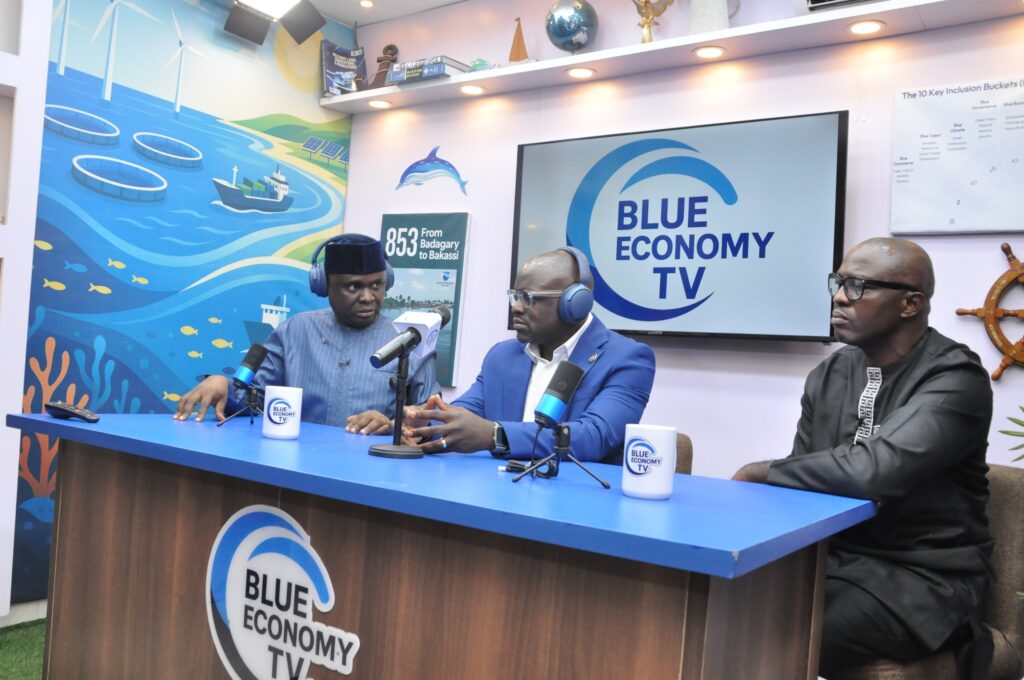
Africa’s first dedicated blue economy broadcast platform, Blue Economy TV (BETV), has launched in Lagos, positioning itself as a strategic media vehicle to unlock investment, policy engagement and innovation across Nigeria’s maritime ecosystem.
The channel, an initiative of the Blue Economy Academy, is designed to deepen awareness of ocean-based industries and catalyse growth in sectors ranging from fisheries and aquaculture to shipping, coastal tourism and marine services.
At the launch on Monday, stakeholders across government and industry underscored the urgency of harnessing Nigeria’s vast but underutilised maritime assets amid growing global focus on sustainable ocean economies.
General Manager of the Lagos State Waterways Authority and Special Adviser to the Governor on Blue Economy, Emmanuel Oluwadamilola, said the initiative signals a shift in how Nigeria perceives and deploys its maritime resources.
“With over 180 kilometres of coastline and more than 140 kilometres of inland waterways, Lagos sits on a maritime corridor that supports over 70 per cent of international trade,” he said. “Yet, we are only just beginning to recognise the true economic value of our waters.”
He described BETV as a critical tool for reframing public understanding of the sector, noting that it would spotlight opportunities in transport, food systems, environmental sustainability and climate resilience.
“The blue economy is no longer an abstract concept. It is a movement with the capacity to generate jobs, drive food security, improve mobility and unlock investment.
Platforms like this help translate that potential into action,” he added.
Founder of the Academy, Ubong Essien, said the channel emerged from a broader mission to position Nigeria as a “blue nation” by leveraging knowledge, media and policy dialogue.
According to him, the Academy—approaching its second year—was established to deliver practical, industry-focused training aimed at immediate application across the maritime value chain.
“We are driven by a vision of a Nigeria that prospers by water. From Badagry to Bakassi, there is immense untapped potential that must be converted into real economic value,” Essien said.
He drew a distinction between the maritime sector and the broader blue economy, describing the latter as a multi-sector ecosystem encompassing commerce, governance, climate, energy and finance.
“The maritime industry is a sector; the blue economy is an ecosystem. Our focus is to expand attention beyond traditional shipping to the full spectrum of ocean-based opportunities,” he noted.
Essien added that BETV would serve as an extension of this vision, deploying specialised programming to shape national discourse, influence policy direction and address what he termed “sea blindness”—a limited appreciation of the economic importance of marine resources.
Planned content includes flagship programmes such as Blue Morning Nigeria and Watchers of the Seas, alongside dedicated news and analysis segments tailored to industry stakeholders.
He also highlighted the strategic role of coastal and water-linked states, urging stronger collaboration to position Nigeria as a hub for “blue capital,” particularly given Lagos’ status as the country’s financial centre.
Industry participants at the event described the launch as timely, noting that Nigeria risks lagging behind global trends in ocean-based development without deliberate efforts to scale awareness, investment and institutional coordination.
BETV is expected to function as a central platform for storytelling, knowledge-sharing and stakeholder engagement, reinforcing the role of media in advancing sustainable development of Nigeria’s marine and coastal resources.