


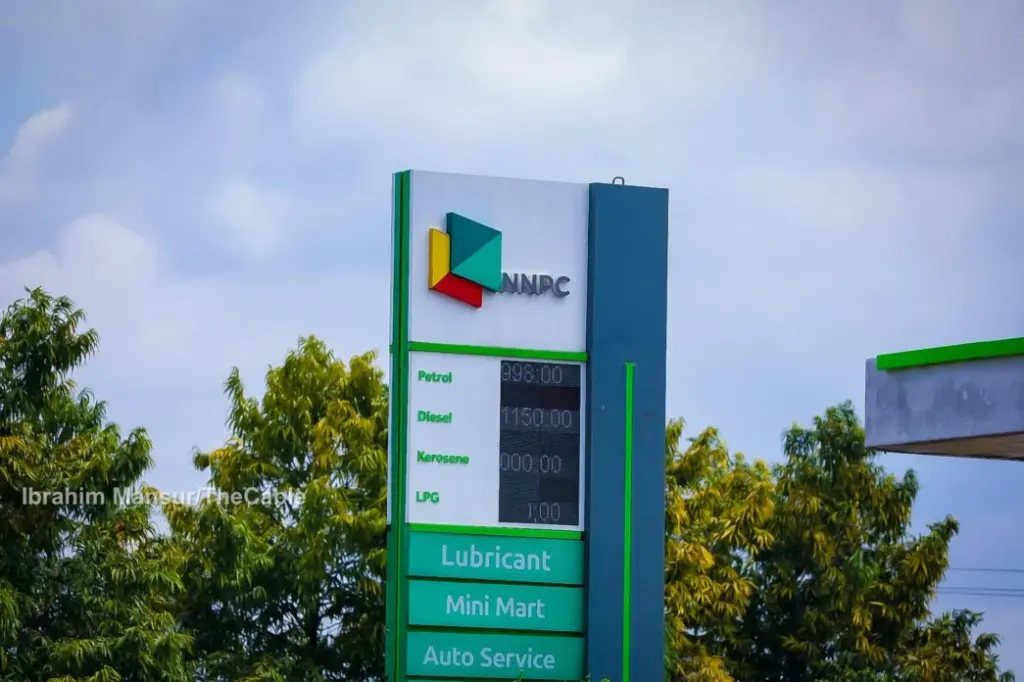
Before the increase in the price of gantry price of Premium Motor Spirit (Petrol) by the Dangote Refinery and Petrochemical Company Ltd from N1, 075 to N1, 145 per litre, Nigerians, especially in the South East and the South South, have had to grapple with the high cost of fuel, which sold for between N1, 300 and N1, 400, respectively.
The sudden jump in the price of energy was occasioned by the armed conflict in the Middle East, between Iran, the United States of America, and Israel, which has negatively impacted the cost of living worldwide. Sunday Telegraph investigations revealed that the sudden increase in the cost of transportation will lead to a rise in the cost of production for businesses, food in restaurants, and other essentials. Not even the popular sachet water is exempt from the high cost.
In the South East for instance, the galloping fuel price occasioned by the armed conflict in the Middle East has adversely impacted nearly all aspects of life in the region, thereby increasing the cost of living. The sudden increase cuts across transportation to the increase in cost of production for businesses, food, and all other essential needs.
A popular chef and baker in Owerri, the Imo State capital, Onyeonoro Cynthia, narrating her experience, said that the situation has left her business struggling to stay afloat. She said: “Fuel is going for ₦1,300 with a few others selling ₦1350. This is really affecting my business because fuel prices have almost doubled, and I find myself expending my profit in fueling my generator to keep my business going.
“I need not mention the noise pollution occasioned by the use of a generator, which makes customers uncomfortable and either discourages them from coming in and making an order or just coming in and rushing out of our office due to the noise. “Also, the power supply in my area does not help matter, as we are always in darkness with an actively epileptic power supply.
I pay far more than the power I consume, and all these eat into my production cost each time. With the nearly perpetual grid collapse, the sudden hike in fuel prices seems a harsh death sentence for many businesses if it is not speedily redressed. My business and our quality of life have been affected by the energy cost. Yet, we have little or no options but to depend on buying the same expensive fuel to run my business and home. We are no longer talking about profit but about staying afloat in business.”
Another trader in Ekeukwu Owerri market, Ejike Achara, told one of our reporters that with the hike in fuel prices, transportation costs have increased substantially. He added: “For everything good and services you need to take a transport to deliver, the price must increase. Previously, from Orji to Douglas Road and Ekeukwu Owerri Market was ₦400; now it is ₦500. Before now, Orji to IMSU Junction was ₦300; now it is ₦400.
That is how every good and service around the area has increased in price, including sachet water, which has since been increased from two sachets for ₦50 to one sachet for ₦100.” Intra-city transport fare spikes in Aba Despite the increase in the cost of intracity transport, occasioned by the increase in fuel price, commercial activities in Aba, the commercial hub of Abia State, are still boisterous.
However, the situation is seriously challenging. With the intra city transportation fare hitting the roof, every other business, goods, and services down the value chain are seriously impacted, leading to a sudden spike in prices across various business sectors. When the Sunday Telegraph visited major markets like the Ariaria International Market, Ekeoha Shopping Centre, Ahia Ohuru, Cemetery Market, Alaoji Spare Parts Market, Uratta Market, and Where Market, drivers of tricycle pickups were seen sitting idle, while manual truck pushers were having a field day because of their comparatively lower prices.
When our correspondent visited fuel stations around Abayi, Ogbor-Hill, Osisioma, Ndiegoro, Main Town, Ariaria, and Over-Rail, it was discovered that the majority of the fuel stations sold for N1, 250. “Before this problem, transport fare from Osisioma to the number 1 Bus Stop was between N400 and even N300. Today, it’s now N600, and if you’re lucky with too much pleading, they may receive N500,” Ugwudimma Obaka said. Mr. Sampson Nwagbara said that Aba is actually lucky that it has its own powergenerating company, which has drastically reduced the number of generators on our streets.
“So, people who do business with power are not severely hit in Aba because they already have a perfect alternative. If you go to St Michael’s Phone and Phone Accessories Market, which is usually noisy due to the general use of generators, the noise level has drastically reduced because one man invested in solar and distributed lights to all shops.
“Our major problem is transportation. We’ve conquered the problems of power. Our problems now are the rising cost of intra city transportation. Aba to Umuahia is not really a problem. Our governor brought out electric buses but they don’t move within the city. I wish he could quickly bring down here those who’ll move around Aba, I’ll be very happy,” he said. No longer at ease in Ebonyi Things are no longer at ease in Ebonyi State, as the cost of living is heading northwards; thereby impacting transportation, food prices, and services in the state that prides itself as the Salt of the Nation.
A visit to major petroleum marketers and Independent dealers indicates that fuel now sells between N1,300 and N1,400 per litre in Abakaliki, the state capital, and its environs. Residents of the state have expressed divergent opinions on this development, alluding to the attendant hardship on the people.
In an interview, a dealer of foodstuffs in Abakaliki, Mr Boniface Okorie, said that the volume of sales has reduced and subsequently affected their businesses. He attributed the price increment to the heavily increased fuel cost, removal of subsidy, and devaluation of the Naira. According to him, the fuel hike has affected patronage by customers in addition to whittling down the purchasing power of customers.
He suggested the establishment of functional local refineries to stabilise fuel prices instead of depending on fuel importation. Another trader, Mr Okon Nwolisa, appealed to the Federal Government to provide lasting solutions to the problem and consider the plight of Nigerians. A visit to markets and motor parks in the state showed an increase in transportation cost from the state to other cities, both intra-state and inter-state, which has forced traders to increase prices of goods. Transport operators had lamented the hike in fuel prices, stating that it has led to an increase in transport fares.