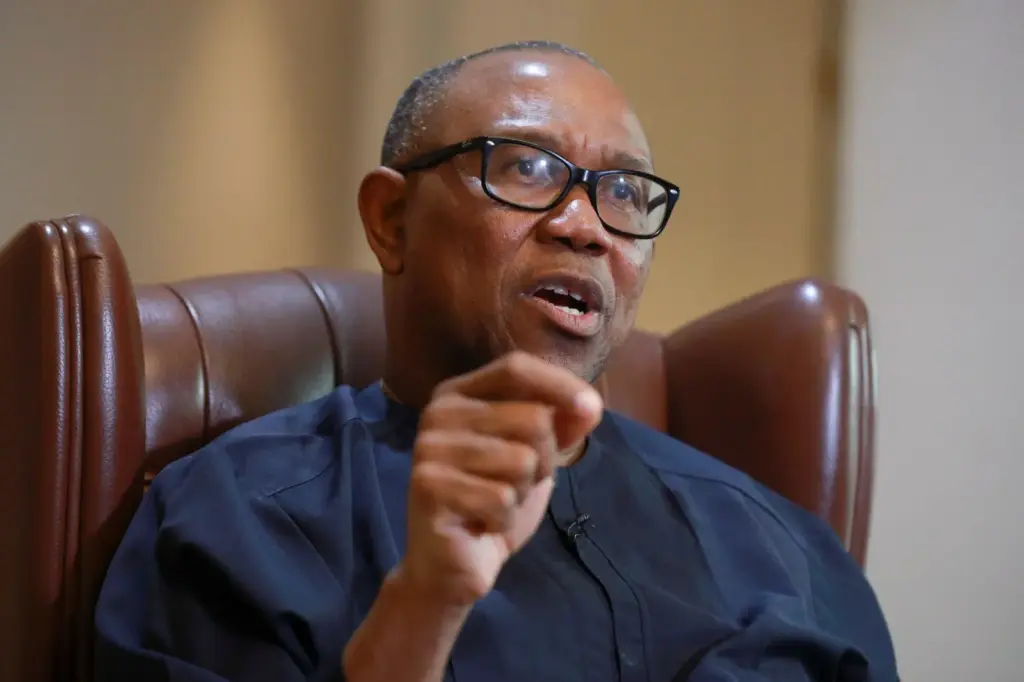
The 2023 presidential candidate of the Labour Party (LP), Mr Peter Obi, has expressed worry at the deepening poverty in Nigeria, saying an economy cannot be said to be improving when the majority of its people are becoming poorer.
Obi, in a statement issued on X on Monday, pointed at the recent report of Agora Policy with support from the Nigeria Economic Stability and Transformation Programme and the United Kingdom’s Foreign, Commonwealth and Development Office, which showed that the poverty rate in the country has risen from about 40% before Bola Tinubu was sworn in as president to over 63% under his administration.
According to him, this has explicitly shown that the economic reforms of the All Progressives Congress (APC) administration have pushed more Nigerians into poverty than ever before in the country.
“For a country whose population is estimated at over 220 million people, this means that well above 140 million Nigerians now live in poverty.
“Families nationwide can no longer afford basic necessities such as food, transportation, rent, or healthcare,” Obi noted.
The former Anambra State governor said the situation remains the same across the six geopolitical zones of the country, with families reporting painful strategies, reduction in food consumption, “trekking instead of using public transport, often without electricity and borrowing simply to survive.
“Small businesses, which are the backbone of our economy, are shutting down.”
Obi condemned the lifestyle of politicians in the midst of growing hardship faced by ordinary Nigerians, describing it as “insensitive.”
He noted that at a time when Nigerians are told to tighten their belts, struggling to eat, and watching their businesses collapse, politicians continued to spend huge budgets on their comfort and other non-essential extravagances.
“Leadership must lead by example, especially during difficult times. You cannot ask the citizens to fast while you feast. Sacrifice must begin from the top,” he demanded.
According to him, true economic reform should be people-centred.
“It must protect the most vulnerable while pursuing fiscal sustainability. Reforms that deepen poverty, widen inequality, and crush small businesses cannot be described as successful,” he warned.
He noted that Nigeria is blessed with immense human and natural resources,” adding that what the country requires “is leadership that prioritises prudence, compassion, and accountability, leadership that measures success not by elite comfort but by the well-being of the ordinary Nigerian.
“Nigeria must urgently and strictly implement policies that support development, expand production, small businesses, and protect vulnerable households.”