
Lagos State has secured support from the World Bank to strengthen its disaster risk management and emergency response ahead of the rainy season, as the city contends with chronic flooding that disrupts lives and infrastructure.
The collaboration, discussed in a meeting on Wednesday in Lagos, aims to improve early warning systems, emergency preparedness, and public awareness.
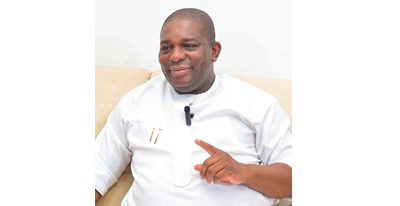
The Commissioner for the Environment and Water Resources, Tokunbo Wahab, remarked that the partnership will focus on enhancing drainage systems and ensuring faster response during heavy rainfall.
“We welcome both technical and investment support that will position Lagos as a model for disaster risk management in Nigeria,” the executive said in a statement.
Lagos, bordered by about 486 kilometres of the Atlantic Ocean and with roughly a quarter of its landmass covered by water, is highly exposed to flash flooding. “We did not create this geography, but we must manage it responsibly,” Wahab added.
Early warning signals are issued annually, and updated advisories will be shared later this month following forecasts from the Nigerian Meteorological Agency, he said.
These advisories will be communicated to residents and agencies, including LASEMA and the State Command and Control Centre.
The city experiences a tropical wet and dry climate, with the rainy season running from April to October and the heaviest rainfall between June and September. Lagos received severe flooding in August and September 2022, displacing thousands and disrupting roads.
Wahab noted that the state has intensified year-round cleaning and dredging of drainage channels and manholes, while enforcing rules to prevent building on floodplains or destroying mangroves, which act as natural buffers.
“Science shows that during periods of heavy rainfall, tidal lock can prevent stormwater from discharging effectively. Infrastructure alone is not enough. Compliance and environmental responsibility are critical,” he stated.
Lagos generates about 13,000 tonnes of municipal solid waste daily. The ban on styrofoam and single-use plastics reflects efforts to shift from a linear waste model to one that treats waste as a resource for wealth creation and energy generation.
Officials said the collaboration is part of Lagos’ broader commitment to building resilient infrastructure, strengthening institutions, and protecting lives and property.
“Preparedness is not optional for a coastal megacity like ours. It is a responsibility we take seriously,” Wahab said.