


Islamic clerics have urged Nigerian political leaders to leave office with positive impacts, reminding them they would answer for their actions and omissions.
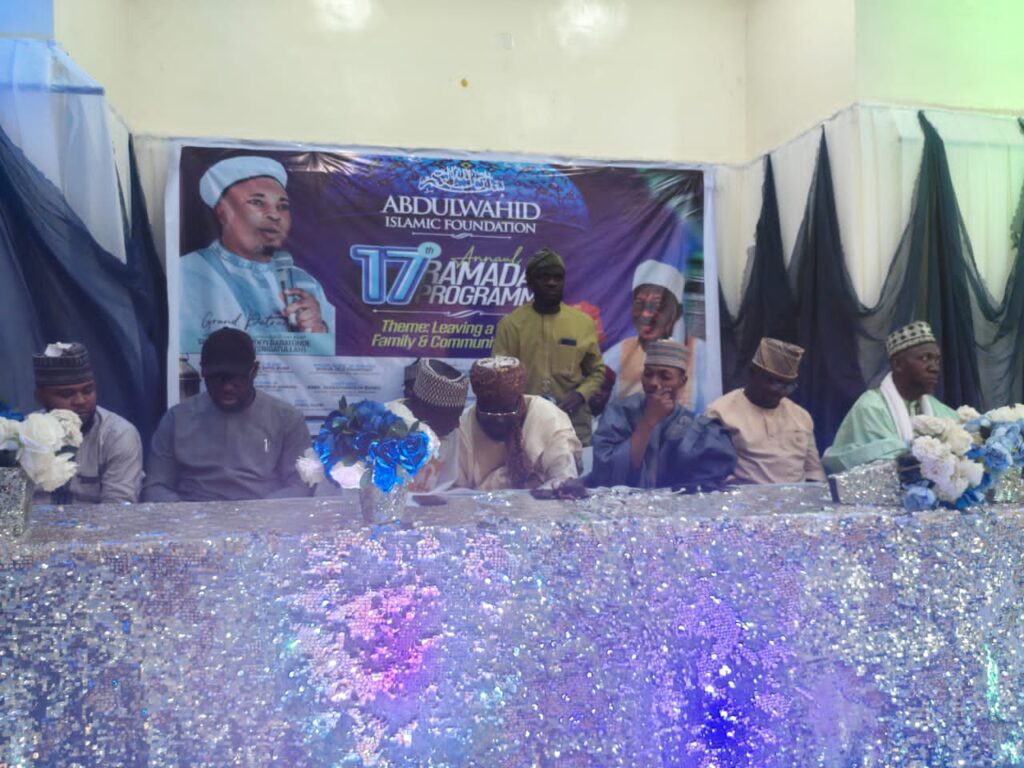
They spoke at the 7th Annual Ramadan Programme organised by the Abdulwahid Islamic Foundation in Lagos on Sunday.
The programme, with the theme “Leaving a Legacy: Family and Community Impact,” drew scholars, community leaders and residents seeking spiritual and social guidance.
Guest lecturer, Sheikh Ibrahim Kajola, said leadership positions were a sacred trust bestowed by God.
“Leadership is a trust from Allah, and every leader will return to give account of that trust,” Kajola said.
He likened leadership to shepherding, stressing that a shepherd must account for all placed under his care.
“Whatever leaders conceive and pursue today will determine the legacy they leave behind,” he added.
Kajola urged leaders, regardless of faith, to fear Allah and prioritise justice, fairness and service to humanity.
He described Ramadan as a sacred month offering Muslims opportunities for spiritual renewal and deeper devotion.
“Ramadan should inspire both leaders and followers to reflect on their responsibilities to God and society,” he said.
The foundation’s Chief Imam, Alhaji Ridwam Abdullahi, said lasting legacy begins with strong family values.
“Choosing a spouse carefully lays a solid foundation for raising responsible and God-fearing children,” Abdullahi said.
He added that combining Islamic and Western education helps shape balanced individuals with moral and societal awareness.
The organiser, Mr Abdulwahid Odunuga, described Ramadan as a season for planting seeds for the future.
“The seeds we sow today determine what we shall reap in the hereafter,” Odunuga said.
He urged Nigerians to plant good seeds that would positively impact families and communities beyond their lifetime.
Former Chairman of Agboyi-Ketu LCDA, Hon. Dele Oshinowo, highlighted the importance of community engagement in national development.
Oshinowo called on the citizens to participate actively in civic duties, including elections, to ensure accountable leadership.
He said collective efforts were essential to tackle infrastructural challenges and promote sustainable development.
The clerics agreed that constant reflection on legacy was vital for leaders seeking to serve future generations responsibly.









