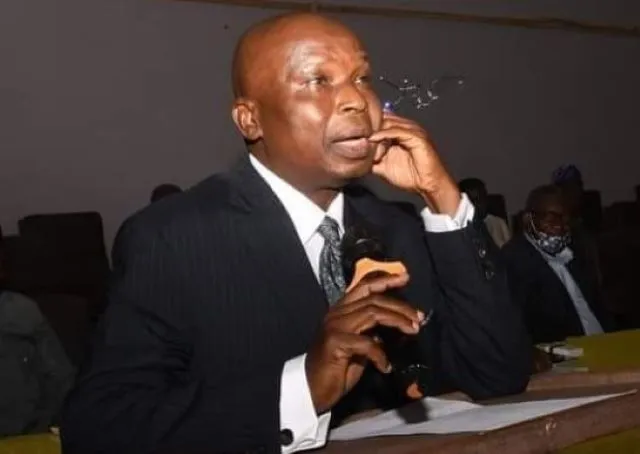

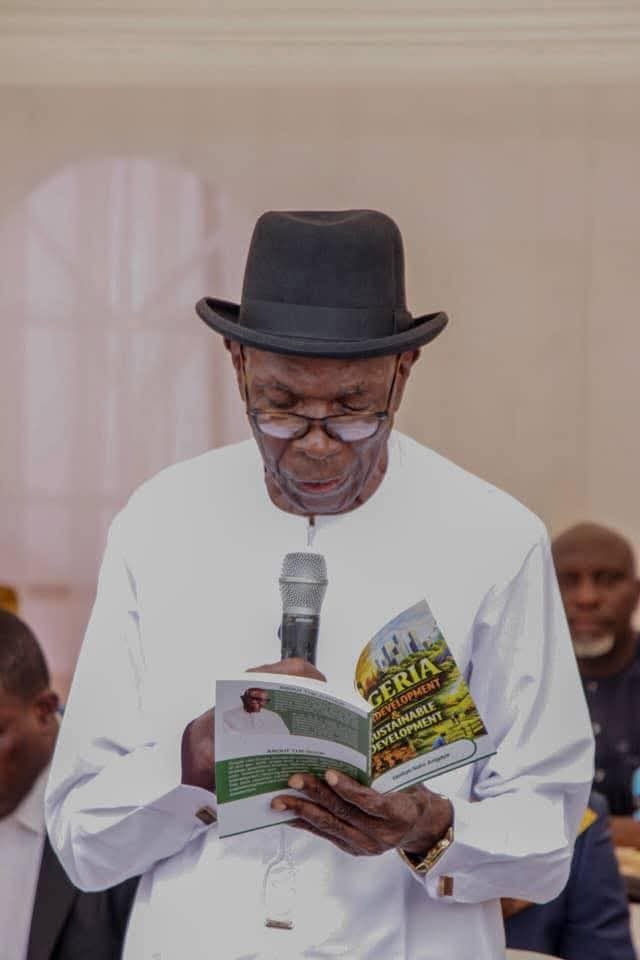
Professor Gesiye Angaye, has urged Nigerian Political Leaders to put the interest of citizens of the country first raising concern over what he described as a deep moral and governance crisis in Nigeria.
Angaye who is a Professor Economics and former Commissioner for Planning and Budget in Bayelsa State, said the country is facing rising insecurity, hunger, unemployment and poverty, while political leaders appear disconnected from the daily struggles of ordinary citizens.
Speaking at the weekend in Yenagoa, the elder statesman who hails from Okoloba in Kolokuma/Opokuma Local Government Area of Bayelsa State, maintained that ” it is troubling that while citizens are battling hardship and burying loved ones, members of the political class are focused on celebrations and early political campaigns.
Speaking in a paper titled “Dancing on the Graves: Moral Collapse, Elite Indifference, and the Crisis of State Responsibility in Nigeria,” the nonagenarian scholar said many Nigerians now live in fear due to kidnapping, banditry and violence across parts of the country.
The elder statesman argued that the primary duty of government is to protect lives and property, stressing that when people can no longer travel safely, farm freely or send their children to school without fear, the social contract between the state and the people is broken.
He also described hunger as a result of policy failure rather than fate, noting that a nation blessed with oil, gas and fertile land should not have millions struggling to afford food.
Prof. Angaye further warned that fear is silencing many citizens, as people are now afraid to speak openly about governance for fear of harassment or intimidation.
He said democracy loses its meaning when citizens cannot freely express their concerns, adding that silence should not be mistaken for consent.
The former commissioner expressed worry that politics in Nigeria has become more about power and privilege than about compassion and service to the people.
Calling on leaders and citizens alike to show moral courage, Prof. Angaye said speaking truthfully and peacefully about the nation’s challenges is a civic duty.
He urged government at all levels to restore empathy in leadership and place the protection of human life at the centre of governance.
He said:”While citizens bury their dead, political actors dance literally and metaphorically at rallies, celebrations and defections. The contrast between elite comfort and popular misery reveals a deep moral fracture in the Nigerian polity.
“Hunger is not a natural disaster; it is a policy outcome. When millions cannot afford food in a country rich in land, oil, gas, and human capital, the issue is governance, not fate. A political class that remains festive amid mass hunger demonstrates what may be termed institutionalized insensitivity, a condition where suffering no longer registers as a policy emergency.
“Politics in Nigeria has increasingly become a zero-sum contest for access to resources, immunity, and privilege. Human lives are treated as collateral damage. Insecurity is politicized; poverty is instrumentalized; deaths are statistics.
“The early fixation on the 2027 elections—amid mass suffering, signals a troubling moral inversion. Winning power has become more important than preserving life. This represents a collapse of ethical leadership and a distortion of democratic purpose.
“This paper is written not out of hatred for Nigeria, but out of love and responsibility. Silence in the face of injustice is itself a form of complicity. To speak calmly, truthfully, courageously is a civic and moral obligation.
“Nigeria still has a choice: to restore compassion to governance, to re-center life as the supreme value of the state, and to rebuild trust between rulers and the ruled.
“But this requires moral courage
especially from elders, scholars, and citizens who refuse to dance on the graves of the innocent. Beware of dancing on graves which could collapse or give way to others to dance on your graves,” he concluded.