

The conduct and outcome of the February 21 Area Council elections in Abuja and the by-elections in Rivers and Kano states raise concern about the 2027 general elections, writes ONYEKACHI EZE.
The furore that greeted the February 21 Area Council elections in Abuja, Nigeria’s Federal Capital Territory (FCT), was seen as a dangerous signal to what would be happen in next year’s general elections. The election was held in six Area Councils and 62 wards in the territory, and was contested by 17 of the registered political parties. Unlike other local council elections, the umpire is the Independent National Electoral Commission (INEC).
FCT Area Council elections is the only local council elections conducted by INEC. Others are conducted by individual State Independent Electoral Commissions (SIECs), which outcome is always predictable. In previous elections conducted in the FCT by INEC, there is semblance of fairness and credibility.
The elections are competitive. No political parties had won all the seats, unlike what is always the case in council elections conducted by SIEC where there is always bandwagon effect. For instance, in 2022, the six chairmanship positions were split three apiece between the APC and the PDP.
While the All Progressives Congress (APC) won Gwagwalada, Kwali and Abaji, the Peoples Democratic Party (PDP) won Abuja Municipal Area Council (AMAC), Bwari and Kuje. Expectations were high in this year’s elections, especially with the participation of the African Democratic Congress (ADC), the political platform adopted by coalition partners.
Again, with the passage of the Electoral Act amendment Bill, 2026 by the National Assembly and quickly assented into by President Bola Tinubu, it was hoped that it would further strengthen the electoral process. Electoral Act, 2026 provides for electronic transmission of election results to INEC Result Viewing (IReV) portal. But the hopes were dashed.
Everything seemed to had gone wrong during the elections. First, voter turnout was low, less than 10 per cent in city centre, and 15 per cent (239,210) of the 1,680,315 total registered voters in the FCT, according to INEC. Secondly, voting started late in most polling units. INEC admitted that its Election Operations Dashboard showed that only 45 per cent of polling units opened for voting as at 8:30 am, while others units opened by 10:00 am on election day, or even much later.
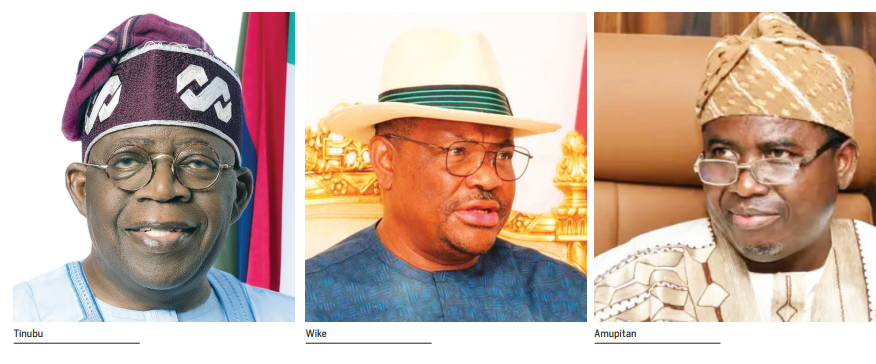
Even the commission’s Chairman, Prof Joash Amupitan admitted that this fell short of standards. “It undermines public confidence. And it will not be tolerated,” Prof. Amupitan warned. There was also reported cases of vote buying. The Economic and Financial Crimes Commission (EFCC), said it arrested 20 persons who attempted to compromise electoral process during the election.
There were equally reported cases of manipulation of figures. At Kuroko Health Centre polling unit in Yangoji Ward, Kwali Area Council, a polling unit result in circulation showed 1,219 votes were credited to a particular political party, despite the fact that the unit has only 345 registered voters, while accredited voters during election was only 213.
INEC Resident Electoral Commissioner (REC), Aminu Idris was later to clarify that the discrepancies were due to an error by the Presiding Officer while entering the score of the party. Idris disclosed that when the matter was investigated, the presiding officer said after sorting and counting the ballots, she recorded 122 for APC but “tallying everything, she noticed that there was an overshoot by one (1).
So, they had to recount the ballots in the open, that was when she realised that APC should be 121 not 122. So, she cancelled the ‘2’ at the end and slotted in a ‘1’ in front of the cancelled ‘2’ to make it 121. She also corrected the figures in words.” Again, many voters claimed that they were deliberately disenfranchised by last minute migration to another polling unit without prior notice.
INEC denied that there was no voter migration but rather a split of large polling unit with voter’s registration of over 1,250 voters to avoid congestion on election day. It claimed that the split units are located some few meters away from the original polling units within the same premises. But even at that the notification was short, just four days to the elections.
The commission admitted that text messages/emails were sent to the affected voters on Wednesday February 18, Thursday 19, Friday 20 and on the election day proper, Saturday 21, indicating the actual locations of their split polling units, and as reminders to assist them in identifying their current polling units.
There was reported incidence of violence except in Gwagwa, a suburb of Abuja where Musa Abubakar, and agent of the ADC was reported to have been killed while resisting attempt by one of the political parties to alter election result. And lastly, upload of election results to INEC Result Viewing (IReV) portal was not “real-time”.
As at 2:00 pm on Sunday, February 22, the commission said the upload had reached 93%, that is 24 hours after voting had ended. INEC declared APC winner in five out of the six Area Council chairmanship positions while the PDP won one.
APC won in Abaji, Abuja Municipal Area Council (AMAC), Bwari, Kuje and Kwali while PDP won in Gwagwalada Area Council. Surprisingly, the ADC did not win any of the seats.
INEC Chairman, Prof. Amupitan had told members of the National Peace Committee that the commission would use the FCT election and the by-elections in Rivers and Kano States which were also held on this day, to prepare for the 2027 general election.
“We regard 2026 as our preparatory year for the 2027 general election,” Amupitan told his guests. Most of the fears he expressed at the meeting happened during the FCT Polls. There were interand intra-party tensions and vote buying.
Though there was no militarisation, but the announcement of 22-hour (8 pm on Friday to 6 PM on Saturday) restriction on movement by the Minister of the Federal Capital Territory (FCT), heightened tension. Opposition parties have on previous occasions, accused the ruling party of militarising the electoral process. PDP had last year, accused the APC of undermining Nigeria’s democracy through militarisation and manipulation of elections in the country.
ADC also in a statement by its National Publicity Secretary Mallam Bolaji Abdullahi, in a post on X, said the decision to impose restrictions on movement a day before the election is a move to suppress voter turnout. The FCT election coming less than one year to the 2027 general elections raised serious cause for concern.
Opposition leaders expressed doubt on the interest of President Bola Tinubu to allow free and fair elections in the country in 2027. National Chairman of the New Nigeria People’s Party (NNPP), Dr. Ajuji Ahmed, at a joint press conference in Abuja on Thursday, pointed at the desperate haste with which President Tinubu signed the Electoral Act amendment Bill into law without even bothering to study it.
“Nigerians have also wondered at this uncharacteristic speed from the president on this electoral law, while he continues to prevaricate, waiver and dawdle over other serious legislations, policies and actions that could actually improve the lives of citizens.
But then, the FCT local government elections came and it all became clear. “In fact, it is quite clear that the very fear of free and fair election is what had led them to mutilate the electoral law and insert loopholes that they could exploit for rigging and manipulation, especially at the collation stage.
“We saw it clearly in the FCT election where votes claimed by the APC outstrips the total number of accredited voters by several folds. We in the opposition therefore condemn that election as disgustingly fraudulent.
But more importantly, it provides practical evidence of what the APC intend to achieve with Section (60) 3 of the new Act,” Dr. Ahmed stated. The opposition leaders also said the low voter turnout at the election signifies gradual erosion of the people’s confidence in the integrity of the electoral system.
“Nigerians are telling themselves that their votes no longer count,” they added. They believe that the only solution to voter apathy is for the electoral umpire to convince the people that their votes would not be stolen and elections would not be manipulated.
The opposition leaders also passed vote of no confidence in the INEC Chairman Prof Amupitan, and said they had given him before the benefits of the doubts.
“The FCT election was his litmus test and from what we have seen, he has failed to convince us that anything would change under his watch, therefore telling us that we can only trust in our capacity and determination to protect our votes,” they stated.
The low voter turnout during the FCT elections was because of the failure of the National Assembly to adopt “real-time” electronic transmission of election results from the polling unit. The new Electoral Act makes provision for both manual and electronic transmission of election results.
This is seen as an avenue for politicians to manipulate the outcome of the election. Presidential candidate of the African Action Congress (AAC) in the 2023 election, Omoyele Sowore, said the signing of the bill into law made a lot of Nigerians lose confidence and trust in the electoral process.
Sowore stated that the moment trust is lost, “people stay at home because there is nothing more voluntary than voting – you take your money, you take your time, and if you feel like the thing is not going to produce the results you want, you don’t leave your house.
“If you want people to have faith in democracy, you must give them what they ask for.” But there is still enough time to raise the confidence of the people to participate in next year’s general elections. The choice of candidates by the parties may made the people to reconsider the earlier stand and come out and vote.
Also the reactions of INEC towards some observed shortcomings can go a long way in restoring confidence in the electoral process. INEC Chairman, Prof Amupitan, last week, admitted that the achieving 45 percent polling unit opening by 8:30 am on election day, fell short of expectations.
He also ordered some staff in Kwali and Kabusa be queried for sabotage, while a transporter is blacklisted for delay in delivering of electoral materials. These are heartwarming. Nigerians are waiting to know what happens to the 20 persons EFCC arrested for vote buying.
Though the Electoral Act, 2026 allows both manual and electronic transmission of election results, Nigerians expect INEC to place more emphasis on electronic transmission.
Luckily, the two off-cycle governorship elections in Ekiti and Osun States, which hold this year, provide opportunities for the commission to convince Nigerians that it is capable of conducting credible elections in 2027.








