

The budget season is currently ongoing at the National Assembly. This is the time when Ministries, Departments and Agencies (MDAs) of government come to defend their budgets of the previous year, and then present proposals for the current fiscal year before the Standing Committees of the apex legislative Assembly.
Consequently, many agencies have appeared before Senate and House of Representatives Standing Committees, to perform this annual ritual. However, one problem which is common to all the agencies that have appeared so far to defend their budgets is poor or no releases of funds for implementation.
The MDAs have been lamenting and complaining to the National Assembly members, that the Office of the Accountant General of the Federation (OAGF) failed in his statutory duty to release funds as appropriated in the 2025 budget, for projects execution.
Angered by this ugly development, the Senate on February 12, threatened to withhold approval of the 2026 budget proposal for the Office of the Accountant-General of the Federation over poor release of funds and non-payment of contractors.
The Senate made the threat through its Committee on Finance, by issuing a stern warning to the Office of the AccountantGeneral of the Federation. The threat came amid growing frustration over persistent delays in fund releases to ministries, departments, and agencies, coupled with the government’s inability to settle long-standing contractor obligations.
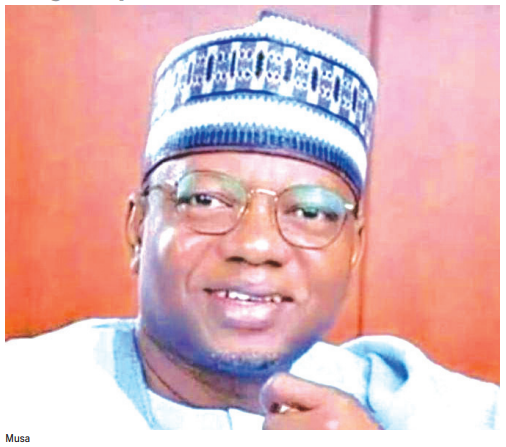
Accordingly, the Finance Committee, which is chaired by Senator Sani Musa, refused to even consider the proposal, citing systemic inefficiencies and persistent failures to ensure timely disbursement of appropriated funds.
The Senate committee lamented that delays in fund releases had left critical agencies, including the Nigerian Bulk Electricity Trading Company (NBET) and the Fiscal Responsibility Commission, struggling to meet operational obligations.
Senators, including Muntari Dandutse and Danjuma Goje, questioned Ogunjimi regarding the “embarrassing and baffling” situation where over N2.2 trillion is owed to contractors despite significant revenue generation.
In his contribution to matter, Goje, who represents Gombe Central Senatorial District, questioned the Accountant General on the over N2.2 trillion owed to contractors, asking Ogunjimi: “Where is the money?” He highlighted revenue inflows from fuel subsidy removals and government-owned enterprises that have reportedly surpassed targets, yet have not translated into payment for essential services carried out by the contractors. Most senators, who spoke, noted that this pattern of inefficiency has consistently undermined operations across statutory transfers, security agencies and the Independent National Electoral Commission (INEC).
They were against the Treasury’s continued reliance on the envelope system of disbursement, describing it as opaque, outdated, and prone to mismanagement of the nation’s resources. The committee recommended transitioning to a performance-based system, linking fund releases to measurable outputs to enhance accountability and ensure timely operational funding.
In his defence, Ogunjimi stressed that the Treasury could only disburse funds that were formally released to it, noting the office operates without a Ways and Means facility—a mechanism that could temporarily bridge funding gaps. He also acknowledged challenges in the existing payment platform, which he said was undergoing expansion to improve efficiency and capacity.
The Accountant-General further pointed to MDAs as complicit in the problem, claiming many fail to remit revenues or taxes and award contracts without adequate cash backing. He argued that these practices limit the Treasury’s ability to meet obligations even when funds are available.
Despite these explanations, senators remained unimpressed. Line items in the budgets of security agencies, statutory transfers, and INEC were cited as examples where poor funding has led to operational inefficiency. The committee made it clear that continued inefficiency would not be tolerated, suggesting that failure to improve fund releases and accountability could result in a symbolic “zero” allocation for the Accountant General’s office in the 2026 budget.
Following the tense exchanges, the Senate Committee on Finance scheduled an executive session with Ogunjimi to resolve outstanding queries and clarify modalities for fund management in the coming fiscal year. The review will examine revenue remittance, contract funding, and the transition to the performance-based disbursement system.
The Senate’s hardline stance reflects growing impatience with fiscal mismanagement, particularly as Nigeria grapples with mounting economic pressures, outstanding contractor liabilities, and the urgent need to fund essential public services.
From the outbursts demonstrated at the session with the Accountant General of the Federation, it appears that the lawmakers are determined to hold the Treasury accountable, signaling zero tolerance for past inefficiencies that put the country in perpetual economic decadence. Analysts say this development could set a precedent for how future budget proposals are scrutinized.
By threatening a “zero” allocation, the Senate is sending a clear message that systemic inefficiencies will no longer be excused, and mismanagement of public funds could carry serious administrative and political consequences. The budget defence session with the Accountant General could redefine Treasury operations, enforce stricter accountability measures for revenue collection, contract payments, and fund disbursement, and ultimately reshape Nigeria’s fiscal governance landscape.
Analysts believe that the Senate’s message to the Accountant General of the Federation is unmistakable; stressing that the era of unchecked inefficiency in Nigeria’s public finances might be coming to an end. How the Accountant-General responds to the whole matter could determine whether the Treasury regains credibility—or faces the consequences of a “zero” budget allocation.