

…Blame DisCos’ inefficiency in taking power, collecting revenue for energy distributed, sold
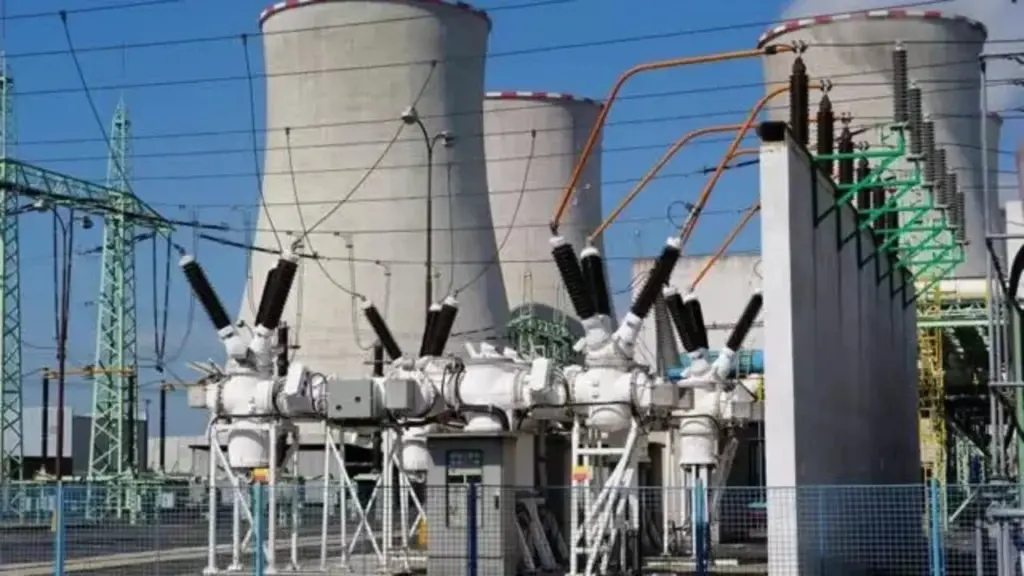
With debt owed by the Federal Government projected to reach N8.8 trillion by December 2026, the power Generation Companies, GenCos, have cried out bitterly, tagging themselves the biggest victims of the current subsidy regime in the Nigerian Electricity Supply Industry, NESI.
The Federal Government‘s debt to the GenCos as of February 2026 stands at N6.5 trillion.
The Chief Executive Officer of the Association of Power Generation Companies, APGC, the umbrella body of GenCos,
Dr (Mrs) Joy Ogaji made the remarks through a statement issued on Monday in Abuja, while lamenting the predicament and difficulty the companies are passing through.
Dr Ogaji noted that the GenCos are not beneficiaries of the current subsidy regime but are, in fact. Its biggest victims.
She said, “GenCos are only requesting their receivables, which have accumulated over the years, as can be verified from the MYTO and NBET documents for power generated and consumed, but only 35% is paid, leaving a huge contagion that is not cash-backed since 2015 to date.”
Explaining further, Dr Ogaji noted that, “The Association of Power Generation Companies (GenCos) consider it necessary to clarify persistent misconceptions regarding capacity payments, Power Purchase Agreements (PPAs), and the operational realities within the Nigerian Electricity Supply Industry (NESI).
“The issues raised go to the heart of market design, contractual sanctity, and the sustainability of power generation in Nigeria.
“Electricity is not stored at the power plants. Once it is produced, electricity leaves the generating plant, is metered, then travels at the speed of light and is consumed within a millisecond.
“In every Electricity Market, there are integral parts, and some of these parts are contained in the Power Purchase Agreements (PPA) that are major and cannot be politicised or swept under the carpet, else, a party to the agreement may be carrying a serious nsk burden.”
According to her, “Some of these major components of PPAs include payment for Available capacity, nominated capacity, metered energy and deemed capacity. These are major because they are among the Must-Occur events.
“Unfortunately, in Nigeria, the capacity made available has been removed from PPA consideration, disincentivising any desire to invest in recovering mechanically unavailable capacity, which can be estimated at 7,000MW of the 15,500-grid installed capacity.
“With the current commercial treatment of capacity made available, it should not be surprising that the quota attributable to the magnitude of faulty machines grows.
“Unfortunately, even the capacities nominated/declared by GenCos and confirmed by System Operators (SO) are fraught with issues.
“These nominated/declared capacities are to be held against the Generators as they form the basis for daily allocation to the Distribution Companies. These daily declarations of available and ready-to-generate capacity are commensurate with the “Net Dependable Capacity (NDC)” of the Power Plant.”
The CEO stressed further that, “Ideally, the GenCo invoices. including its tested/established NDC, are issued to the off-taker (buyer) at the end of every billing period for settlement. Again, bearing the extraneous factors not within the control of the GenCos and as agreed, the NDC accounts for an equivalent energy, which is metered and invoiced for payment.
“For instance, the grid code mandates that the GenCos obey the SO’s instruction to ramp down from its declared capacity to ensure grid stability. Natural justice, apart from PPA clauses, requires that GenCo be paid full for the declared available capacity as well as the energy it should have produced from that capacity, but for the deliberate restriction by the System Operator to safeguard the grid network.
“The obvious commercial justification is that GenCos have mobilised and paid for every input variable – fuel, labour and all other overhead costs needed to produce energy as declared. All negotiated PPAs are approved by NERC after ensuring that such cost is prudently incurred before they are sent to NBET to make payments.
“The presiding contracts and rules determine the basis of relationships and obligations of the functional organisations. The structure of the sector is set up in such a way that poor performance is contagious.
“However, the current practice of only recognizing called up capacity (power the discos and transmission can take} and ignoring capacity component made available, presents a wrong signal to international and local investors, shatters/ negates the aim of the reform, and prejudices the GenCos ability to meet financial ratios imposed by the lenders, and certainly reduces/erodes the Investors’ confidence in the Reforms and returns on investments as enshrined in the extant regulatory documents, including the MYTO.
“This practice also negates a key pillar of the Power Sector Recovery Program, approved by the Federal Executive Council. which seeks to establish a contract-based electricity market, as it restricts and undermines the robustness of the electricity market. In addition, it can deflate the appetite or ability of investors to invest, with a detrimental long-term effect of decreasing power plant financing options.”
The Nigerian scenario, the APGC said, “Represents an absurdity of sorts. The fact that NBET claims that they have only ‘five active PPAs’ entails that most of the power plants do not have power purchase agreements (PPAs). This situation is a scary scenario for any investor, as no guarantee of any sort is in place to ensure any form of return on investments.
“The non-availability of the active PPAs has made it impossible to secure a gas supply agreement (GSA), as there is no backstop to support such agreements. The economics behind this denial or ostracism in the same market where the same gas, similar O&M costs, etc., exists is indescribable and will be discussed in a subsequent paper.
“The lack of PPAs also means that the GenCos are exposed to the vagaries in the downstream in the electricity market: when the transmission company is unable to wheel power efficiently, load rejection occurs. resulting in idle generation capacity, and when the DisCos are unable to distribute available power efficiently, load rejection also occurs.”
She said, “A third exposure the GenCos face occurs when the DisCos are unable to efficiently collect revenue for energy distributed and sold and hence cannot make payments for energy taken.
“The inability to enforce performance and efficiency towards optimal utilisation will lead to all computations for a full return on investment being thrown into chaos. Sanctity of contracts may continue to be a mirage in the power sector.
“Thus, the issue of security of supply is strongly dependent on how quickly the electricity market can de-bottleneck the constraints imposed by other critical stakeholders.
“The current market design, as envisaged, is not reflected adequately in the incentives and enforcement measures for performance.
“Electricity requires huge investments, recouped over very long periods. How can it operate on a voluntary basis? The reality is that GENCOs have not been receiving full payment for the electricity supplied by them, while the gas suppliers have also not been receiving full payments for gas supplied to the GENCOs.
“This has accounted for the sub-optimal growth, inefficient operation and the current dire situation of the GENCOs, which has a huge negative impact on the entire power sector.
“The current state of the market, where a generation company is short-changed for the benefit of other market participant negates the tenets of the Multi-Year Tariff Order (MYTO). a tariff model for incentive-based regulation that seeks to reward performance above certain benchmarks, reduces technical and nontechnical/commercial losses and leads to cost recovery and improved performance standards from ail industry operators in the Nigerian Electricity
Supply Industry.
“From the foregoing, the legacy GenCos and the NIPP plants in the market have been operating without adequate sector risk protection, hence exposed to various operational and regulatory risks.
“This singular reason has kept the sector at about 4,000 MW of average grid generation, for many years, notwithstanding an installed capacity of 15,500MW. This is a clear anomaly in the market, and GenCos, for the record, have kept the records of such losses to date, as a regulatory risk.
The question then is:
“How would power growth in Nigeria be encouraged if GenCos are not incentivised to make capacity available for dispatch to the NESI?
“What incentives does the market present for GenCos to invest towards recovery of unavailable capacity when they are denied capacity payment for what is already provided and maintained amid constrained and unutilised capacity?”
“Unfortunately, GenCos’ increased capacity has not translated to a corresponding increase in power supply to consumers. This has become a big challenge and an inhibitor to the NESI, defeating the effort of the GenCos in recovering unavailable capacities, considering the massive, fixed charges
incurred to keep the GenCos machines and units running to make power available.
“It is international industry best practice in critically underserved countries that available generation capability should be equal to average generation (energy utilised). In Nigeria, available generation has met increased stranded capacity.
“The process of verifying the GenCos invoices is akin to undergoing a doctoral degree (PhD) viva. We dare to state here that. Contrary to the allegation disparaging the GenCos, no sector participant has any powers to negotiate inflated invoice payments, she said.
She noted, “Metered data is obtained by NISO from the tariff meters, for which GenCos and DisCos have a corresponding check meter, with respect to energy sent out and energy delivered. (MR: 27.6.4).
“Market Operator (NISO) validates the metered data submitted by the participants with System Operator (NISO) figures.
“The capacity figures are obtained from the System Operator (see Second Interim Rules s. 8a}.
“Capacity reading is taken every hour for each GenCo. The total is then used for preparing the monthly settlement statement and the invoices processed.”
Ogaji said, “To authenticate the process, the MO (NSO) prepares two settlement statements in a month:
“The Preliminary Settlement Statement (PSS) – participants are expected to check and raise complaints if they disagree with the content of the preliminary statement.
“The Final Settlement Statement (FSS) – Prepared after considering objections raised. if any. Then the final payable/receivable is made.”
The GenCos, she said, have kept to the terms of all industry and privatisation agreements as well as the Power Purchase Agreement since the takeover on the 1st of November 2013. In exchange, they have been rewarded with liquidity challenges, default on contractual terms, regulatory risks, and increased market volatility, lacklustre performance of agencies and participants, leading to disregard for the sanctity of contracts.
“The foregoing goes to buttress the fact that GenCos’ outstanding amount, which is over 6.2 trillion, does not represent all their entitlement, contractually.
“These debts continue to accumulate because GenCos are not fully paid for their output, despite incurring high costs for gas supply, plant maintenance, foreign exchange exposure, and financing obligations.
“This persistent nonpayment has rendered most GenCos technically insolvent and severely constrained their ability to invest in capacity maintenance and expansion.
“In summary, GenCos are not beneficiaries of the current subsidy regime but are, in fact. Its biggest victims. GenCos are only requesting their receivables, which have accumulated over the years, as can be verified from the MYTO and NBET documents for power generated and consumed, but only 35% is paid, leaving a huge contagion that is not cash-backed since 2015 to date. “