


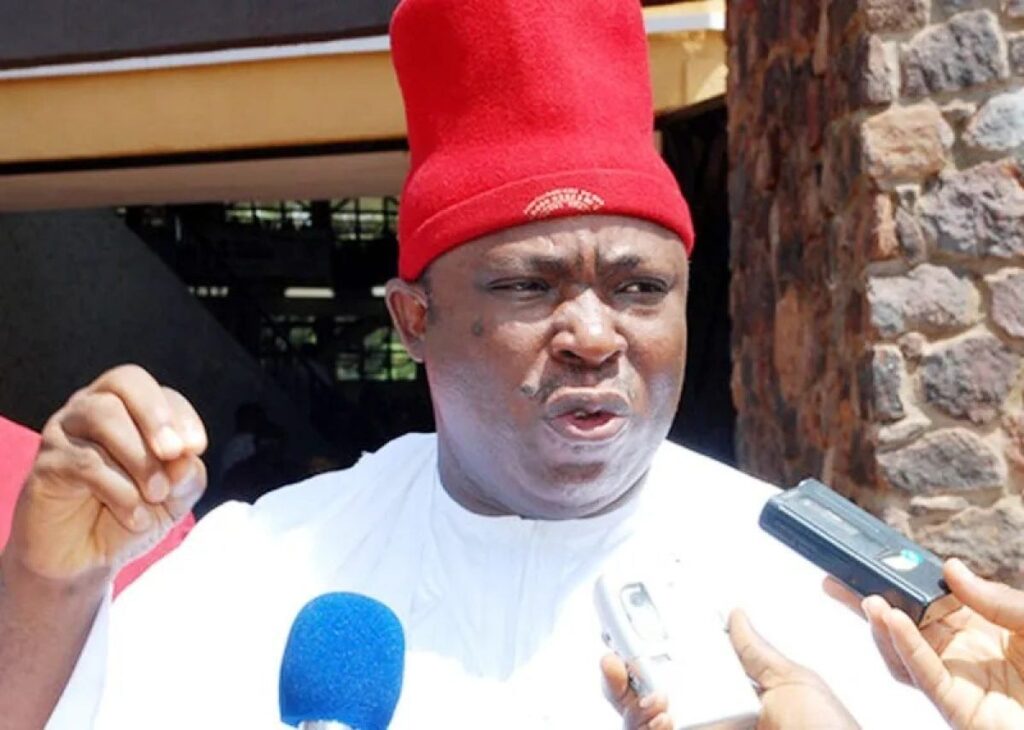
Following the presidential assent to the Electoral Act (Amendment) Bill 2026, a Senator representing Anambra Central Senatorial District, Sen. Victor Umeh has said President Bola Tinubu decision to sign the bill into law was expected, and predicted.
Speaking on Channels Television on Thursday, Senator Umeh said the political and legislative process surrounding the bill made the President’s assent inevitable.
According to the lawmaker, the controversy surrounding the debate was the electronic transmission of election results, particularly the provision now captured in Section 63 of the amended law
He noted that the repealed Electoral Act 2022, then Section 65, only provided for the transfer of results in a manner prescribed by the electoral commission, without expressly mandating electronic transmission.
He added that the electoral commission’s guidelines for the 2023 general election required electronic transmission, but the law itself did not explicitly state it.
READ ALSO
Umeh noted that the court held that electronic transmission “Was not expressly recognised by the Act,” even though the Independent National Electoral Commission (INEC) had the power to prescribe the mode of result transfer.
He said the amendment was therefore aimed at giving clear statutory backing to electronic transmission to avoid similar disputes.
“There is no surprise that it will be so. Anybody who was expecting the president not to assent to the bill is perhaps not honest to himself or herself. The whole process was predicted to end this way, and that’s what we have seen.
“Seeing what played out in both chambers of the National Assembly, one will be expecting that at the end, the president will veto the National Assembly or say that he doesn’t want to assent to the bill…because everything was tailored to meet a certain end,” he said.