
FELIX NWANERI reports on the commencement of real politicking following the release of the timetable and schedule for the 2027 general election by the Independent National Electoral Commission (INEC)
The build-up to next year’s general election is expected to gain more momentum, with the Independent National Electoral Commission (INEC) officially announcing the timetable and schedule for the polls.
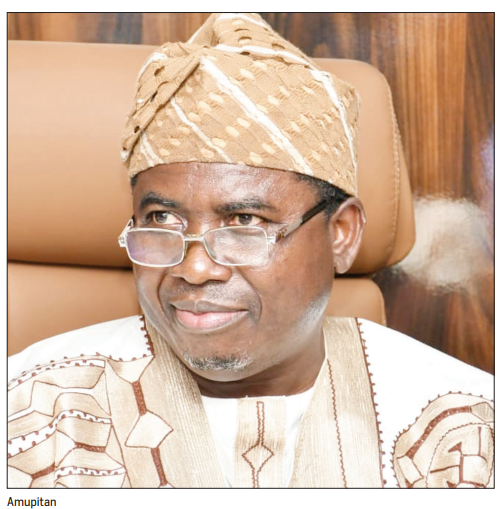
According to the timetable and schedule for the elections announced by the chairman of the election management body, Prof. Joash Amupitan, at a press conference in Abuja on Friday, the presidential and National Assembly elections will hold on February 20, 2027, while the governorship and state Houses of Assembly elections will hold on March 6, 2027.
The INEC chairman, who explained that the announcement is in line with provisions of the 1999 Constitution and the Electoral Act, 2022 (as amended), noted that the commission recognises the critical need for the timely action to ensure the integrity and effectiveness of the electoral process.
According to the schedule, the various political parties are expected to conduct their primary election between July 1 and September 30, this year, and must submit their lists of candidates between October 1 and October 31, while the commission will publish the final list of candidates on November 15. Campaigns for the presidential and National Assembly elections will commence on November 8 and end on February 19, 2027, while campaigns for the governorship and state Assembly elections will begin on December 15 and end on March 5, 2027, 24 hours before the respective election days.
Before now, political discussions centred mostly on the jostle for the presidential tickets of the main opposition parties, particularly that of the African Democratic Congress (ADC), a coalition of key opposition figures. Similarly, issues over tickets of the ruling All Progressives Congress (APC), where gubernatorial elections will hold as well as tickets of the party for the senatorial, House of Representatives and states Assembly elections have equally dominated the polity.
While some of the political gladiators have been testing the political waters with what many described as the poster game endorsement politics aimed at feeling the pulse of the people, the mind game over the 2027 elections will definitely give way for real politicking, following INEC’s release of the timetable and schedule for the general election.
It is against this backdrop that supporters and groups loyal to the aspirants, particularly the presidential hopefuls are expected to raise their game in the days ahead political activities rev across the country. As it stands, there is no contest for the presidential ticket of the APC but the battle would be at the state level, where primaries for the governorship, National Assembly and state Assembly primaries will hold.
Another epic battle ahead is the ADC presidential primary. The contest is one to be watched out for given the political profile of chieftains of the party, who have so far declared their interest. On the other hand, mot much is expected from the presidential primaries of the other main opposition parties – Peoples Democratic Party (PDP) and Labour Party (LP) – given the leadership crisis rocking presently rocking both parties.
APC: Tinubu already emerged as sole candidate
The principle of right of first refusal has already decided presidential primary of the ruling party in favour of President Tinubu given the torrent of endorsements for his second term bid by APC stakeholders. What is likely to play out is a national convention that will formally ratify the President as the candidate of his party. Many believe it would amount to a wild goose chase for any member of the APC to square against Tinubu in a primary election as the President has kick-started his re-election campaign in a subtle manner.
Endorsement of the President dates back to April 2024, when the President of the Senate, Godswill Akpabio, led members of the National Assembly to pay the President Sallah homage at his residence in Lagos during the Eid el Kabir celebration. Setting the tone for an early push for Tinubu’s re-election, Akpabio declared: “As you coast home to victory for a second term, may all the governors seated here also coast home to a second term victory in their states.”
At the gathering were 27 governors from across party divides, former governors and the leadership of the Senate and House of Representatives. Other speakers at the event showered praises on the President.
They include Vice President Kashim Shettima and Kwara State governor, AbdulRahman AbdulRazaq, who is the chairman of the Nigeria Governors’ Forum (NGF). A subsequent declaration by the then National Chairman of the APC, Abdullahi Ganduje, that there will be no vacancy in Aso Rock, further gave credence to the belief that the President’s re-election bid had been launched.
The Secretary to the Government of the Federation (SGF), George Akume, who spoke in like manner, particularly advised politicians of Northern extraction to wait till 2031 for another presidential bid. Although he acknowledged that individuals have the right to aspire for positions, he predicated his stand on the power shift arrangement between the North and South.
However, endorsement of the President’s second term bid got to a height, when governors of the APC extraction under the aegis of Progressive Governors Forum (PGF), declared him as the sole candidate of the ruling party for the 2027 presidential election. Hope Uzodimma, governor of Imo State and chairman of the forum, who announced the decision at the APC national summit at an APC summit in May last year, said the governors were united in their support for Tinubu’s reelection bid.
Members of the National Assembly elected on the platform of the APC, who also announced endorsement of the President as the party’s sole candidate for the 2027 presidential election at the summit, said their position was based on his political sagacity, According to Akpabio, who moved the motion in that regard, and which was seconded by the Speaker, House of Representatives, Tajudeen Abbas, Tinubu has been able to set Nigeria on the path of growth.
Similarly, the zonal caucuses of the ruling party have endorsed the President for a second term. But in what appears a departure from the norm, some members of the opposition political parties have equally joined the fray by endorsing the President for a second term even when their respective parties are strategisiing on how to wrest power from the ruling APC. Notable among these opposition politicians is Governor Charles Soludo of Anambra State, who made his position public during Tinubu’s visit to his state in May last year.
The governor elected on the platform of the All Progressives Grand Alliance (APGA) said his party will work with APC as both share a common belief in progressivism. Besides endorsements, some APC youth groups have raised funds ranging from N100 million to N200 million and donated same to national leadership of the party for the purchase of the nomination form the President Tinubu.
While the APC could be said to have picked a presidential candidate with ease, the party is likely to face a litmus test in its choice of a vice presidential candidate given emerging developments. Indications are strong that President Tinubu and the leadership of the party are at a crossroads at the moment over the choice of a vice presidential candidate for the 2027 election.
The President is said to be particularly under pressure by to drop Vice President Kashim Shettima (a Muslim) as his running mate and replace him with a Christian, to avoid any backlash the Muslim/Muslim ticket, which the party rode on to win the 2023 election is likely to trigger this time. The plot against the vice president is not only gaining momentum but has seen some Northern APC leaders shopping for possible replacements.
Those on the cards, according to sources, include a former Speaker of the House of Representatives, Yakubu Dogara and the Minister of Defence, General Christopher Musa. However, the move is said to have split Northern APC leaders into camps based on religious and zonal political cleavages – North-West and North East. One of the camps is pushing for a switch to a Muslim-Christian ticket, while another is bent on the MuslimMuslim ticket as in 2023. However, the vice president’s camp is insisting ting on the status quo; Tinubu running with Shettima.
While those rooting for a vicepresidential candidate from the NorthWest are looking at the of bulk votes the President stands to garner from such move, the plot to get Tinubu’s nod for a Christian, possibly from the NorthEast, where Shettima comes from, is aimed at avoiding the crisis that may erupt in the zone if the vice president is dropped.
Some analysts who noted that the APC would have imploded before now over the 2023 Muslim-Muslim ticket if not for the way President Tinubu managed the issue, however said the situation is not likely to be same come 2027. “There is intense lobbying for the vice-presidential slot ahead of the 2027 elections within the ruling APC as the plot against Shettima thickens.
This, has not only left President Tinubu at crossroads, but speaks to an imminent implosion that may rock the ruling party if not carefully handled. “As it stands, the President is undecided on whether to run with Shetttima or not, but I will tell you that he is under pressure over the issue given the implications of whatever choice he makes. “But I can also tell you that Shettima is not likely to give up without a fight. He is reaching out to APC leaders in the North and South as well as notable political and religious leaders across the country,” a source within the APC said.
ADC: High stake battle for presidential ticket
It is high stakes ahead of the ADC presidential primary election given the array of politicians who have so far declared for the party’s ticket. Among those who have so far declared interest to fly the party’s presidential flag are former Vice President Atiku Abubakar; former Governor Peter Obi and Rotimi Amaechi, and the immediate past Minister of Education, Emeka Nwajiuba.
For Atiku, who was the presidential candidate of the PDP in the 2023 elections, his official registration as a member of the opposition coalition party on November 24, 2025, not only signaled a major realignment ahead of the general election but confirmed the belief that he will contest the presidential election. However, his bid has continued to face opposition in some political quarters, particularly on account of his age and the power sharing arrangement between the North and South.
The former vice president is 79 and would be 80 by 2027, and it is against these backdrops that some stakeholders are of the view that he should step aside and support a younger person after six attempts that have seen him made it to the ballot as a presidential candidate on three occasions – 2007, 2019 and 2023. The merit or otherwise of this argument, Atiku’s camp is confident that he will pick the ADC’s ticket if he vies for it.
However, while the debate on whether Atiku should quit the political stage ahead of the 2027 elections rages, the fact remains that whatever choice he will make is not likely to be informed by the wishes of his critics as it will amount to succumbing to what many have described as cheap political blackmail. Those who hold this view believe that Atiku’s envisaged emergence as ADC’s presidential candidate is a done deal, considering his political network and financial strength. Others are of the view that adoption of the ADC by leaders of the coalition was solely for Atiku’s 2027 presidential project.
These, they say, informs why he has continued to shun entreaties for him to jettison his ambition. These assumptions, perhaps, informed why the former vicepresident, in October 2025, dismissed reports that suggested that he intends to step down for another presidential aspirant ahead of the 2027 elections. Atiku, who spoke with BBC Hausa Service then, was quoted to have expressed willingness to abandon his presidential ambition for a younger, vibrant and acceptable candidate under the ADC. But a statement by his Media Adviser, Paul Ibe, described such claims as a misrepresentation of his position. Ibe explained that a careful review of both the video and the transcript of the interview showed that Atiku never said, suggested or implied that he intends to step down for anyone.
The statement read in part: “After a thorough review of both the video and transcripts of the interview – in the original Hausa and the English translation – it is evident that at no point did the former vice-president expressly state, suggest, or even imply that he intends to step down for anyone. “What Atiku Abubakar clearly and unambiguously said was that young people, as well as other prospective presidential aspirants, are free to enter the contest. He further stressed that if a young candidate were to emerge through a competitive primary, he would readily support such a candidate without any hesitation.”
The clarification by the former vicepresident is understandable. His bid for Nigeria’s presidency dates back to 1983, when he made an unsuccessful bid after placing third behind Chief MKO Abiola and Alhaji Babagana Kingibe in the presidential primary election of the Social Democratic Party (SDP).
In 1998, he was elected as governor of Adamawa State but was picked before his inauguration by the presidential candidate of the PDP, Chief Olusegun Obasanjo, as his running mate, and both won the presidential election held in February 1999. After his first term as vicepresident, some governors elected on the platform of the then ruling party came up with a plot to deny Obasanjo a second term.
The plan was to hand Atiku the party’s presidential ticket in the 2003 general election but he opted for a joint a ticket with his principal and the duo were re-elected. However, the aftermath of the botched plot against Obasanjo, not only pitted Atiku against the then president, the cold war that ensued after their inauguration, degenerated to a bitter political battle by 2006, when Atiku declared ambition to succeed his principal.
Obasanjo’s insistence that Atiku will not succeed him forced the then vice-president to leave the PDP for the Action Congress (AC), which handed him its presidential ticket. The poll was won by the candidate of the PDP and Obasanjo’s anointed, Umaru Yar’Adua, but Atiku rejected the result and called for its cancellation, describing the poll as Nigeria’s “worst election.” The former vice-president returned to the PDP in 2009. Despite resistance by his state chapter of the PDP, he was granted a waiver by the party’s national leadership, which paved the way for him to contest the 2011 PDP presidential primary election.
He was selected by the Northern Elders Political Leaders Forum (NPEF) led by a one-time Minister of Finance, Mallam Adamu Ciroma, as the region’s consensus candidate, but was floored by the then acting President, Goodluck Jonathan, who went ahead to win the election. The 2011 defeat did not deter Atiku as he returned to the political turf again in 2014 for the 2015 presidency. He had before then made good his threat of dumping the PDP over what he described as failure of the party’s leadership to return it to the vision of its founding fathers, following his defection to the then opposition APC.
Many had thought that Atiku would be the candidate to beat in the APC presidential primary given his financial strength and political structure, he however lost the ticket to a former Head of State, General Muhammadu Buhari, who went ahead to win the main election. As expected, Atiku returned to his business, but a rumoured ambition sometime in 2017, prompted the belief that he has not foreclosed his presidential ambition.
The former vice-president, however, described the rumour as the handiwork of political mischief makers, who were out to draw a wedge between him and President Buhari. But it was not long before it became clear that he will take another shot at the presidency. However, there was an impediment to this quest – Buhari’s second term bid. This forced Atiku to resign from the APC on November 24, 2017 over the party’s failure to deliver on its promises to Nigerians. He later returned to the PDP and the stage was set for him to join the 2019 presidential race.
As expected, he defeated 11 other aspirants at the party’s national convention held in Port Harcourt, the Rivers State capital on December 7, 2018 but lost the election to Buhari by over a million votes. He challenged the outcome of the election but the Supreme Court dashed his hope of turning the table against Buhari. He, however, threw his hat to the ring again immediately INEC blew the whistle for the 2023 general election.
What however ensued over his ambition was infighting over zoning within the PDP. As expected, the May 28, 2022, presidential primary election of the party was characterised by high level politicking that pitted the aspirants against each other. The contest was won by Atiku, who polled 371 votes to defeat his major challenger and the then governor of Rivers State, Nyesom Wike, who garnered 237 votes. However, the PDP’s inability to resolve the pre and post-presidential primary election crisis contributed to Atiku’s loss of the presidential poll.
He polled 6.9 million votes to place second to his APC counterpart, Tinubu, who had 8.7 million votes. The belief in some quarters after the 2023 elections was that Atiku would quit politics after his bid to upturn President Tinubu’s election was dashed by the Supreme Court, but he vowed to fight on. He later called on the opposition parties to come together to create a more formidable front that will salvage Nigeria’s democracy from sliding into a one-party state.
His call, no doubt, culminated in the opposition coalition that adopted the ADC as the platform for the 2027 elections, but informs the belief that the former vice president kick-started his 2027 presidential bid immediately after the judgement of the apex court that affirmed Tinubu’s victory in the 2023 elections, and will not likely back down for anyone.
Obi on his part, had during the build-up to the formation of the coalition, maintained that he is not against the idea of the opposition parties coming together to challenge the APC, he however insisted that he will never be part of any alliance solely focused on seizing power without prioritising the welfare of citizens. Apparently, Obi’s position then informed the belief that he would not be part of the coalition, but politics being a game in which nothing is foreclosed, his decision to team up with the other opposition leaders in ADC has not only buoyed the coalition but unsettled some camps within the fold.
His insistence on contesting the 2027 presidential election is viewed as a threat to Atiku’s ambition and there is no doubt that the outcome of the ADC’s presidential primary would be one of the major factors that will determine how far the coalition can go in the main elections. A pointer to this assumption is the insistence by his camp that it is either the presidential ticket or no deal.
The belief among Obididents – Obi’s main supporters – led Yunusa Tanko, is that some people within the coalition are aiming to ride on the former LP presidential candidate’s back to get into office like many did in the 2023 elections even when they do not share his vision of “a new Nigeria.” No doubt, Obi’s support base is huge and populated by youths, who want a break from the old order, the questions are: Can Obi match Atiku in terms of structure and cash in a primary election given recent experiences; would he accept to be running mate if he fails to get the ticket or move to another party?
While the former Anambra governor is the only one to answer the questions, those urging Obi to pair Atiku as running mate, are of the view that such arrangement is likely to be backed by most voters in the North. But Obi, in a push back, reaffirmed his commitment to the zoning arrangement that rotates power between North and South. He also declared his readiness to serve for four years if elected given that the incumbent, Tinubu, who succeeded Buhari (a northerner that spent eight years in power), would have spent four years by 2027.
The former Anambra governor, who reiterated his position in a recent interview, however said that the ADC coalition is faltering because it is yet to settle questions on zoning and the rotation of key offices. He added that the coalition must tidy up loose ends and agree on a shared direction for the country. Asked whether he would remain committed to the coalition even if he is not chosen as its presidential flag bearer, Obi said he is driven by the desire to see Nigeria progress rather than personal ambition.
“I’m not desperate to be president of Nigeria, I’m desperate to see Nigeria work,” he said. Despite Obi’s position, his supporters’ insistence on the ADC presidential ticket is practically based on what they termed his acceptance by the electorate. The 64-yearold former governor’s first attempt at the presidency was in 2023, after running with Atiku in the 2019 elections. He was among the frontrunners for the PDP presidential ticket before he announced his withdrawal from the contest and resignation from the party as well, few days to the primary election.
He later opted for Labour Party and emerged as its candidate. This development, not only turned the party to a movement, but altered the political calculation for the 2023 presidential election. For the first time since 1999, Nigerians witnessed a three-horse presidential contest. Though Obi was unable to win the election, the massive mobilization by his supporters, mostly youths under the aegis of Obidient Movement and some other Nigerians, who wanted a break from the past, shook the political landscape.
The former governor polled 6.1 million votes, winning in 11 states and the Federal Capital Territory (FCT), Abuja. His influence also contributed to the appreciable number of legislative seats Labour Party won across the country as well as the governorship position in Abia State. Amaechi, who has equally promised to serve only one term if elected in adherence to the power rotation agreement between the North and South, is however of the view that competence, character and credibility over ethnicity should guide the ADC in its choice of a candidate for the 2027 presidential election.
The former governor of Rivers State, who insisted that the ADC must conduct an open contest, described himself as one of the most qualified contenders in the country. “If you look at all those aspiring, including Tinubu, who is better prepared than I am? My candidacy offers unity because I come from the South, and we are not in conflict with any region,” he said. A man whose rise to national limelight was quite meteoric, the immediate past Minister of Transportation, also has enviable intimidating political profile as Atiku and Obi.
After eight years as speaker of the Rivers State House of Assembly, Amaechi served as governor of the oil-rich state for two terms – 2007 to 2015. On leaving office as governor, he was appointed by President Buhari as Minister of Transportation after serving as the Director-General of his campaign organisation in the 2015 presidential election. He also served in the same capacity in the 2029 elections and was reappointed as Minister of Transportation.
Amaechi contested the APC presidential primary election for the 2023 elections but lost to Tinubu by 316 votes against 1,271 votes. Another high-profile politician in the race for the ADC presidential ticket is the immediate past Minister of State for Education and a former two-term member of the House of Representatives, Emeka Nwajiuba. His declaration signals the entry of someone who intends to ride on experience, policy depth and institutional knowledge to power.
However, this is not the first time he would be running for the presidency. He was in the race for the 2023 APC ticket alongside Tinubu and others, but pulled out over alleged manipulation of the process. The former chairman of the Tertiary Education Trust Fund (TETFund) insist that it will not be business as usual this time as Nigerians are looking at aspirants with proven integrity and requisite educational and work experience.
With a message anchored on what he described as “competence-first” approach to leadership, Nwajiuba emphasises that Nigeria’s current challenges require leadership driven by clear policies, effective negotiation skills and a strong grassroots political structure rather than rhetoric. He believes that his years in the legislative and executive arms of government as well as key national institutions have equipped him with abroad understanding of governance and public finance.
The youngest to have so far declared for the ADC presidential ticket, Nwajiuba represented Okigwe South federal constituency in the House of Representatives from 1999 to 2003 and 2019 before his appointment as minister by then President Buhari. He had also contested the governorship position of Imo State on three occasions – 2003, 2007 and 2011. Given that none of the contenders for the ADC presidential ticket is likely step down for each other, the belief is the outcome of the presidential primary will determine not only the how far the party will go in the 2027 elections but its future as well.
Analysts are also of the view that besides ambitions of the coalition’s leaders making it difficult for them to close ranks, the power sharing arrangement between the North and South, is another hurdle the ADC will face as it goes into the primary. These assumptions were predicated on the belief that Atiku, Obi and Amaechi are bent on contesting the 2027 presidential election and that none of them is likely to step down for the other. On power shift, the analysts wondered how leaders of the coalition will resolve the knotty issue of zoning as regards where their presidential candidate will come from.
The position of most political stakeholders is that it would be morally wrong for a northerner, whether of ADC or another opposition party’s extraction to succeed Tinubu after North’s eight years in power through Buhari. However, there is no doubt that leaders of the coalition are disposed to allowing aspirants from all parts of the country to vie for the presidential ticket.
The present democratic dispensation (Fourth Republic) would be 26 years old by 2027 and the power rotation arrangement, though not constitutional, has seen the South had the presidency for almost 16 years through Olusegun Obasanjo (South-West, 1999-2007) Goodluck Jonathan (South-South, 2010-2015) and Tinubu (2023 to date).
However, by 2027, when Tinubu’s first four years term will elapse, it would be 17 years for the South. For the North, the region has been in power for 10 years through Buhari (2015-2023) and Umaru Yar’Adua, who succeeded Obasanjo in 2007, but passed on May 5, 2010, barely three years in office. As it stands the South has almost a six-year advantage over the North but would be seven years by 2027. However, most Nigerians believe that power shift to the North will negate the rotational agreement.
This conviction is despite the clamour by some northern political leaders for their region to return to power in 2027. Their quest is based on what they termed need for the region to be at par with the South. It is against this backdrop that many are of the view that the coalition’s bid to unseat Tinubu will only gain traction if a southerner picks the ADC presidential ticket, and perhaps, completes South’s tenure by serving only four years, but there are those who believe that the one-term presidency proposal would not be sellable to northern supporters of the party.