

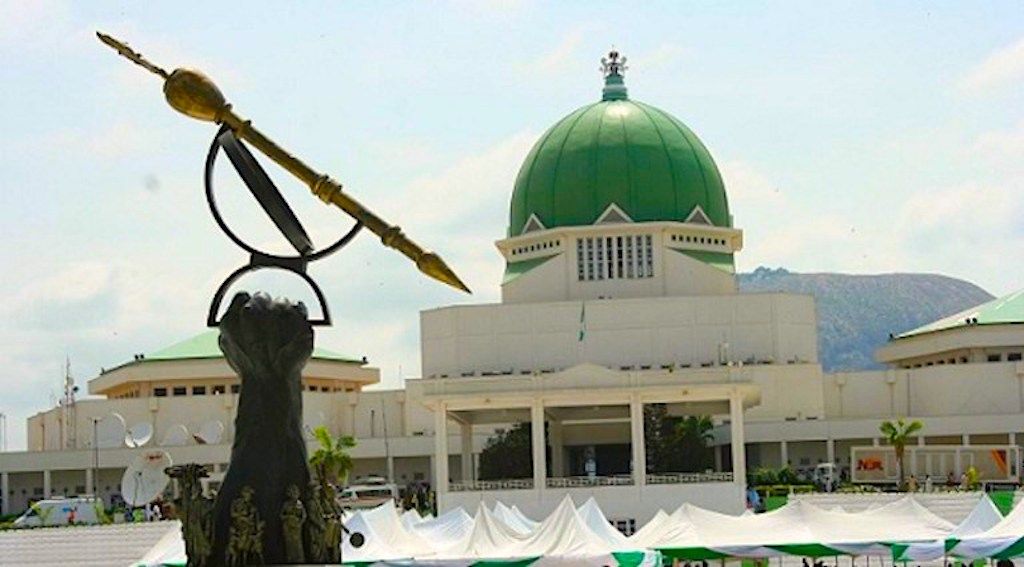
Barring the last-minute change, there are strong indications that the National Assembly may consider adjusting the date of the 2027 presidential election, following the announcement of early resumption from recess.
The resumption of the planary was announced in a notice issued on Sunday, February 15, and signed by the Clerk to the National Assembly, Kamoru Ogunlana.
According to the statement, Senators and members of the House of Representatives were directed to reconvene for plenary at 11 a.m. on Tuesday, February 17, 2026.
The notice, however, stated that “Very crucial decisions” would be taken during the session.
The notice read, “I am directed to inform all Distinguished Senators and Honourable Members of the National Assembly that the Senate and House of Representatives shall reconvene plenary sessions at 11:00 am on Tuesday, 17th February 2026, respectively.
“Consequently, all Distinguished Senators and Honourable Members are kindly requested to take note and reschedule their engagements accordingly to enable them attend the session, as very crucial decisions shall be taken by each Chamber during the session.”
However, sources within the legislature disclosed that the emergency sitting is largely connected to the 2027 election timetable.
According to insiders who spoke on condition of anonymity, the presidential poll could be moved from February 20 to February 13, 2027.
READ ALSO:
“It is more of an extraordinary plenary session to review the 2027 presidential election date as stipulated in the Electoral Act amendment. That is why our recess has been cut short through the announcement made by the Clerk of the National Assembly,” a senator said.
“The ultimate aim is to give legislative backing to INEC’s request to address the concerns raised regarding the 2027 election slated to hold during Ramadan,” the lawmaker added.
Another source confirmed that if discussions proceed as planned, the earlier date may receive legislative approval.
“This session is crucial. It is about more than dates—it is about ensuring that every Nigerian, regardless of faith, has a fair opportunity to participate in the electoral process. The decisions we take here could define the credibility of the 2027 elections,” the source said.
The development follows growing concerns over the timing of the election, which coincides with the Muslim fasting period of Ramadan. The Independent National Electoral Commission (INEC) had earlier scheduled the presidential and National Assembly elections for February 20, 2027, and the governorship and state assembly polls for March 6, 2027.
INEC has since acknowledged the concerns and indicated it may seek legislative backing for any necessary adjustments.
“Notwithstanding the foregoing, the commission has taken due notice of concerns expressed by stakeholders regarding the coincidence of the scheduled dates with certain nationally recognised holidays and observances.
“The commission wishes to assure the public that it remains sensitive to all legitimate concerns that may impact electoral participation and the overall conduct of elections.
“In view of these representations, the commission is currently undertaking consultations and may, where necessary, seek appropriate legislative intervention to address the concerns raised, while ensuring that any adjustment remains consistent with constitutional and statutory requirements,” the commission stated.
Prominent figures, including former PDP presidential candidate Atiku Abubakar, had urged reconsideration. On his verified X account, Atiku noted that the date falls “squarely within the Ramadan period (February 7 – March 8, 2027), a sacred season of fasting, reflection, and spiritual devotion for millions of Nigerian Muslims.”
Former presidential aide Bashir Ahmad also called for a review, stating: “If the intention is to encourage full and inclusive participation in the electoral process, scheduling such a critical national exercise during Ramadan may present challenges for a large segment of the population.
“Many Muslims tend to reduce engagement in worldly activities during this period in order to focus on religious obligations.
“Given the significant Muslim population in this country, it may be worthwhile to reconsider the timing to ensure broader participation and convenience for all citizens. I do hope this observation will be taken in the spirit of inclusiveness and national cohesion.”
Meanwhile, Senate Leader Opeyemi Bamidele defended the chamber’s earlier decision to remove the “real-time” transmission clause from the Electoral Act amendment, citing infrastructural limitations.
“By global standards, the real-time electronic transmission of election results may not be practicable at this stage of our development.
“To avoid a situation that compounds our country’s woes, it is better that we make it discretionary since Section 62(2) of the Electoral Act, 2022 has already established the National Electronic Register of Election Results,” Bamidele said.
He further emphasised the importance of practical lawmaking: “All these facts were before us for consideration before we initially decided to retain Section 60(3 & 5) of the Electoral Act, 2022, in the interest of the people and security. The data speak directly to the stark realities of our federation and not emotion or sentiment.”
“The term ‘real time’ was removed to ensure Nigeria’s electoral framework remains workable given current infrastructural and technological limitations, while still addressing citizens’ concerns across the country,” he added.
The Joint National Assembly Conference Committee is expected to meet to harmonise the Senate and House versions of the Electoral Amendment Bill before forwarding it to President Bola Tinubu for assent.
Observers say the outcome of the emergency plenary could significantly shape preparations for the 2027 general elections.