


The Managing Director of Aero Contractors, Capt. Ado Sanusi, has pointed to weak internal governance and failures in corporate governance as a primary reason Nigerian airlines struggle to survive and attract investment. He further stated that an airline cannot be sus- tainable if it is profitable on paper but insolvent in reality.
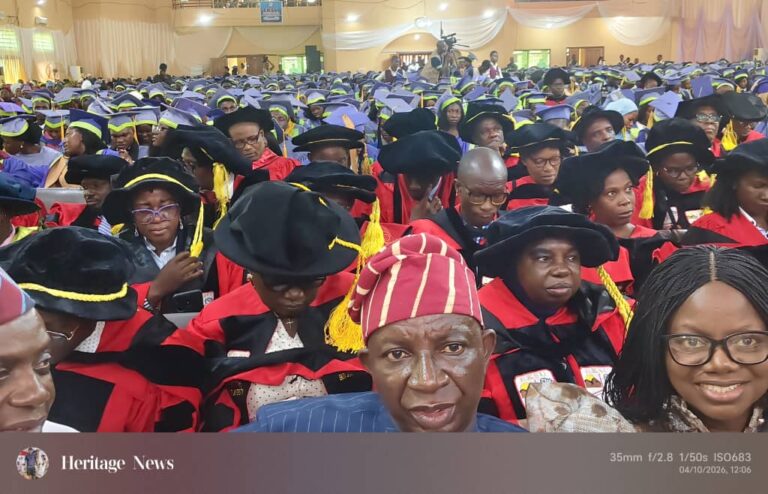
In his presentation at the African Travel Com- mission (ATC) meeting convened by the ATC Executive Director, Dr Lucky George, with the theme: ‘Challenges Facing Local Airlines in Nigeria and Practical Pathways For Sustainable Growth’, held in Lagos over the weekend, he stated that airlines are complex, capital-intensive businesses. Sanusi further explained that when governance structures are weak, boards lack aviation expertise, management decisions are short-term, or political and emotional consider- ations override commercial logic, airlines struggle to survive.
He said: “One of the most critical challenges facing airlines in Nigeria is weak internal gover- nance.
To survive, they need strong, independent boards, a clear separation between ownership and management, and profes- sional decision-making anchored in data, safety, and long-term strategy.
Without this, even wellfunded airlines eventu- ally fail.” The Aero chief also ar- gued that many domestic airlines are run as “oneman shows” rather than as structured corporate entities, noting that this lack of institutionalised management leads to poor decision-making, with business choices based on personal whims rather than data or longterm strategy.
This, he reiterated, had made international lessors and investors hesitant to work with Ni- gerian carriers because they lack the transparent governance structures required to ensure that leased assets or invested capital are managed prop- erly. He equally pointed out that when the founder of an airline is also the sole decision-maker; the air- line’s survival becomes tied to that individual.
“Without a strong board of directors or independent oversight, these airlines often fail to outlive their founders or survive major economic shifts,” he said. He described the in- dustry as in a state of financial fragility, stress- ing that while external factors such as high fuel costs and forex scarcity are real, weak internal controls exacerbate these issues, leaving airlines with razor-thin margins and no buffer for crises.
While airlines must take responsibility for internal weaknesses, Sanusi disclosed that external factors remain the single biggest threat to sustainability in Nigeria and much of Africa. Sanusi does not just blame the airlines; he views the governance problem as an ecosystem-wide issue.
He has recently called for stricter economic regulation, ar- guing that the Nigerian Civil Aviation Authority (NCAA) focuses heavily on safety but neglects economic regulation, allowing airlines to continue operating even when their internal finances and governance are clearly failing. For Sanusi, weak internal governance is a bar- rier to implementing the Cape Town Convention.