


The most valuable capital of all is that invested in human beings – Theodore W. Schultz
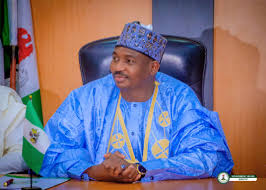
In naming Governor Ahmad Aliyu as the New Telegraph Governor of the Year in Human Capital Development, the newspaper has once again drawn national attention to a leader whose governance philosophy is firmly anchored on people-centered development.
The award is no doubt a fitting recognition for the Governor Aliyu’s administration which has deliberately invested in education, health, social welfare and institutional capacity, while also recording superlative performance across virtually all sectors of governance.
Indeed, beyond human capital development, Governor Aliyu’s record makes a compelling case, that he could easily have emerged winner in several other categories in public service delivery.
This honour conferred on Governor Aliyu by the authoritative New Telegraph newspaper builds on an earlier recognition of the governor by The Sun Newspaper, which in 2024 named him the Sun Newspaper Governor of the Year for Impactful Governance, citing the breadth, speed and visibility of projects executed under his administration under one year.
Taken together, the several awards reinforce a growing national consensus that Governor Ahmed Aliyu Sokoto represents a model of purposeful, and results-driven leadership.
More significantly, these recognitions confirm what has already become the common sentiment across Sokoto State of the average Sokoto State man and woman from the markets to offices, and from urban neighbourhoods to rural communities, that Governor Aliyu’s performance is so consequential that his re-election in 2027 should be a formality- a walkover, no matter the candidate the opposition presents.
For many residents, the awards have merely validated lived experience—that governance has become a serious business, projects are visible on the ground, and leadership is once again working for the public interest.
Since assuming office as the 20th Governor of Sokoto State, Aliyu has distinguished himself as a disciplined, focused and visionary leader. Guided by his well -articulated 9-Point Smart Agenda, he has demonstrated that purposeful leadership, fiscal discipline and empathy can reverse years of decline and restore public confidence in government.
In less than two years, his administration has delivered over 350 impactful projects, all of them directly touching the lives of the ordinary citizens. Underlying this performance is the governor’s deep concern about leadership itself— what it means, how it should be exercised and how history would ultimately judge those entrusted with power.
Governor Aliyu governs with an acute awareness that leadership is a sacred trust, a privilege, and that lack of performance in public office carries severe consequences for society. Conscious of his legacy and accountability to both God and posterity, Governor Aliyu has consistently held himself to higher standards, insisting on visible results and policies that would endure beyond his two terms. For him, leadership is not about occupying office, but about leaving society better than he met it. Central to this worldview is the belief that sustainable development begins with investment in human capital development.
This conviction is most evident in the priority accorded to education. In the 2025 budget, education received the largest share of the ₦526.88 billion allocation, surpassing UNESCO recommendations and underscoring a commitment that goes far beyond intentions.
Across the state, dilapidated schools are continually being renovated, new classrooms constructed and learning environments significantly improved through the provision of teaching materials and recruitment of teachers. These interventions have led to increased school enrolment, improved attendance and a noticeable reduction in the number of out-of-school children.
Complementing these efforts is a robust scholarship programme that has enabled Sokoto State indigenes to pursue tertiary education both within Nigeria and abroad, especially in medical sciences and Information Technology.
By removing the financial barriers that would have hindered learning, the Governor Aliyu administration has opened pathways of opportunity for thousands of young people, reinforcing the understanding that the future of the state lies in its classrooms. Healthcare delivery, is another critical pillar of human capital development, which has also received sustained attention.
Primary healthcare centres have been rehabilitated, access to care in rural communities improved, and health personnel better motivated.
These initiatives, alongside the regular and timely payment of salaries have strengthened productivity, and ensured improved living standards for the people. “Infrastructure may open roads, but human capital opens the future.” This principle is clearly reflected in Governor Aliyu’s broader governance outcomes.
Upon assuming office in May 2023, he inherited a state burdened by crippling liabilities, unpaid pensions, decaying infrastructure and eroded public trust.
Within months, he changed the narrative by restoring pipe-borne water supply to Sokoto metropolis, clearing critical debts that had paralysed essential services, addressed refuse management challenges and drastically reduced pension arrears of over N14 billion and has executed numerous projects without embarking on reckless borrowing.
While human capital and infrastructural development stand out as a defining strength of his administration, Governor Aliyu’s performance in other sectors has equally been remarkable.
In agriculture, he has pursued food security and wealth creation through large-scale land preparation, farmer support initiatives, provision of fertilizers and improved seedlings, mechanisation and strategic partnerships under the SPIN programme with the Federal Government and the World Bank.
The rehabilitation and optimal use of major dams are expected to transform Sokoto into a major agro-production hub, improving farmers’ incomes and contributing to national food sufficiency. Infrastructure development across the state – the metropolis and rural areas has equally been unprecedented.
Roads, bridges and bypasses—many abandoned for years—have been completed, improving connectivity and stimulating economic activities.
Rural communities are benefiting from solar street lighting, improved access roads and rehabilitated primary healthcare facilities, ensuring that development is inclusive and equitable.
In housing and urban development, Governor Aliyu demonstrated uncommon urgency by commencing the completion of 500 housing units and the construction of another 500 units within his first 100 days in office, alongside the development of the New Sokoto City with nearly 2,000 serviced plots.
His acquisition of the 136 units from the Federal Government and allocation to deserving public servants further reflects his belief that decent shelter is a social right.
These achievements earned him the 2024 Urban and Housing Governor of the Year Award, further reinforcing his multisectoral impact. Security—especially along the volatile eastern border with Zamfara State—has received deliberate and sustained attention.
The government established the Sokoto State Community Corps to enhance grassroots intelligence gathering and rapid response, complemented by the construction of strategic security bases in vulnerable areas. In addition, patrol and operational vehicles have been provided to improve mobility, while the welfare and working conditions of security personnel have been significantly enhanced to boost morale and effectiveness.
Collectively, these interventions have reassured communities, strengthened public confidence, and contributed to improved stability across the affected areas.
He has reaffirmed his unwavering commitment to deploy all available resources and authority to ensure the complete defeat of the terrorists, and the restoration of lasting peace.