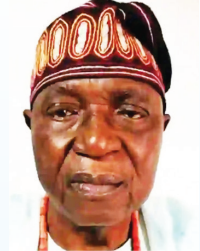

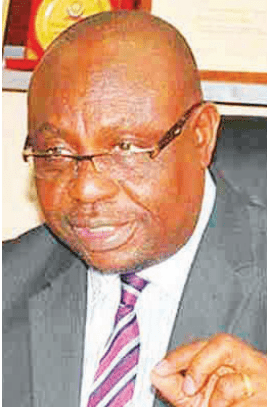
Human rights lawyer, Mr. Festus Okoye, was until recently the National Commissioner of the Independent National Electoral Commission (INEC) in charge of Information and Voter Education. In this interview with OLAOLU OLADIPO, he waded into the controversy over electronic transmission of election results in iRev. Okoye proffered solutions to stakeholders on things to do to enhance the quality of elections conducted by the Independent National Electoral Commission (INEC). Excerpts:
Do you think the National Assembly particularly the Senate is justified by making real-time transmission of election results to INEC portal optional?
I believe that the contestations, the demonstrations and the name calling around the issue of electronic transmission of (election) results is healthy in any democracy but the issues around it have not been properly placed.
People who have been making comments about what the National Assembly has done are agitating about only transmission of results but what the Senate deleted was the electronic transmission of results to the IREV portal.
Going by the provision of the Electoral Act (2022) and the repealed session of Electoral Act 2022, that is the repealed and the enactment Bill 2025 do not significantly in my view improve the electoral process, instead, the controversy over the deleted or removed provision will only complicate the electoral process and mislead Nigerians about the bill’s true aim and intentions and reflect poorly on the country’s ability to learn from history, precedents and mistakes.
Now, the Senate rejected the new provision which states that the presiding officer shall electronically transmit the results from each polling unit to the IREV portal in real time.
It added that such transmission shall be completed after the Form EC8A has been signed by the presiding officer or countersigned by the candidates or the polling agents who are available at the polling units.
For me, this does not improve the existing sessions of the Electoral Act 2022 in which the presiding officer shall transmit the results including the total number of accredited voters in a manner prescribed by the commission (INEC).
If you can recall, in the case of Oyetola versus INEC which was decided in 2023, the Supreme Court clarified the issues relating to collation and transmission of election results.
I remember that the Supreme Court suggested that as the name suggests, the collation system and INEC viewing portal are integral parts of the electoral process and that they have specific roles.
The collation includes centres where elections are collated and collected at various stages of the election which means that polling unit results transmitted to the viewing portals enables the relevant collation officers to verify the polling unit results when and if necessary for collation.
However, the results transmitted to viewing centres are intended to allow the public to view the polling unit results on election day.
Also, in the case of Peter Obi versus INEC, which was also decided in 2023, the Supreme Court also clarified the issue and stated categorically and specifically that the collation system including where elections results are compiled at various stages of election accordingly results transmitted to the viewing centres enables the relevant collation officers to verify the results for collation, however the results transmitted to this portal are intended to give the general public, the opportunity to view the polling unit results on election day.
Now, the widespread anger over the rejection of real time transmission of election results to IREV as far as I am concerned is misplaced. The focus rather should be on the mandatory election transmission to the collation system rather than having mere results viewing centres.
For me, whether results are transmitted on discretion or compelled by law to INEC result viewing centre does not alter the fact that it is supposed to allow the public to view what has happened on election day. It does not enter the collation system nor does it change the current system.
So what Nigerians should be advocating for is real time transmission of election results to the collation system rather than the IREV.
This is because IREV is only to give the Nigerian people a way of viewing what happened during election day but it does not translate to the collation officer the discretion or the mandate to the result electronically transmitted for the purposes of collation. These are two different things.
As a stakeholder and a former election manager, would you present such views before the National Assembly having seen the lapse?
Democracy and its sustenance should be a collective responsibility of everyone. It should be the responsibility of the Nigerian people especially for those of us that fought for the enthronement of this democratic order.
As a stakeholder in the electoral process, I attended some of the public hearings organised by the joint committee of the National Assembly and I was also part of the technical committee of the same National Assembly and so I can say that some of these issues have been on the table for some time but ultimately, the business of lawmaking is the exclusive preserve of members of the National Assembly.
Also, the ultimate decision of assenting to the bill passed by the National Assembly rests with the President and so, our responsibility as stakeholders is to make our views known through the platforms such as public hearings, protests, demonstrations, debates and through any other democratic means that are provided for in the Constitution. I am sure that the two chambers of the National Assembly know what the issues are and that during the harmonisation stage of both versions passed by them, we would make this view known to them. We will make it very clear to them too.
My biggest worry though is that from the demonstrations that I have seen and from the debates that I have heard, people are only talking about real time transmission of voting results; the current version of the bill mentions results viewing centre and as the name suggests, it is a viewing centre and not a collation platform.
So, what our focus should be and I insist is that we should be advocating for real time electronic transmission of election results to the collation system so that it would be part of the collation system.
How feasible is that?
We can have a duality in the process such that the results from the polling station would be carried manually from the polling unit to the INEC collation centre so that the results would be there physically. Results that have been transmitted directly from the polling units will also be available to the collation officer.
So, if there is an issue relating to the physically transmitted results that have been given to the collation officer, he can use the electronically transmitted one to clarify the issue to make sure that they align and that is what the issues should be.
Even when there is any issue with the result, what has been transmitted to the IREV centre, those results cannot be used to contradict what has been collated manually.
Apart from the issues of transparent collation of results, what other areas of the election management chain do you think we should reform?
The Senate has failed to adhere to some basic principle when it passed the Electoral 2022 Repeal and Reenactment Bill. Adherence to and fidelity to timelines are very essential to the electoral process.
Some timelines in the Constitution and the Electoral Act are as inflexible as the Rock of Gibraltar, especially when these deadlines are enshrined in the Constitution itself. As you know, timelines help reduce planning uncertainty.
They also provide the election management body, the political parties, the voters and the general public with an indication on when key events are expected to take place, enabling them to prepare well for the election.
The timelines must be well structured, properly ordered and reliable as one timeline connects to another and any incorrect sequencing of the timeliness can lead to legal challenges and disrupt the entire electoral process.
If you look at what has been passed by the National Assembly, the Senate shortened the deadline for the submission of nominated candidates from 180 days to 90 days without taking into cognizance that organising primaries and verifying valid nominations are a substantial task for INEC to undertake.
Now, INEC must monitor party primaries and the primaries must pass the test of validity. If you look at what has been passed, the parties have been condemned to submitting the list of candidates to INEC 90 days before the election.
Thereafter, INEC now has 21 days within which to publish the names of nominated candidates in their respective constituencies. After that, candidates now have 14 days to raise objections and correct errors in the particulars as published by INEC.
Now, 21 days plus 14 days give you a total of 35 days and when you subtract that from 90 days, it leaves you with 55 days to the electioneering period. As you know, INEC has to print ballot papers most times outside the country and store them in offices of the Central Bank of Nigeria across the country.
That doesn’t really bother me if you look at Section 31 of the Bill, it allows for the withdrawal of candidates after nomination. It states that ‘a candidate can withdraw candidature by written notice signed by him along with a sworn affidavit done by him along with the political party that sponsored him.
The political party must convey the letter and the affidavit to the commission, not later than 90 days before the election. Now, the law has provided that nomination should be provided by the parties 90 days before the election and at the same time in Section 31, you are also providing that the withdrawal of candidates will occur not less than 90 days to the election.
For me, this is a huge contradiction that will create very big challenges to the electoral process. Not only that, if you look at Section 285 of the Constitution of the Federal Republic of Nigeria, it provides for what we call ‘pre-election matters.’
That’s issues that occurred in the electoral process before the election itself and the nomination process is part of that. We have been canvassing that all electoral matters should be dispensed with before the election itself so that they don’t dovetail into the election process.
Now, if you have less than 50 days to the election for processes leading to nomination to be completed, it is next to impossibility for any pre-election matter to be decided before election because if you look at the sequencing of Section 285 it says that all pre-election matters should be filed within 14 days occurrence of the event, decision or action. The implication is that the moment you remove 14 days from 55 you know what you get.
What other issue have you seen in the new bill that you frown at?
I am yet to finish. The parties involved or the respondents will have to file a response. So, if they complete the process of filing the response, an election would have taken place.
The 180 days allowed by the Federal High Court to dispose off pre-election matters would have dovetailed into the election and then create some level of confusion.
I think that the joint committee of the National Assembly should take all these things into consideration and harmonise the timelines to make sure that no timelines contradict the other.
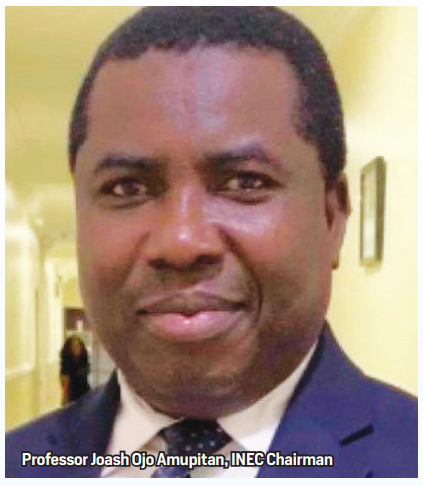
There have been calls in some quarters for the removal of the current INEC chairman with those making the call citing likelihood of bias against their faith during election; do you see this call as justified?
It is the prerogative of the President to nominate the chairman of INEC and that nomination must be approved by members of the National Assembly. If you look at Section 157 of the Constitution, it provides for the situation in which the chairman of INEC can be removed.
The person can only be removed for inability to discharge the functions of the office for which the person was appointed or for infirmity of mind or body or for misconduct.
Anybody who feels that the chairman of INEC has done any of the infractions as contained in the Constitution can make representation to the President. But for me, I think we should be focused on how to give INEC the opportunity to conduct an election that would be credible.