The Federal Government has said that Africa can boast of over $4 trillion to finance projects, particularly in the oil and gas sector.
It explained that this money is in sovereign wealth funds, pension funds, insurance assets, and unclaimed debts.
According to it, the problem is not whether the capital is available on the continent but how to unlock it to finance oil and gas.
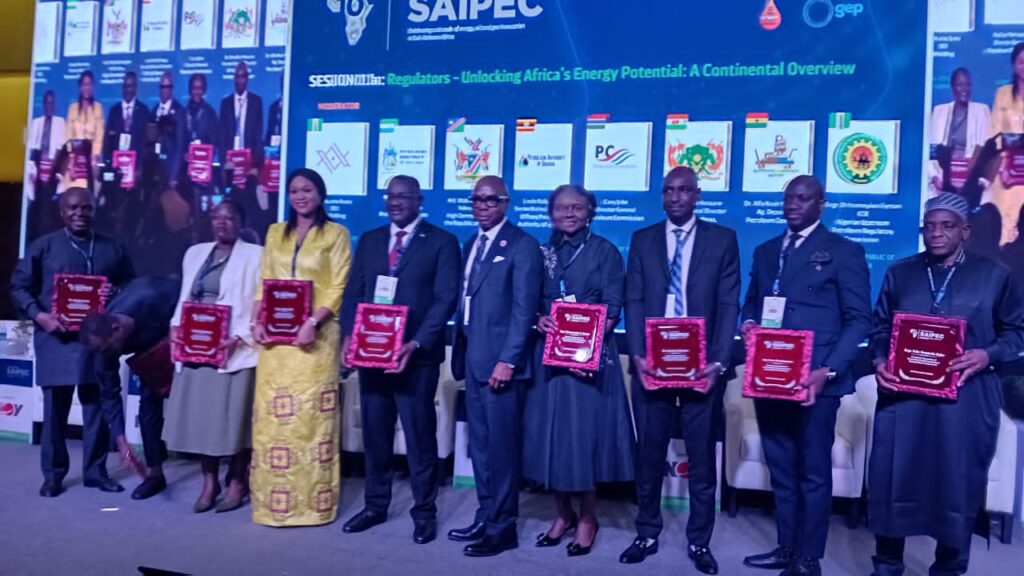
Minister of State for Petroleum Resources (Oil), Senator Heineken Lokpobiri, made the pronouncement while delivering his speech at the 2026 Sub-Saharan Africa International Petroleum Exhibition and Conference (SAIPEC) in Lagos on Tuesday.
He said that SAIPEC and the government should be talking about how to unlock this financing.
He said: “The assurance I am giving is that the government, working together with colleagues across the continent, will do everything possible to unlock this capital to finance projects in the sector.
“Africa has enormous markets. One of the problems we have is that people believe that we don’t market in Africa. The African market is huge. Data available show that for the past few years, Africa’s imports for goods and services in the industry is over $120 billion. Most of these are refined products and imported services to the continent.
“Even if PETAN and SAIPEC retain just 20% of that, the impact will be very transformative in the continent. That is why, as a government, being enablers of businesses, we have no choice but to ensure that we work with PETAN to strengthen the partnership of stakeholders to ensure they are supported and have the value that is needed in the continent.
“Africa’s problem, largely, has been lack of access to capital. That’s why African countries came up with the idea of the African Energy Bank (AEB). And thanks to our African brothers, that they trusted Nigeria and gave Nigeria the right to host the headquarters of the African Energy Bank. We had a rare privilege of handing over the furnished headquarters of the AEB to the promoters of the bank: Afreximbank and the African Petroleum Producers’ Organisation (APPO). We have given them a timeline within which the bank must flourish.
“Nigeria, as the host country, had the obligation, and we have met all our obligations. As of today, African countries have made subscriptions, and Nigeria has made about 70% of that subscription. I told my colleagues in Africa during a meeting in Abuja that if they delay raising the balance of the minimum capital, Nigeria will raise the balance so that the bank can take off.”
Chairman, Petroleum Technology Association of Nigeria (PETAN), Engr. Wole Ogunsanya, said the gathering was part of a collective effort to shape Africa’s energy future.
He added that the topic of the summit: “Africa’s Local Content Collaboration Strategy” clearly reflected that desire.
The Executive Secretary, Nigerian Content Development and Monitoring Board (NCDMB), Engr. Felix Ogbe, representing the Director of Corporate Services at NCDMB, Dr. Abdulmalik Halilu, said the insights from the SAIPEC 2025 conference showed that the journey towards fostering local content in Africa’s energy sector is a work in progress.
“One self-evident lesson from those insights is the realization that for Africa, collaboration is and must remain a cornerstone of our strategies. Our efforts cannot be siloed; they must be collective to ensure not only real progress but also consolidation of our collective efforts.
“Collaboration between governments, private sector players, and local communities continues to demonstrate itself as the bedrock upon which we must build successful local content strategies.”
The Group Chief Executive Officer of the Nigerian National Petroleum Company Limited, Engr. Bashir Ojulari, thanked SAIPEC for its consistency.
He said that the African energy future must be shaped by Africans, anchored on strong institutions, credible policies, and capable indigenous companies.