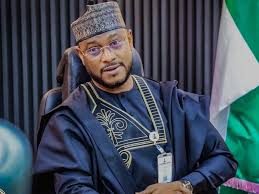
For about a decade, Zamfara State has been the epicentre of banditry and terrorism. However, Dauda Lawal, governor of the state reports that a lot has changed in the last two and half years the state has been under his watch. He spoke with ONWUKA NZESHI on some of his reform policies that are transforming the state
How’s Zamfara State today?
Zamfara is good. We’re doing a lot to keep our people safe and happy. We inherited a very dysfunctional system. We inherited a three and a half months backlog of salaries when minimum wage was still N7,000 in Zamfara State. We were able to pay that and then we implemented the N30,000 minimum wage and we’re now paying the N70,000 minimum wage.
We can say that we were among the first states that keyed into the N70,000 minimum wage and we are still paying. We always pay our salaries on the 25th, not later than the 25th day of every month. You’re journalists, so you can verify that information anywhere. I’m a politician but I don’t lie. In terms of pension, we had a 13 years backlog of pensions and we were able to clear it. We paid a total of N13.6 billion to everyone up to 2024. So, we’re now just paying for 2025.
We have so far done about 760 schools; we renovated, constructed new ones, fully equipped with furniture and everything across all the local government areas of the state. We have done about 100 primary health care centres, fully renovated and equipped. We’ve done 10 general hospitals, fully equipped with modern equipment. We have the latest MRI and CT scan machines in the country. It’s a 2025 model and it is at the Yariman Bakura Specialist Hospital in Gusau. We have done roads, unbelievable, everywhere now with solar street lights.
What other reforms or projects have you put in place?
We’re restructuring the system totally because we just want to have a process in place whereby whoever comes next, at least he can just key into it. We have done, for the first time, a 10-year development plan supported by the UNDP and KPMG. It was launched live in December, last year. Also, we have paid all the backlog of scholarships. We paid over N3.5 billion to settle WAEC and NECO examination fees for secondary school students across the state. Why did we do this?
For almost six years, our children who finished their secondary education, couldn’t get their certificates. And for two years, they couldn’t write NECO and WAEC. But all that is history now. We’ve settled the outstanding bills, collected all the certificates, distributed to all the students.
On the tertiary scholarships, we had problems with our students who are on scholarships in India, Cyprus and Sudan. We’ve paid all that. And then locally also, we’ve paid all the outstanding fees for all the schools that we were owing. I think, two weeks ago, we paid Christian University outstanding fees for nine years. Their certificates were held for non-payment of these fees, about 50 of them. We’ve cleared all that too.
Even the KEDCO, the power supplier, we’re no longer indebted to them. When we took over, all the government institutions, including government houses, were disconnected from KEDCO for non-payment of outstanding bills. So, we had to settle KEDCO to the tune of N1.6 billion to be able to get reconnected back to the national grid. So, a lot of changes have taken place.
You seem to have spent so much within a short time. How were you able to achieve all these?
It’s simple. We just had to set our priorities right and adopt prudence in the management of our resources. We downsized the Ministries, because when we took over, we had about 48 commissioners. We only have 18 now. We had 52 permanent secretaries. We only have about 20 now. We rationalised all the ministries.
And then, of course, we had to tackle the issue of ghost workers…. unbelievable. So, we’re still in that process, but we have brought the number down significantly because even with the salaries, everybody was just there. So, we’re bringing new things. We have refurbished all the offices. So, if you go now, at least you have a very comfortable environment where you can work as a civil servant. And, of course, training and retraining because we realised that even manpower is an issue. Capacity building is all incorporated into what we are doing now.
Are there any programmes targeting the youth population?
Of course, we have to engage the youth because even the insecurity plaguing the state is as a result of some economic factors pushing these young people into all sorts of crimes. So, we have to find a way to engage them and bring them on board. All the skilled acquisition centres in Zamfara State are now fully renovated, equipped and functional. We train a minimum of about 2,000 men, every three months.
By the time they graduate, we give them certificates, and then we give them a starter pack to start their own businesses. It could be tailoring, it could be plumbing, it could be POP, makeup, all sorts of things. So at least they are now functioning. By that way, at least you reduce the rate of unemployment.
Apart from the reconstruction of schools, what else are you doing to improve the quality of education and healthcare in your state?
We recently employed 2,000 teachers and deployed them to all the schools that are fully renovated now. In all the tertiary educational institutions, we’ve sunk in money there. Like the State University, we have gotten all the accreditations in all the courses because of the structures we put in place.
We’ve spent over N20 billion in the State University. In the polytechnic also, we’ve spent over N10 billion there just to make them functional so that we can absorb all our students that cannot gain admission into other federal universities in the country. So, we’re just trying to catch up.
In terms of healthcare, we have improved the number of personnel. I think we’ve employed almost over 2,000 nurses who are now working in various healthcare facilities across the state.
But how have you been able to effect all these reforms without any uprising and resistance?
Well, I think the most important thing in governance is first, you need to make your objective very clear to everyone and you need effective planning of the process under which those objectives can be executed. Yes, initially there were push backs, but we also took steps towards changing the mindset of the people. You can imagine for about 30 years people were used to doing the wrong things and all of a sudden now, you want to work on their mindset. It was a problem.
But the good thing is that I just decided to remain steady, no distraction, I say it must be done irrespective of how anybody feels because I know I’m doing that with a good intention and it’s for the future of the state and the children of Zamfara State. So, I just blocked my ears, closed my eyes and said, look, these reforms must take place. Yeah, there may be pockets of resistance here and there but you engage them.
You sit down with them at town hall meetings, and say, look, you know what? We’re almost 30 years old as a state. Compare yourself with Gombe, where are you? Compare yourself with Bayelsa. where are you? Compare yourself with Yobe, where are you?
Look at every indices of development, we’re at the bottom. We have 36 states in the country. In education, we’re competing with Yobe. It’s either we’re 36 today, or the next day we’re 35. Health care, zero. It’s interesting to know even the general hospital, or let me say the specialist hospital, there was only one ultrasound machine, even a non-functional one in the state.
A state where you cannot move 200 metres on a good road, when it rains, everywhere is flooded, a very dysfunctional system. Everything I’m telling you is documented. I’m not saying this for political reasons. These are facts. We have before and after picture of the state of our facilities.
We’re still paying the outstanding debt of the previous administration. On a monthly basis, a direct deduction of N1.2 billion is made on our finances. Initially, it was N1.5 billion, but because we’re paying, and we don’t borrow, it’s going down.
What has been the magic wand? Is it because of your background in finance?
I think it’s a combination of so many factors. First, experience matters in everything you do. Exposure also helps and of course, commitment. So, if you’re able to combine these as a leader, it will make things easy for you. Also, you need effective planning and when you plan, execution also is key. How do you do it? You need to get the right set of people to assist you in doing that which you want to do. But we must stay firm because there will be all sorts of distractions.
We can’t avoid the issue of insecurity. What have you done to make your state more secure and safe?
The insecurity that has been plaguing the state for over a decade, has gone down drastically because we faced it head on and I made it clear that I’m not going to negotiate with the bandits, never, unless there’s no government. So, it’s one reason why I had to set up my own internal security outfit called the Community Protection Guards where we employ youths, train them, and then they are the ones now providing security in all the local government areas. And they are fully equipped, kitted, guns, everything.
But they work in collaboration with the conventional security outfit. In fact, they do more of the work because they understand the terrain, they are locals and. It helps in bringing down the crime rate because they are always the first line of defence. They live within the communities. They are fully armed, fully kitted, with bulletproof, helmet, everything.
What are you doing about attracting investments to your state?
It is interesting to know that prior to state creation, in the entire Northern Nigeria, when you speak of commercial activities, Kano was always number one. But then the second at the time was Gusau, a local government headquarters. It was a commercial city because of trade.
We are into agriculture. That is where we have comparative advantage. If you look at all the cotton in the past, it actually came from Gusau. That is why we have the presence of the white people. You know you always have this BCGA, that is British Cotton Growth Association, where they have their own formation, it was only in Gusau, Funtua and Gombe. That chain, even the railway, goes all the way to Kaura Namoda, which is the last stop, based on the agricultural produce that we do.
The beans that you consume in the Southwest came from here. So, in terms of agriculture, Zamfara is a fantastic place. And that is why we also have to incentivise the farmers. I am the only government that gives out free fertiliser, free power tillers, pesticides, insecticide, to every community in the state free of charge and because there is an improvement in security people can now go to their farms without fear.
Yes, we are still battling insecurity here, especially in some of the rural areas, but in most of the major cities, you don’t hear any of such things again. In the past, not a single day would pass and you would not hear that 50 or 100 people have been killed but not anymore.
There may be pockets of attacks here and there, but we still remain committed and ready to ensure the state does not go back to the dark days.
Have you been able to get investors interested in the gold mines?
Yes, solid minerals are another area where we have comparative advantages. There is no place like Zamfara in terms of the presence of critical solid minerals in the entire Nigeria. Just recently, we went into partnership with a local company that has set up an industry in one of the local government areas. If you see the gold, just at the surface, it is unbelievable.
It is interesting to know that the informal gold market in Zamfara rakes in about $1 million daily. I’m telling you. We also have the highest grade, and largest quantity of lithium in Nigeria. But the challenge is that we don’t have people that can think on how we can invest on it and mine it at an industrial scale, we are yet to take advantage of it. They are only after FAAC allocation and once it comes, steal the money. They want to give people money here and there as stipends, and they take a larger chunk of the money. However, with all the developments we have initiated now, things will have to change.
Right now, we are building an international airport, one of the best in the entire Northern Nigeria. I’m telling you, and you can come and verify, there is no airport like that in the entire region. It is of high standard, world-class.
We are equally building a five-star hotel. It’s almost at 70 per cent completion now. So, it will go hand-in-hand with the airport. The airport will be commissioned on the 31st of March God’s willing. The airport may take maybe up till the second quarter of next year because of the furnishing and everything.
So, we are opening up the state for investors to attract investments. We are even getting calls now from different financiers, different industries, they want to set up either a lithium factory or gold factory or copper factory in Zamfara.
And that is why we are making a conscious effort to open up the state by building that airport as well as building an international hotel where at least people can come.
If I tell you to go to Zamfara, with all the negative news, you’ll wonder whether you’re going to hell from here. I’m sure that once you say you are going to Zamfara, the amount of calls you receive from family members, every minute, will be overwhelming. Every minute, somebody’s calling: How far? Where are you? Are you safe? But it’s not the case. We are changing that narrative. So, within the shortest possible time, investments will start to come into Zamfara. So these are some of the things we are doing and that will lead to industrialisation.
Like I said before, outside Kano, Gusau is the second commercial city in Northern Nigeria because we had all the expatriates. We specialised in leather tanneries. All these people from Morocco, Algeria, North Africa, they stayed in Zamfara because of all the hides and skin, they normally get from there and then transport it to Europe and other parts of the world.
That is why it’s a cosmopolitan town. We had the Chinese because the textile industry was in Gusau. I’m sure you have heard of Zamfara textile industry. So, we used to feed Kaduna and Kano industries, as well as Lagos.
We were the major supplier of cotton to Nichemtex in Lagos. TVMTL in Kaduna. So, you can imagine. We had all the cotton ginneries. We had about 18 cotton ginneries at a time. We had an oil mill because of the cotton seeds, and they were doing very well.
All the multinationals that you can think of, Bata, Lennards, SCOA, were all in Gusau. But it was like a curse, just like Nigeria and oil. The moment we were given a state, politicians realised that there’s free money. You don’t need to go and waste your time trading, suffering, before money comes. Let’s give you a contract.
What you’re getting in your normal trading activities, you can get it in one day. So forget about trading. That was the beginning of the problem. So, people that used to be enterprising now decided to sit idly and everybody became a politician.
The biggest head ache I had was changing that mindset because they’re used to sharing money with politicians. Unknown to them, they’ll give them N1million, and they’ll take N100 million and they can’t say anything. And deliberately, education is suppressed because it is only when you’re educated, that you can have the mindset to be able to understand what is rational and what is not rational; what is good and what is not good. If you’re not educated, you don’t have that capacity to identify the difference.
But the good thing now is even the peasants now understand the presence of the government because what they see now, they keep asking: so all these things are possible?
I went round the city a few days ago, just myself and my ADC. Honestly, as a person, I was impressed with what I saw. In fact, some of the road networks that we did, I didn’t even know that they had gotten to that level.
Everywhere now, people move freely. We now have paved roads with drainages, traffic lights, schools, hospitals are being built and the people are being empowered. I refuse to give them money. I said, I’ll never give you money. I would rather work on you and teach you how to get the money. And the question now is, where am I getting the money? Because up till now, with all these reforms, we have not borrowed a dime. Not one kobo from anybody. You can verify that information.
Are you saying that you don’t borrow even from the financial institutions too?
Our internally generated revenue (IGR) is N365 billion, we can now pay our salary with our IGR. When we took over, it was N90 million, but now it is over N500 billion
You mean annually or monthly?
Monthly. Go and check the data, it’s there. And of course, we engage some foreign donors. In the area of education, in the area of health, we do get funding from people that believe in what we are doing. Like the Bill Gate Foundation and the Dangote Foundation. We key in some of these donors to say, look, I’m not saying give me the money. Or give me the money, come and supervise how I use the money. If you’re not okay, you can take your money. But now they are the ones coming to say look, we believe in what you’re doing. We are very, very transparent and accountability is key. And that’s what I always tell people.
We are not here to be collecting bribes and doing things. No. We’re here to build the state for the future generation and it’s working. But it was hell when we started because it is not easy changing somebody’s mindset.
I’ll give you an example. The state is about 30 years old. So, anybody who’s 35 years old today in Zamfara, does not know the difference between right and wrong because he was brought up under that condition. So, what is normal has become abnormal. What is abnormal has become normal. There are so many other things that we are doing that are unbelievable. The transformation, honestly, within the last two years is amazing.
Many of your colleagues in the People’s Democratic Party (PDP) have defected from the party to the ruling All Progressives Congress (APC) due to various factors. Are you heading in the same direction?
A very good question and like I said during some recent town hall meetings in some of the local government areas in the state, I still remain in PDP until the last day when I realise there is no PDP, which means there’s no platform for me to contest. I said, if there’s a provision for independent candidates in Nigeria, I would have run as one. So, I’m not in a hurry to go anywhere until the end. When I realise PDP cannot move anywhere, then I have to make a decision. I won’t sit down alone and make that decision. I will consult, because politics is local. You need to also hear their view. So, to say this, yes, I still remain in PDP until the last day. But if PDP contests, I will remain in PDP. But if there’s no PDP, I need a platform to contest. It could be either way. My door is open.
You can imagine, I’m the only first-timer governor that is still in PDP with all the challenges. Adamawa is a second-timer. Seyi Makinde, Ibadan, is a second-timer. Bauchi, Bala Mohammed, is a second-timer. I’m the only one who’s a first-timer. And there’s no shaking. I’m not in a hurry. I’m not going to betray my party because I got elected under that platform.
However, if that platform is not available for whatever reason, then I have every reason to switch somewhere else. And I still remain in PDP until the last day when I know PDP is dead. Then I move on. At least I’ve done my best. I didn’t disappoint anybody. I went from the start to the finish line. When the time comes, then I’ll decide and the people will decide. I’ll be the last man standing.
What was the state of out-of-school children when you got in there and what has changed?
When I came in, I realised it was high, honestly, very, very high. So, I said, let’s try a model where we can combine western education and Islamic education. In each of the senatorial districts we have three. I built one Islamic and Western education school with classrooms, hostels, staff quarters, and provided everything as a model.
This is towards taking those children out of the streets because the challenge now is they use religion as a tool to oppress people. Remember, Zamfara was the first state that introduced Sharia. So, they are capitalising on Sharia to manipulate the system.
But in order not to go into conflict with the Mallams, I said, ‘let’s have a hybrid. Let’s try it and see.’ We feed them, we do everything and so far, they are running concurrently.
Remember also we have been dealing with IDPs for a long period of time now. So it’s a multi-sectoral problem that you need to do careful planning. And it should be over a period of time because everywhere we’re starting from ground zero, on everything.
What is your motivation in all these programmes?
What we’re enjoying today is the work of someone. I asked somebody, I said, look, ‘why is it that in the North, when you speak about leadership, you say Sir Ahmadu Bello. He died 60 years ago. He only lived for, I think, 54 years or thereabouts but he was able to achieve so much. That everything you see in Northern Nigeria, they will tell you it’s Ahmadu Bello. If you look at ABU Zaria, it’s Sir Ahmadu Bello’ ABU Teaching Hospital, FRCN, Northern Nigerian Development Company, the textile companies. Who brought all these? Sir Ahmadu Bello.
So, I’m saying that if after 60 years, we don’t have another Sir Ahmadu Bello in the entire North, with all the population that we have, there’s something fundamentally wrong. So, some of us will have to make the sacrifice. I was brought up with a golden spoon. My Dad was well-to-do. I attended the best schools, but what about the majority? Is that how everybody would just fold their arms and say, nothing can be done? No.
If you look at the nation itself, part of the issues that we have is leadership. If there’s any country that is blessed as a nation, Nigeria is one, in every aspect, human, natural, name it. But where are we in terms of development?
Go to Dubai. The entire population of Dubai is just 6,000,000 people. Every other person you see is a foreigner. It doesn’t rain in Dubai. It rains here. So, in agriculture, we can feed anywhere. Even where we are capitalizing on petroleum, we have more reserves than Dubai. We have more quantity than Dubai. But what happens? Leadership makes the difference.
The amount of money we are getting is enough to do so much, but we are so greedy. Everybody wants to be super rich that he don’t even know what to do with the money. People stole money and just kept it in a foreign account or somewhere for their family. Is that the best thing? Meanwhile, the majority are suffering. You cannot provide basic infrastructure. Why can’t we make life easy for everyone in this country because the money is there?
Typical example now. No subsidy. Our internally generated revenue at least is within the range of N3 trillion monthly. What is being shared with states? Initially, it was less than one trillion.
It is when we start complaining now that they share at least N1.2 trillion out of the 3 trillion, which means there’s still a surplus of 1.8 trillion. When you check, they will say deduction. For what? They say security.
You remove the subsidy, you have surplus money, and you’re borrowing. Now, if you put on a scale the revenue versus capital projects, how do you align the two as a nation? Is there a balance? Is there an equilibrium? The answer is no.So, we need to change our attitude. We need to do something drastic for the system to work. We don’t need to borrow. We don’t need to go through all this. You can provide all of those things.
Even our contract system is so inflated, you find that even the amount of the contract, what comes outside is three times more than the actual cost. And somebody will sit down on the money, and we’re all looking, we’re all quiet. We don’t want to die. Nobody wants to say anything. Everybody is scared. Think about it. You are journalists. You have access to information. You know what is happening.
You have just spent a few years now and God willing you get a second-timer, what would you want to be remembered for?
Even as we are now, let’s even say we stop here. Believe me, for the next 20, 30 years I’ll be remembered in Zamfara and I’ll tell you why. I have built structures that are visible, not hearsay. The transformation that I brought into the state is visible. If you talk of school, we built schools. If you talk of roads, we built quality roads, not manageable roads. Go and check the standards of our roads. No compromise as far as standards concerned.
If you look at hospitals, the hospitals that we go to today, I’m telling you with all sense of humility and pride, there is no hospital today that is better equipped than the specialist hospital, which is called Yerima Bakura Hospital in Gusau. There, we have the latest equipment, the 2025 model. The MRI is the latest in the country. I think even in Lagos, there’s only one, talk less of Northern Nigeria that is struggling. The CTScan is a 2025 model. So, for now, it’s the first of its kind. I’m not sure if there is a second one.
We expanded and computerized the hospital to a modern healthcare facility, fully equipped. We have the hospital management system now that all the new hospitals that we built, if you are treated in Anka Local Government today, and you go to Yerima Bakura Hospital, your records will be there in the system. It’s computerised. We’re going e-health. We’re going e-governance. We have all the infrastructure in place now. We are test-running. So that’s healthy. If you go to at least 10 local governments out of 14 now, we have brand new hospitals. I’ll be remembered for these investments.
If you go to all the local governments in terms of schools, I’ll be remembered for reconstructing the schools, putting the necessary infrastructure in place.
Now let’s talk about the airport. The airport will be there for eternity. I’ll be remembered for it. The five-star hotel I’m building, unless there’s bad management, I’ll still be remembered for it.. Even if it is the building that is there, I’ll be remembered. So, like I said, even if we stop now, I’ll be remembered for many legacy projects.
I’ve cleared the backlog of pensions of civil servants that was abandoned for 13 years. Even some of the people were dead. But we still paid their families the 13 years, pension. No bribery, nothing. You just go and get your money, just go and do verification. I’ll be remembered for that. People will remember me and pray for me. People in their graves now, their families are praying for me. I’ll be remembered for that.
So, there are so many things I can tell you that I’ll be remembered for. So, there’s no regret. Even if I leave today, walahi, no regrets. I’m good, wholeheartedly. And I can sleep comfortably and say, yes, it was during my tenure that XYZ happened in Zamfara State.
Even the recruitment process of Permanent Secretaries. We changed everything. There’s no politics to it. You must be deserving. You go through rigorous analysis, you go through the assessment centre, you write exams, oral and computer-based, and your scores are there.
So, if you complain, I’ll say, look at what you scored. I did not bring somebody from Zamfara State, I came to the Federal Civil Service Centre here. I said, this is what I want, because I want to build a quality system through capacity building. I don’t want to have a Permanent Secretary that cannot write a memo. So, it’s not based on who you know, and I made it very clear and it is working.
By the time we go on e-governance now, we’ll put all the necessary infrastructure in place; all the computers, everywhere. Go to all the offices of the civil servants, the secretariat today, I can comfortably tell you that even Lagos offices don’t have that kind of office. They don’t have it, go and check. I’ll take you to Gusau, come and go with me. I’ll show you how practical this is. It’s not hearsay. These are real.
If you’re a Kabu-kabu man now, you can go and pay your tax and everything happily. You can imagine, because they were saying, no more breakdown of the motorcycle, no changing new tyres, no changing new brakes, everything is working because of good roads. They can work round the clock, because there is solar light everywhere, at night, everywhere is lighted; booming. It’s simple economics. If you look at our salary, we’re paying about N4.5 billion salary monthly. It’s a state that is purely civil service.
If you go to the market now there’s economic activity. If you go to the bank now, because your salary, the yard stick is six months consistent, and they check your account and see that on the 25th of every month, your salary boom, the bank will be able to give you a loan, because you already set that record.
So, there’s economic activities; that is how you stimulate the economy. That is when you don’t feel it. Check the index. In terms of inflation, Gusau has the lowest inflation rate. Check price of commodities, Gusau has the lowest. We’re also fighting crime and I’ve provided over 300 vehicles to the security agencies to fight crime.
As we speak, I’ve bought about 30 brand new armoured personnel carriers (APCs) each one costs about N750 million, just to make sure the state is safe. They monitor everything with the latest technology. So, I’ll be remembered for this too.