
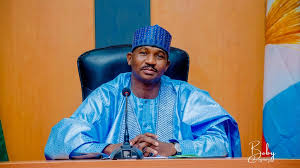
In a decision that holds promise for cultural preservation, economic diversification, and identity renewal, the administration of Governor Ahmed Aliyu of Sokoto State has announced plans to restore historic and cultural sites across the state.
Framed as part of a broader strategy to strengthen tourism, protect heritage, and improve internally generated revenue (IGR), the initiative draws inspiration from the enduring legacy of the Sokoto Caliphate—one of Africa’s most influential pre-colonial states, renowned for its systems of governance, Islamic scholarship, judicial administration, and trans-Saharan intellectual networks that shaped much of West Africa in the 19th century.
If pursued with discipline and sustained commitment, this effort could become one of the most consequential heritage and tourism interventions in the North-West Zone in recent decades, repositioning Sokoto State as a major centre of cultural learning, religious tourism, and scholarship in history.
Governor Aliyu therefore deserves commendation, particularly in view of the governor’s clear determination to translate vision into action and to ensure that these restoration efforts deliver tangible, long-term benefits for the people of Sokoto State—economically, culturally, and socially.
Sokoto State occupies a singular place of importance in the cultural and intellectual history of Northern Nigeria and indeed West Africa.
As the cradle of the Sokoto Caliphate, founded in the early 19th century by Shehu Usman ɗan Fodio, the state is home to monuments, sacred spaces, manuscripts, and cultural landscapes that chronicle one of Africa’s most influential Islamic reform movements and systems of governance.
The Caliphate’s legacy of scholarship, administration, trade, and social organization continues to shape religious and cultural life across the region.
Yet despite this remarkable inheritance, many of the heritage sites have suffered from decades of neglect, environmental degradation, and lack of investment.
Several historically significant locations remain underdeveloped, poorly documented, or inaccessible to the public. In this context, the current administration’s decision to prioritize restoration signals an important recognition that cultural heritage is not merely about the past, but a strategic asset for the present and the future.
At the heart of this initiative was Governor Ahmad Aliyu’s announcement during the commissioning of the remodeled Zawiyatu Sheikh Aliyu Bunza, where he articulated a bold vision that restoration of heritage sites would go beyond renovating mosques or historic buildings to become the foundation of a sustainable tourism ecosystem grounded in cultural pride.
His administration has also taken steps in directing government agencies to prepare a comprehensive blueprint for heritage site restoration and management, a strategic move that reflects an understanding of the need for meticulous planning, professional stewardship, and sustainable execution.
Equally important is the administration’s openness to collaboration with the Federal Government institutions and private stakeholders to achieve these goals.
Heritage preservation and tourism development are capital-intensive and technically demanding endeavors that no single actor can successfully execute alone.
An inclusive approach that draws on public expertise, private investment, and community participation increases the likelihood of success.
This approach reflects a governance philosophy that is inclusive, pragmatic, and future-oriented. The potential economic implications of this initiative are significant.
When properly managed, cultural tourism can generate employment, stimulate small businesses, attract investment, and expand revenue streams for the state government.
Sectors such as hospitality, transportation, crafts, local commerce, and creative industries stand to benefit directly. For a state seeking economic diversification and youth employment, heritage-based tourism offers a viable and still underutilized pathway.
Experiences from other countries demonstrate that this is possible. Morocco has successfully leveraged its historic cities, such as Fez and Marrakech, into major tourism hubs built around heritage conservation, artisan industries, and cultural festivals.
In Senegal, the preservation and promotion of Gorée Island transformed a site of painful history into a global destination for cultural tourism and education, generating sustained economic activity for local communities. Ethiopia’s investment in the ancient rockhewn churches of Lalibela and the historic city of Harar has similarly positioned heritage as a pillar of national tourism revenue.
These examples show that when history is thoughtfully preserved and professionally packaged, it can become a powerful driver of an inclusive economic growth.
Sokoto State, with its unique Caliphate heritage, scholarly traditions, and living religious institutions, possesses comparable potential to follow this path and translate cultural assets into sustainable economic opportunity.
Several sites in Sokoto State already have strong tourism potential. The Hubbaren Shehu Usman ɗan Fodio, the tomb of the Caliphate’s founder, remains one of the most sacred historical locations associated with the nineteenth-century jihad and reform movement.
With guided tours, the site could serve scholars, pilgrims, and history enthusiasts while efforts would be made to preserve its sanctity.
The Sultan’s Palace, the enduring seat of the spiritual leadership of Nigerian Muslims, symbolizes the living continuity of the Caliphate from 1809 to the present day.
Carefully managed cultural and historical tours, exhibitions, and seasonal festivals would allow visitors to experience its history.
Gidan Shehu, the residence associated with Shehu Usman ɗan Fodio and his family, offers another tourist attraction. Its conversion into a museum would provide educational value by showcasing manuscripts, artifacts, and narratives that reflect the Caliphate’s intellectual foundations and ethical ideals.
Other sites—including the Waziri Junaidu History and Culture Centre, the remnants of the old Sokoto city walls and gates, and heritage locations associated with Nana Asma’u—highlight the diversity of Sokoto’s historical landscape.
Nana Asma’u’s legacy in education and women’s intellectual leadership, in particular, presents an opportunity to foreground progressive dimensions of the Caliphate often overlooked in popular narratives.
Analysts have long noted that historic cities across Africa—from Marrakech to Timbuktu—draw thousands of visitors seeking authentic cultural experiences.
Sokoto State, with its distinctive Islamic heritage, scholarly traditions, and royal institutions, has the potential to attract researchers, students, and international tourists interested in African and Islamic history.
Harnessing this potential could significantly expand the state’s internally generated revenue while empowering local entrepreneurs.
However, it is important to acknowledge that heritage restoration is neither cheap nor easy. Conservation demands sustained funding, technical expertise, adherence to preservation standards, and effective longterm management. Tourism development also requires supporting infrastructure— roads, accommodation, security, and promotion—to succeed.
Governor Aliyu is already providing critical infrastructure that has contributed to changing the face of the city. Security considerations, particularly in Northern Nigeria, is central to tourism planning. Safe and welcoming environments are essential for attracting visitors.
In this regard, the administration’s efforts to stabilize the state’s security situation deserve commendation. There is also the need for clear timelines, transparent budgeting, and regular public updates to maintain momentum.
Partnerships with universities, conservation professionals, and international bodies such as UNESCO could help ensure that restoration efforts meet global standards and potentially position Sokoto State for international recognition.
To the credit of Governor Aliyu, the focus on heritage revival aligns with earlier investments in religious and communal infrastructure, suggesting a broader commitment to strengthening the state’s social and cultural fabric. These actions point to a governance philosophy that values dignity, identity, and continuity alongside economic development.