



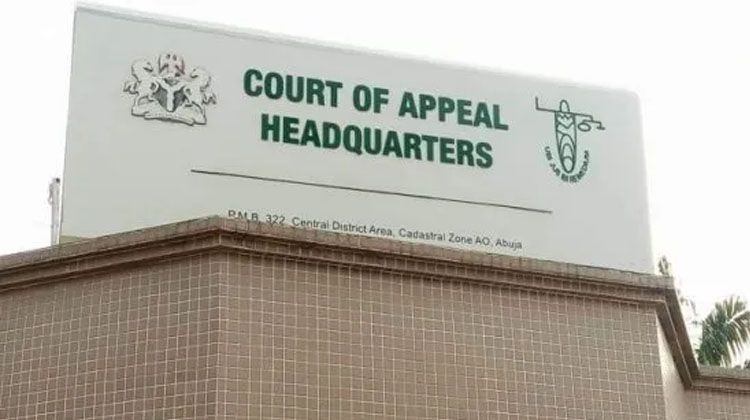
On Friday, a Court of Appeal sitting in Abuja affirmed ₦2.5 billion judgment entered against Ahmadu Bello University (ABU), Zaria, for the unlawful disengagement of 110 employees in 1996.
This is as the Court ordered immediate compliance with the judgment in two unanimous judgments delivered on February 6, warning of sanctions for default.
A three-man panel of the appellate court upheld the November 30, 2015, decision of the National Industrial Court of Nigeria (NICN), which nullified the mass dismissal and awarded the affected workers accumulated salaries and entitlements exceeding ₦2.5bn.
Justice Okon Abang, who delivered the lead judgments, dismissed separate appeals filed by ABU, the Federal Ministry of Education, the Attorney-General of the Federation, and the Central Bank of Nigeria (CBN), describing them as lacking merit.
In the first appeal, marked CA/ABJ/CV/476/2023, Justice Abang faulted ABU and its co-appellants for challenging a judgment delivered eight years earlier, holding that the appeal was an afterthought and that the trial court did not breach their right to a fair hearing.
He said: “Having resolved the three issues formulated by the appellants against them, this appeal is devoid of merit. It is accordingly dismissed.”
READ ALSO:
The court awarded ₦5 million costs against ABU, the Ministry of Education and the AGF in favour of the disengaged workers.
The NICN had earlier declared the 1996 disengagement unlawful, ordered the reinstatement of the affected staff and directed payment of all outstanding salaries and benefits.
In the second appeal, CA/ABJ/CV/1064/2022, filed by the CBN, the Court of Appeal upheld a garnishee order absolute issued by the NICN on January 27, 2022, directing the apex bank to release the judgment sum from ABU’s funds in its custody.
Justice Abang rejected the CBN’s argument that the NICN lacked jurisdiction to entertain the garnishee proceedings, ruling that enforcement proceedings were incidental to the substantive employment dispute already decided by the court.
He criticised the role played by the CBN in what he described as attempts to frustrate the execution of a valid judgment, stating that the bank acted outside its responsibility as a garnishee.
Justice Abang said: “The CBN ought to have released that money to the judgment creditors when the judgment was not set aside or stayed. Why is CBN holding the brief for the judgment debtors?”
He added: “The conduct of the CBN in this case is reckless and condemnable to the extreme. There is no reason for the CBN to have filed this appeal. Its conduct is oppressive.
It is not the duty of the garnishee to play the role of an advocate for the judgment debtors by shielding them from the effect of the judgment.”
The appellate court also faulted the decision of the CBN’s counsel to pursue the appeal instead of advising compliance.
Justice Abang said: “Counsel ought to have advised the appellant on the futility of filing this appeal or withdraw his services if his client insisted on proceeding with the appeal.”
He further held that the apex bank had unfairly benefited from withholding the funds for several years.
According to him: “Since 2018 ,when the order nisi was made, the CBN has held on to the money and has been trading with it at the expense of the judgment creditors. This is man’s inhumanity to man.”
Dismissing the appeal, the court ordered the CBN to immediately release the judgment sum, warning that failure to do so would attract disciplinary action against its principal officers. A further ₦5 million cost was also awarded against the apex bank.
Justice Abang dismissed the argument that the consent of the Attorney-General was required before garnishee proceedings could commence, citing the Supreme Court’s decision in CBN v. Interstella Communications Ltd.
Other members of the panel — Justices Adebukola Banjoko and Eberechi Wike — agreed with the lead judgments in both appeals.