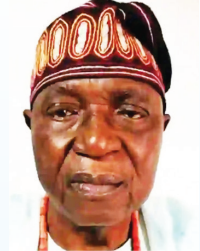

A Lagos-based social crusader, Sola Onamodu, has defended the Lagos State Government’s now-paused partial demolition in Makoko, describing the intervention as a necessary step to prevent a potential disaster.
Onamodu said while public debate has largely centred on displacement, loss, and the timing of the exercise, a critical question remains whether authorities should ignore visible and persistent dangers within densely populated communities.
He noted that for years, parts of Makoko were situated directly beneath high-tension power lines, exposing residents to constant risk as children played in narrow walkways, traders conducted business under the cables, and elderly residents remained indoors.
According to him, the government’s decision was not primarily driven by redevelopment ambitions but by the accumulation of safety risks that could easily spiral into tragedy.
“In crowded informal settlements, a single electrical fault, fallen cable or severe weather event can escalate rapidly. Fires spread faster, escape routes are limited, and emergency response is often delayed,” he said.
Onamodu added that in such situations, vulnerable groups, particularly children and the elderly, are usually the most affected.
He explained that the state’s action focused on clearing structures in the most dangerous locations, especially those built directly under high-tension lines, stressing that authorities have maintained the exercise was guided by hazard assessments and risk mapping rather than a blanket demolition.
Referencing Governor Babajide Sanwo-Olu’s position, Onamodu said the governor made it clear the state could not “stand by and allow a situation where hundreds of people could lose their lives in a single incident,” noting that waiting for tragedy before acting would have been irresponsible.
While acknowledging that the decision has attracted criticism, the social crusader described it as a common governance dilemma whether to act early and face backlash or delay action and later explain why nothing was done.
He further pointed out that Makoko’s waterfront location heightens its vulnerability to flooding and fire outbreaks, risks he said are intensified by overcrowding and informal construction.
“These layered hazards make inaction a decision with serious consequences,” Onamodu stated.
He, however, commended the government for pausing further demolition after clearing the highest-risk structures, saying the move indicates a willingness to review safety measures and reduce disruption for affected residents.
Onamodu also welcomed the announcement of a $2 million intervention fund aimed at providing temporary shelter, financial assistance, and support for small businesses impacted by the exercise.
“The pause suggests the government recognises the social cost of enforcement and the need to balance safety with humanity,” he said, adding that the intervention should be seen as a phased response to an identified risk rather than a rush to demolish.
According to him, the Makoko situation raises broader concerns about urban governance in Lagos and the point at which visible danger becomes too significant for authorities to ignore.
He maintained that the government’s central argument is that the intervention was not about responding to a disaster after it occurred, but about preventing one from happening.