
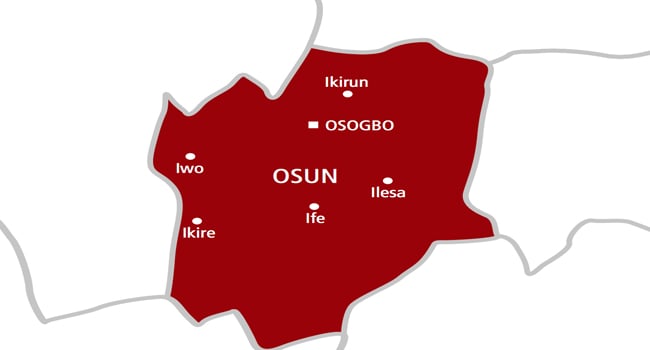
A renewed focus on governance, private sector mobilisation, growth, innovation hubs and cultural preservation would improve the lives and welfare of Osun State citizens, according to the Osun Development Association.
Members of the ODA affirmed these development indices, following a keynote address by the Chairman of the Nigerian Economic Summit Group, Niyi Yusuf, on priorities to improve the quality of life in Osun State.
Yusuf gave the charge at the ODA’s 30th anniversary gala held recently in Lagos.
Speaking on governance, Yusuf explained that citizens could contribute to public leadership without partisan politics, stressing the need for practical involvement beyond advocacy.
Yusuf said, “You can be apolitical but still produce good people who can be in governance in the states. Governance is important, and you’ve got to see how you can get your members to be involved. Beyond advocacy, it is the doing.”
He also challenged members of the association to mobilise private sector capital and expertise to support Osun’s development, noting that many of its members control or influence significant economic assets.
Yusuf said, “The challenge will be to ODA members: how can you mobilise private sector capital, the technical knowledge, and the know-how to support governance in Osun? When you have private commerce, it creates an ecosystem of distributors, retailers and employees, and that increases the pay-as-you-earn tax that the government can earn.”
On growth, the NESG chairman urged a shift towards scalable enterprises and export-orientated investments rather than an exclusive focus on small enterprises.
Yusuf challenged the ODA on the nature of investment, asking, “How can we mobilise growth capital to support those young ones who have courage, who are innovative? SMEs by nature will remain small, but we’ve got to look for companies that can scale. More importantly, how can we mobilise capital to support export processing?”
He also called on the association to move from mentoring to building physical spaces that support innovation, especially for young people, stating, “We’ve got to move from mentoring to setting up innovation hubs, spaces.”
On culture and tourism, the NESG leader urged Osun indigenes to leverage the state’s heritage to attract the diaspora and promote sustainable development.
He noted that the indigenes should “be custodians of the cultural and environmental areas of Osun”, as there is no reason why “we can’t create a yearly homecoming for the diaspora, including Yorubas in Brazil and Cuba who trace their roots to Yoruba”.
He highlighted recent improvements in education and health outcomes in the state, noting that Osun moved from 33rd position in the National Examinations Council rankings to seventh in 2025.
Yusuf said, “As late as 2020–2021, Osun ranked 33rd, but in 2025, Osun ranked seventh in the NECO exams. That is quite rewarding and aligns with the plan of ODA to transform teachers and education.”
He added that Osun ranked fourth nationally in health preparedness, even though no state scored above 30 per cent, but warned that primary healthcare and poverty remain major challenges.
Yusuf said, “In terms of the multidimensional poverty index, Osun ranked 31st out of 36 states. Poverty in Osun is about 40.7 per cent. Poverty should be an issue, but it is also an opportunity for us in ODA, because we can’t focus on increasing quality of life if people are still multidimensionally poor.”
He noted that Osun’s internally generated revenue almost doubled between 2024 and 2025, rising from N27bn to N54bn, which he said showed growing economic activity that should be harnessed for development.
Earlier, the Chairman of the Organising Committee, Dr Bamidele Alimi, said the 30th anniversary marked three decades of service, unity and commitment to the development of Osun.
Alimi said, “This gala marks a moment of reflection on how far we have come as an association and as a people. It is also forward-looking, calling on us to think boldly, act strategically and work inclusively for the future of Osun.”