
In the last two and half years that President Bola Tinubu and his All Progressives Congress ( (APC) have been in power, there has been a persistent cry from the opposition camp that the ruling party has been systematically decimating the opposition through various strategies. However, in this analysis ONWUKA NZESHI, says some recent political developments appear to signal a rebirth of the opposition.
The Federal High Court recently ordered the Independent National Electoral Commission (INEC) to recognize the Esther Nenadi Usman-led Caretaker Committee as the legitimate leadership of the Labour Party (LP), thereby effectively removing Julius Abure as the national chairman of the party.
This decision is based on a Supreme Court ruling from April 4, 2025, which affirmed Usman’s leadership. This development is significant for the opposition camp. It means that the opposition camp, particularly the Labour Party, will now operate under Usman’s leadership, potentially impacting their strategy and unity ahead of the 2027 General Elections.
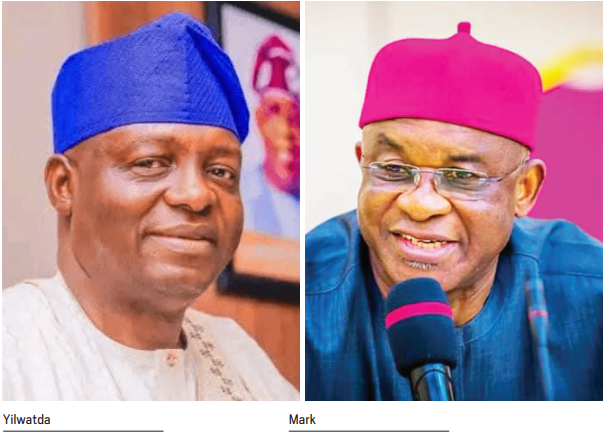
About the same time, INEC has also recognised the National Chairman of the African Democratic Congress (ADC), Senator David Mark and given him clearance to submit the list of candidates of the ADC for the FCT Area Council Elections.
The recognition of Sen Mark by INEC means the African Democratic Congress (ADC) can now participate in the FCT Area Council Elections with Mark’s leadership recognized. A Federal High Court had earlier ordered INEC to recognize and publish the list of ADC candidates submitted by Mark for the February 21 elections.
As it was in the case of the Labour Party, this is a significant win for the opposition, as it allows the ADC to field candidates and potentially strengthen their position in the elections and future election.
Opposition coalition
The 2027 election promises to be a critical test for Nigeria’s democracy, with the opposition seeking to challenge the APC’s dominance in the polity. The ADC is leading the charge to form a grand coalition against the ruling APC. This move is seen as a bid to unseat President Bola Tinubu in the 2027 elections.
The coalition includes prominent politicians from various parties, such as Atiku Abubakar, Peter Obi, David Mark, and Rauf Aregbesola. The ADC has been gaining momentum, with several politicians defecting from other parties, including the PDP and LP.
This coalition aims to provide a credible alternative to the APC and address issues like economic reform, security, and electoral integrity. Moving in this direction, key opposition figures in ADC, led by former Vice President Atiku Abubakar, Mark and Rauf Aregbesola, converged on Abuja last week for a book launch that had the trappings of show of force, as pointers growing unity against the ruling APC ahead of 2027.
Mark said ADC was out to rescue Nigeria, and urged Nigerians to see “the mission to rescue Nigeria” as a “collective” responsibility. Rauf Aregbesola, ADC National Secretary, was quick to add that state governors’ defections by state governors will not guarantee victory for the APC in the 2027 general elections, insisting that elections are won by the people, not political office holders.
Issues driving coalition
The issues driving the opposition coalition in Nigeria are many and include: Economic hardship, manifesting in soaring inflation and a cost-of-living crisis, with many struggling to afford food, fuel, and school fees. Insecurity: Banditry, Boko Haram, and separatist tensions, with over 10,000 killed in violent incidents since President Tinubu took office.
Electoral reforms: There are calls for the strengthening of the Independent National Electoral Commission (INEC) and ensuring transparent voter accreditation and result transmission. The coalition aims to address these issues through targeted subsidies, job creation, police reform, and infrastructure development.
Potential candidates
The opposition coalition is considering several prominent figures to lead the battle against the APC in 2027. Some of the potential candidates include: Atiku Abubakar: former Vice President and PDP presidential candidate in 2023, known for his experience and strong political base in the North.
Peter Obi: Former Labour Party presidential candidate and popular figure among youth and professionals, with a strong showing in the 2023 elections. *Rabiu Kwankwaso: Former Kano State Governor and a prominent figure in the North, with a strong political structure and support base.
*Nasir El-Rufai: Former Kaduna State Governor and a vocal critic of the APC, who has recently joined the Social Democratic Party. These individuals are part of the ADC) coalition, which aims to provide a united front against the APC.
The River to Cross
Interestingly, last week, former National Chairman of the Peoples Democratic Party, PDP, and currently a Chieftain of the ADC, Dr. Okwesilieze Nwodo, declared that the ADC would suffer massive division and loss of votes should Atiku and Peter Obi go into primary contest for the presidential ticket of the party.
Nwodo, a former governor of Enugu State, asserted that the leaders of the party from the South would negotiate with Atiku and plead with him to support Obi to fly the party’s ticket as the only way to defeat President Tinubu and the APC in the 2027 general elections.
Nwodo’s position is in tandem with the view of two other leaders of the ADC, Chief John Oyegun, who said that Southern leaders joined the party for the sole purpose of making Obi its presidential candidate and then president of Nigeria; and Dr. Umar Ardo, who on the other hand postulated that the only way Obi would clinch the ticket of ADC was if Atiku Abubakar decided to step down from the primary of the party.
The former Enugu State Governor highlighted the credentials of Peter Obi as the man for the job noting that he has demonstrated vast knowledge of the economy, his humility and the massive resources he left behind as governor of Anambra State.
He also argued that in the four times Atiku contested for presidency of Nigeria he had always chosen an Easterner as running mate and the people of the East had always given him massive support, contending that it was time for him to reciprocate that gesture by supporting Obi, more so as the presidency has been zoned to the South.
He said, “I align myself with former Edo Governor, John Oyegun’s statement for the following reasons: The presidency is zoned to Southern Nigeria at this time after eight years of former President Muhammad Buhari’s administration.
“And if Nigerians believe that the president (Tinubu) is not doing well, that there is hunger and poverty in the land, there is unemployment, massive insecurity and economic hardship leading to lack of indigenous and foreign investment in the country, that we need a change of government,
Peter Obi has demonstrated by his regular analysis of the performance of this government and the solutions he thinks will solve the problems of Nigeria, which sound convincing to everybody who listens to him, that he is somebody who can make a change from what we are going through at this time in Nigeria.
Opposition coalition strategy
The opposition coalition, led by the African Democratic Congress (ADC), is employing a multi-pronged strategy to unseat President Bola Tinubu in the 2027 elections. Their approach includes: Grassroots Mobilization: Launching voter registration drives across all 774 Local Government Areas, targeting youth and first-time voters.
Policy Platform: Promising targeted subsidies, job creation programs, tax incentives for small businesses, and security reforms. Electoral Reforms: Advocating for transparent voter accreditation and result transmission to strengthen the Independent National Electoral Commission (INEC).

Coalition Building: Uniting opposition parties, including the Peoples Democratic Party (PDP) and Labour Party (LP), to present a united front. However, the coalition faces challenges, including internal conflicts, zoning disputes, and the ruling All Progressives Congress’ (APC) access to state resources.
Counter strategy
However, the APC is aware of the plans of the opposition coalition and has developed some counter strategies. Some of the strategies include highlighting the weaknesses of the opposition by emphasizing that the opposition coalition lacked cohesion, have ideological differences, and competing personal ambition.
The APC predicts that the coalition will collapse. The ruling party is also trying very hard to focus on governance and has been highlighting its reform agenda, showcasing President Bola Tinubu’s Renewed Hope Agenda to demonstrate stability and continuity.
The APC is also remotely trying to divide the opposition by infiltrating and destabilizing their parties, using state resources, influence and planting moles inside the opposition camp. The APC is also luring defectors from opposition parties, expanding its influence and weakening the opposition.
Opposition chances
The opposition coalition’s chances of success in the 2027 general elections are uncertain, with both optimistic and pessimistic views. On one hand, the coalition, led by the African Democratic Congress (ADC), has brought together influential figures like Atiku Abubakar, Peter Obi, and Rotimi Amaechi, which could potentially replicate or exceed their combined voting power in 2023.
On the other hand, the coalition faces significant challenges, including internal divisions, regional tensions, and ideological differences. The ruling All Progressives Congress (APC) has also strengthened its position with a two-thirds majority in the National Assembly, making it harder for the opposition to pass legislation.
Some analysts believe the opposition’s best chance lies in presenting a united front, with a southern candidate, and focusing on economic and security issues. However, others argue that the coalition’s internal conflicts and lack of cohesion will hinder its success at the polls.