




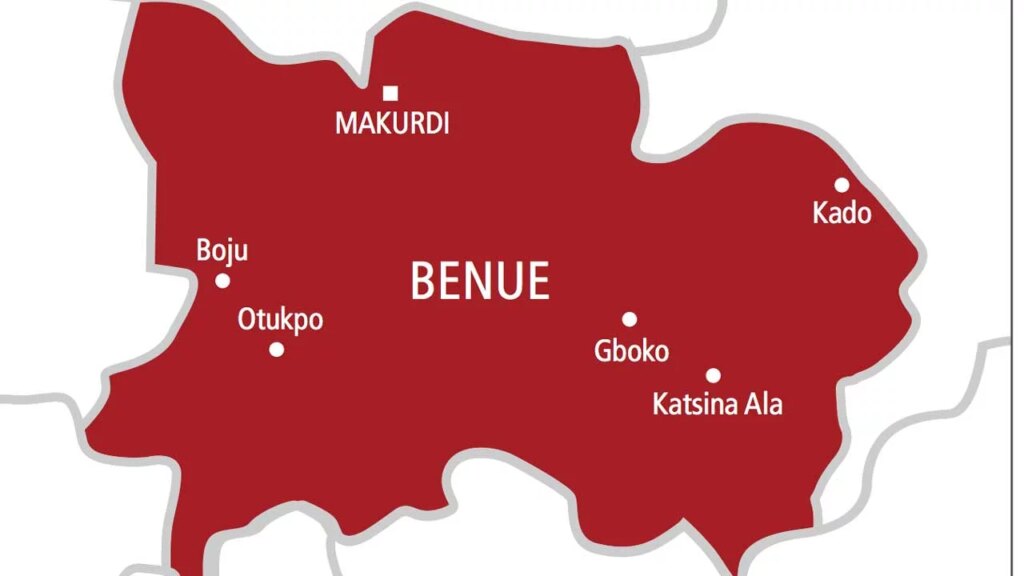
The Benue State Government, under the administration of Governor Hyacinth Alia, has introduced comprehensive education reforms to enhance quality education, reduce financial burdens on parents, and ensure accountability, with key policies taking effect in the 2025/2026 academic year.
These reforms, overseen by the Ministry of Education and the Benue State Education Quality Assurance Agency (BEQA), apply to both public and private institutions.
The Executive Secretary of the Benue State Education Quality Assurance and Examinations Board (BEQAEB), Dr Terna Francis, disclosed this during an interaction with journalists of the Correspondents’ Chapel of the Nigeria Union of Journalists (NUJ), in Makurdi, where he clarified BEQAEB’s mandate, reforms and enforcement measures across public and private schools across the state.
Dr Francis, who was reacting to allegations of corruption practices pinned against him by the National Association of Proprietors of Private Schools (NAPPS) in the state, described BEQAEB as one of the most disciplined regulatory establishments in the state, noting that resistance from schools and proprietors is often inevitable whenever regulations are enforced.
NAPPS had, aside from calling for the redeployment of Dr Francis for perpetrating corrupt activities in the education sector, also threatened a total shutdown of all private schools in the state if its demands are not met within one week.
But the BEQAEB leader explained that the governor’s decision to strengthen quality assurance and separate it from the Ministry of Education was guided by the need for a more rigorous and independent mechanism for monitoring schools.
Quoting the enabling laws, Dr Francis said BEQAEB is empowered to inspect, monitor, regulate, accredit and sanction schools, both public and private, to ensure compliance with approved minimum standards.
He noted that the legal backing informed the establishment of the Board to allow closer scrutiny of school operations and ensure proper implementation of education sector reforms.
Dr Francis highlighted the government’s investment in education, including the construction of new primary school structures, renovation of existing facilities, and the recruitment of over 9,000 teachers into basic education schools through the State Universal Basic Education Board (SUBEB).
According to him, the education sector received over 15 per cent of the state’s total budget in 2025, with a significant increase in the 2026 budget to 25.29 per cent, describing this as a clear demonstration of the administration’s commitment to reform.
He explained that part of the reform agenda includes the enforcement of policies such as the re-use of textbooks, the prohibition of graduation ceremonies for non-certificate classes, as well as the ban on compulsory lessons for kindergarten and lower basic education learners.
On levies collected by BEQAEB, the Executive Secretary referred to the Revenue Administration Law and the approved 2026 budget estimates, where revenues such as Quality Control, Workshop, Sports and ICT Development levies are clearly captured.
He explained that reactions from some proprietors arose after BEQAEB queried exorbitant charges by certain schools, including fees as high as N35,000 for BECE instead of the approved N10,250, and between N70,000 and N100,000 for WAEC, which is officially pegged at N27,000 with an additional processing fee of N500, bringing the total to N27,500. Dr Francis vowed that such practices would be brought to an end.
Dr. Francis also spoke on challenges inherited by BEQAEB following the merger of agencies, including delays in the release of results and shortages of examination materials.
He revealed that investigations showed poor planning and failure by some principals to discharge their statutory responsibilities as major causes of these challenges.
“To address this, and in line with our powers under the law, we introduced the e-Dossier system,” he said.
He explained that the e-Dossier replaces manual records and allows schools to upload Continuous Assessment and examination scores in real time, thereby eliminating manipulation, delays and human interference.
According to him, resistance to the e-Dossier system by some proprietors is linked to the operation of so-called miracle centres, where students migrate shortly before registering for external examinations. With the e-Dossier, continuous assessment records are tied to individual learners and their respective schools, and any movement is automatically flagged by the system.
This, he said, will effectively end miracle centres, as candidates from such centres will no longer be admitted for registration or examinations.
He added that BECE and Mock-SSCE examination results, which are conducted in the third term, will be released on time and used as the legal basis for promotion into SS1 and SS3, as required by regulation.
On examination fees, the BEQAEB boss cited the law and approved guidelines which empower the Board to determine and publish allowable charges for examinations and related levies.
He further clarified that no new rates have been introduced by the Terna-led Board, stressing that the N10,250 BECE fee remains the same amount paid in the previous year before his assumption of office.
Dr. Francis warned that schools are only permitted to collect approved fees, adding that the Governor has directed that handling charges must not exceed N5,000 in order to reduce the financial burden on parents.
He assured journalists that BEQAEB will continue to enforce the law, protect learners and parents, and restore discipline, credibility and standardisation in the education system across Benue State.
Speaking during the briefing, the state chairman of NAPPS, Hon. Ada Sunday Ojo, accused the BEQAEB leadership of arrogance, humiliation of school proprietors and unprofessional conduct, adding that the situation has been worsened by an unresolved institutional conflict between the Ministry of Education and Knowledge Management and BEQAEB, which has subjected schools to conflicting directives and regulatory uncertainty.
Hon. Ojo said the association was not opposed to government regulation but insisted that such regulation must be lawful, fair and transparent.
“If we say the governor is working, the governor needs money. But the governor does not need illegal money to work,” Ojo said, condemning what he referred to as arbitrary and unlawful levies imposed on private schools.
The association specifically faulted the compulsory N30,000 recertification fee imposed on schools that were already duly certified by the Ministry of Education, describing it as illegal, lacking statutory backing and amounting to double certification. NAPPS demanded an immediate refund of all monies collected under the recertification exercise.
It also rejected what it termed multiple illegal levies collected by BEQAEB, including e-dossier, workshop, ICT, sports development and office maintenance fees, arguing that none of them is backed by a law passed by the Benue State House of Assembly.
According to him, private schools should not be compelled to fund BEQAEB’s office development or maintenance, while all legitimate taxes should be paid only through the Benue State Internal Revenue Service.
NAPPS further raised concerns over the non-issuance of official government receipts for payments made to BEQAEB, describing the practice as a violation of basic principles of accountability and transparency. It also condemned the tying of examination registration, including WAEC, NECO, NABTEB, BECE and MOCK, to tax compliance, insisting that the right of children to education and examinations must not be used as leverage in fiscal or administrative disputes.
It also rejected what it termed multiple illegal levies collected by BEQAEB, including e-dossier, workshop, ICT, sports development and office maintenance fees, arguing that none of them is backed by a law passed by the Benue State House of Assembly.








