



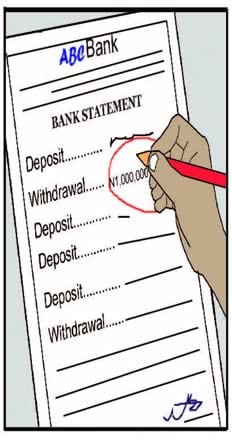
Mastering your bank statement turns it from a simple record into a powerful financial tool. By understanding your transactions, monitoring fees and interest, and spotting errors, you gain full control of your money. Tracking spending and planning finances helps you save, invest, and grow wealth effectively. Regularly reviewing your statement builds financial discipline and awareness. TEMITOPE AINA writes
A bank statement is more than just a monthly document showing your account balance; it is a powerful tool that provides insight into your financial habits, highlights errors, and helps you make informed decisions about your money. Many Nigerians receive bank statements but rarely take the time to read and understand them. Learning to read your bank statement like a pro can help you spot discrepancies, avoid unnecessary fees, and manage your finances more effectively.
Understanding the layout
The first step to mastering your bank statement is to understand its layout, because this is where you begin to make sense of your financial activity. Most bank statements start with account information, which usually includes your account number, the type of account you hold, and the statement period, typically a month. This section is critical because it confirms you are reviewing the correct account and provides the timeframe for the transactions listed. By knowing the exact period covered, you can compare your spending and deposits with previous months and notice trends in your financial behaviour.
Following the account details, statements often include a summary section. This part provides an overview of your financial activity during the statement period, showing your opening balance at the start of the month, total deposits, total withdrawals, fees charged, and the closing balance. This snapshot is essential because it immediately tells you whether your account grew, remained stable, or decreased over the month. Comparing this summary with previous months can highlight changes in your income, spending patterns, or even alert you to unusual activity that may need further attention. The summary section is essentially the financial “headline” of your account, giving you a quick understanding of your money flow without having to analyse every single transaction at first glance.
Analysing transactions
The core of any bank statement is the detailed list of individual transactions. Each transaction entry usually includes the date, a description, a reference number, the amount credited or debited, and the resulting balance after the transaction. Learning to read these entries carefully is essential because this is where you can spot irregularities or understand exactly how your money moves.
The description provides critical context, such as the recipient of a transfer, the type of payment made, or the merchant name for purchases. By reviewing these details, you can quickly identify transactions you don’t recognise, detect duplicates, or recall payments you may have forgotten about. For instance, if you notice a debit labelled with an unknown merchant or a transfer you didn’t initiate, you can immediately raise a query with your bank to investigate. Regularly analysing these transactions ensures your records are accurate, helps prevent overspending, and keeps you alert to potential fraudulent activity. Over time, this practice allows you to recognise patterns in your spending, helping you budget more effectively and make informed financial decisions.
Identifying fees and charges
A critical part of your bank statement that many account holders overlook is the fees and charges section. Banks in Nigeria, like elsewhere, levy a variety of fees on accounts. These may include monthly maintenance fees, ATM withdrawal fees, transfer charges, and penalties for exceeding transaction or withdrawal limits. Some of these fees are fixed, while others vary depending on how frequently you use your account or the types of transactions you perform.
Carefully reviewing this section is essential because it reveals the cost of using your account. By understanding the fees you incur, you can make smarter financial decisions to minimise unnecessary charges. For example, frequent withdrawals from ATMs outside your bank’s network may attract higher fees, gradually eroding your savings. Similarly, exceeding your monthly withdrawal limit may result in additional penalties. Being aware of these charges empowers you to adjust your banking habits, such as planning withdrawals more efficiently, using in-network ATMs, or choosing an account type that aligns with your transaction frequency. In essence, knowing how fees affect your account allows you to optimise your banking experience and ensure your money goes further.
Monitoring interest and returns
One of the most valuable insights a bank statement provides is information about interest earned on your account. This applies to savings accounts, fixed deposits, or any interest-bearing account. Your statement typically shows the total interest accrued during the statement period and indicates how it has affected your overall balance. Understanding how interest is calculated is essential for optimising your savings strategy. Some banks calculate interest daily and credit it monthly, while others may credit it quarterly. Knowing the calculation method allows you to plan your deposits strategically. For example, depositing a larger sum at the beginning of a period could result in higher interest earnings compared to making deposits sporadically.
For those using digital savings platforms or investment-linked accounts, statements also reflect the growth of your funds over time. By regularly reviewing this section, you can ensure your money is performing as expected and decide whether to adjust your contributions, explore higher-yield options, or reinvest returns. In essence, understanding interest and returns transforms your bank statement from a simple record of activity into a tool that helps you maximise the growth potential of your funds.
Spotting errors and fraud
Perhaps the most critical reason to read your bank statement is to detect errors and fraudulent activity. Mistakes can occur in banking systems, such as double charges, incorrect transaction amounts, or misapplied deposits. Even a small error left unnoticed can affect your budgeting and long-term savings.
Fraud is another serious concern. Unauthorised withdrawals, transfers you didn’t initiate, or suspicious debits can appear on your statement. Scammers often target unsuspecting account holders through phishing, impersonation, or digital attacks. By reviewing your statement thoroughly and consistently, you can identify these irregularities early. Prompt reporting to your bank increases the likelihood of recovering lost funds and preventing further unauthorised access. In short, carefully monitoring your statement is a vital defence mechanism that protects your money and ensures peace of mind.
Comparing and tracking your spending habits
Reading your bank statement also gives you a clear picture of your spending behaviour. Each transaction provides insight into how and where your money is going, whether on bills, groceries, transport, subscriptions, or discretionary spending.
By categorising these transactions, you can identify patterns, spot areas where you may be overspending, and make adjustments accordingly.
This process allows you to create a realistic budget, reduce unnecessary expenses, and allocate more funds toward savings or investment goals. Over time, regularly analysing your statement builds a strong habit of financial awareness and discipline. It empowers you to make deliberate choices about your spending, avoid impulse purchases, and gradually develop a more secure and sustainable financial lifestyle.
Using your statement for financial planning
A bank statement is also an essential planning tool. When applying for loans, mortgages, or other financial products, banks often request statements to evaluate your financial behaviour. A well-maintained and clearly understood statement demonstrates responsible money management and strengthens your credibility with lenders.
Beyond lending, statements help you set measurable financial goals, track progress toward them, and ensure that your transactions align with your objectives. Whether you are saving for education, a home, a business venture, or retirement, reviewing your bank statement allows you to monitor your growth and make informed adjustments.
Conclusion
Reading your bank statement like a pro is not merely about checking numbers; it transforms a simple record of transactions into a powerful tool for financial empowerment. When you take the time to understand the layout of your statement, you gain clarity on your account type, statement period, and the overall flow of your money. Analysing transactions in detail allows you to distinguish between necessary and unnecessary expenditures, identify patterns in your spending, and recognise unusual or unauthorised activity before it becomes a major issue.
Monitoring fees and charges ensures that you are aware of the true cost of maintaining your account and empowers you to take steps to reduce avoidable expenses. Similarly, understanding interest and returns gives you insight into how your money can grow over time, enabling you to make strategic decisions about deposits, savings, and even investments.
Spotting errors and fraudulent activity is another critical benefit of regularly reviewing your statement. By detecting discrepancies early, you not only protect your money but also strengthen your ability to respond swiftly, whether by reporting the issue to your bank or taking preventative measures to secure your account.
Furthermore, using your statement to track spending habits and plan your finances allows you to set clear, achievable goals. You can budget effectively, allocate resources wisely, and measure your progress toward long-term objectives such as saving for education, starting a business, or building an emergency fund. Over time, these practices foster financial discipline, awareness, and confidence, making you more capable of navigating Nigeria’s fast-evolving banking and economic environment.
In essence, mastering your bank statement turns it into a roadmap for financial growth and stability. It empowers you to make informed decisions, optimise the use of your funds, safeguard your wealth, and create opportunities for saving and investing. In today’s world, where digital banking and online transactions are increasingly common, taking the time to understand your statement is no longer an option.