



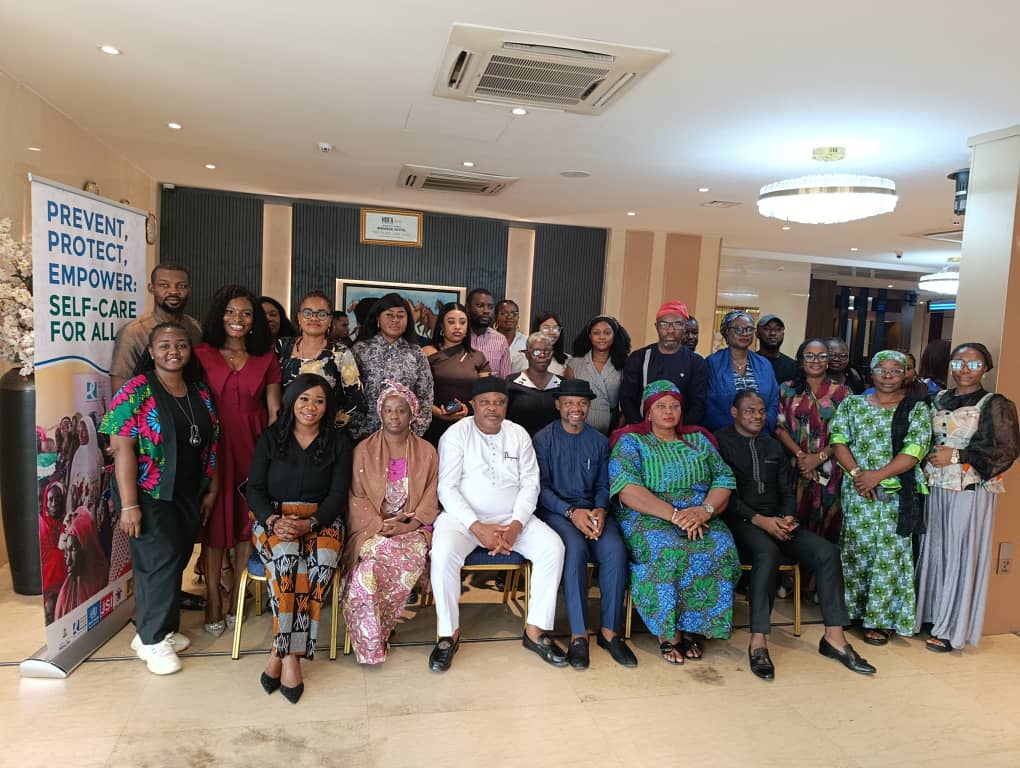
Stakeholders in Nigeria’s health sector have called for stronger advocacy, grassroots engagement, and wider partnerships to entrench self-care as a critical pillar of the country’s health system, warning that Nigeria cannot achieve Universal Health Coverage (UHC) without empowering citizens to take charge of their health.
The call was made at a national stakeholders’ workshop on the activation of the National Self-Care Advocacy Network (NSAN) on Wednesday in Abuja, convened by the Health Promotion Division (HPD) of the Federal Ministry of Health and Social Welfare, with support from the White Ribbon Alliance Nigeria and development partners.
Speaking at the event, the Director of the Health Promotion Division, Mr. John Uruakpa, described self-care as “no longer optional” but a necessity for protecting the health and well-being of Nigerians, particularly women, men, and vulnerable groups at the grassroots.
He said: “Self-care interventions have become very crucial in preserving the health and well-being of citizens in any country. As far as self-care is concerned in Nigeria, you cannot do without this network. The National Self-Care Advocacy Network is not just important; it is a key requirement of the National Self-Care Guidelines.”
Uruakpa explained that the network provides a platform for harmonised advocacy, in-country collaboration, and implementation of demand-generation strategies for self-care, stressing that self-care must move beyond national conversations.
“It is not done only at the national level. We need a formidable structure that will take self-care down to the grassroots, because self-care is about the community,” he added.
He also commended partners for sustaining the initiative, singling out the White Ribbon Alliance, the Department of Family Health, and the media for their pivotal roles.
“The media is very powerful in this network. In fact, they have formed the cornerstone for the advancement of this initiative, and I’m very happy many of you are here today,” he said.
The Executive Director of White Ribbon Alliance Nigeria, Tonte Ibraye, said the focus of the meeting was to generate ideas for evidence-based advocacy that would prioritise self-care at all levels of governance.
“We are civil society partnering with government to ensure that women, girls, and communities have the power to take charge of their health. Self-care reduces the burden on facilities, saves costs, and is especially critical in humanitarian and insecure settings,” she said.
“There are a lot of security challenges everywhere, but if the frequency of going to the health center is limited and people have access to healthcare directly from their homes, it will save a lot of costs both for the government, facilities, and citizens.”
Earlier, the Programmes and Advocacy Manager of White Ribbon Alliance Nigeria, Ms. Omolade Ogunlela, said the renewed push to activate the self-care advocacy network was driven by lessons from the COVID-19 pandemic and the need for inclusive participation.
“Self-care cannot achieve its full depth if it is limited to the Federal Ministry of Health and implementing partners. We need all hands on deck: the media, civil society organisations, women’s groups, and professional health associations. You cannot push a health initiative without solid advocacy and awareness. What COVID taught us is that the value of self-care cannot be overstated.”
The United Nations Population Fund (UNFPA) Representative, Dr. Ummuikhilthum Bajoga, said self-care aligns with the agency’s mandate to ensure safe pregnancies, childbirth, and the full potential of young people.
“In this trying time, when there is donor fatigue and funding constraints, we must look inward. We must do advocacy and think of domestic resource mobilisation. UNFPA is committed to supporting this endeavour,” she said.
Also speaking, Jennifer Adebambo, Programme Manager Partnerships and Collaboration DISC Project at the Society for Family Health, recalled the early resistance faced by self-care interventions such as self-injectable contraceptives.
“There were pushbacks. People asked, ‘How do you think women can inject themselves?’ But standing together now as a strong network, we can ensure that self-care goes beyond this generation,” she said.
In a technical presentation, Mrs. Joy Anugwa from the Self-Care Desk at the Ministry of Health and Social Welfare described self-care as the ability of individuals, families, and communities to promote health, prevent disease, and cope with illness with or without direct support from health providers.
“Self-care is not replacing the health system. It is an adjunct to it, especially in the face of health worker shortages. It must be safe, effective, and linked to the health system,” she noted.
Anugwa added that the COVID-19 pandemic brought self-care to the forefront and led to the development of Nigeria’s National Self-Care Guidelines in 2020, emphasizing that sustained advocacy and system linkages are essential for long-term impact.








